Reviewed · TICKETS
Eisenstadt: Esterhazy Palace Admission Ticket
Great palaces tell more than one story. Esterházy Palace brings together Baroque rooms, a remarkable silver collection, Joseph Haydn’s musical career, Melinda Esterházy’s dramatic life, and a wine museum in centuries-old cellars. For $22, you get a full day of access to one of Eisenstadt’s main sights in Burgenland.
I especially like the way the visit moves beyond grand rooms and family portraits. The Haydn exhibition gives the palace a strong musical identity, while the wine museum adds a more earthy look at life under the Esterházy princes. The main consideration is that the ticket does not include the audio guide, which costs another €2, and the meeting point can vary by booking option.
A 4.8 rating from 40 bookings reflects the appeal of the experience. One particularly warm account praised guide Rebeca for her excellent explanations, background knowledge, and clear affection for the palace. Keep in mind, though, that the admission ticket itself may not include a guided visit, so check your chosen option carefully.
In This Review
- Key points to know before you go
- Why Esterházy Palace matters in Eisenstadt
- The bel étage and the Esterházy silver
- Joseph Haydn’s years with the Esterházy princes
- Melinda Esterházy’s career and personal life
- Down to the 300-year-old wine cellars
- How much time should you allow?
- Is $22 good value?
- Who will enjoy this palace visit most?
- My verdict: book it if you want the full story
- FAQ
- Where is Esterházy Palace located?
- How much does admission cost?
- How long is the ticket valid?
- What does the admission ticket include?
- Is an audio guide included?
- What languages are available for the audio guide?
- Can I cancel my booking?
- Can I reserve now and pay later?
- Does the meeting point always stay the same?
Key points to know before you go
- The bel étage offers the palace’s grandest rooms, with art-historical objects and the Esterházy family silver collection.
- Joseph Haydn gets his own exhibition, tracing his work as music director and composer for the Esterházy princes.
- Melinda Esterházy’s story is personal and dramatic, covering her career as a ballerina as well as her private life.
- The Wine Museum occupies the old palace cellars, with more than 700 objects connected to viticulture and winemaking.
- The ticket is valid for one day, giving you time to take the exhibits at a comfortable pace.
- An audio guide costs €2 extra and is available in German, Hungarian, and English.
Why Esterházy Palace matters in Eisenstadt
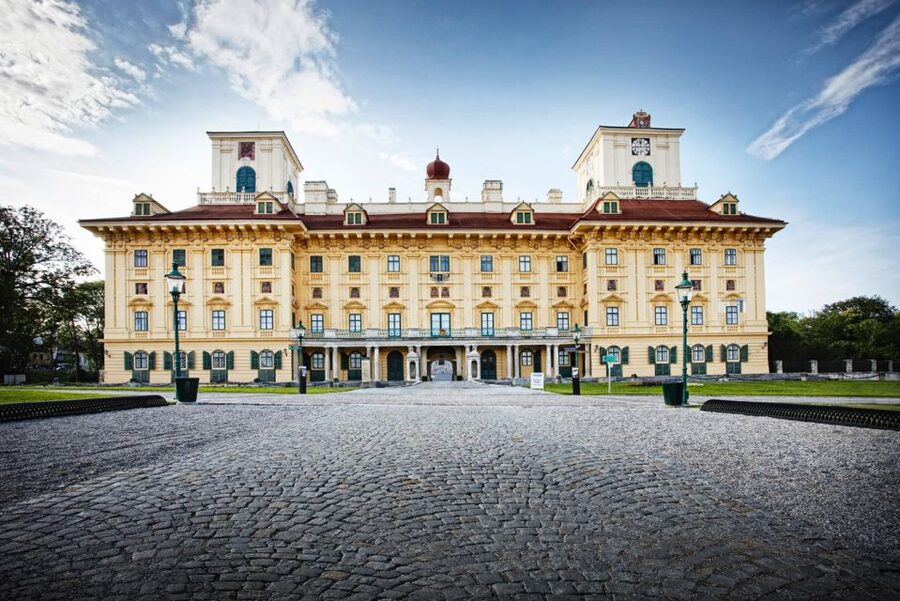
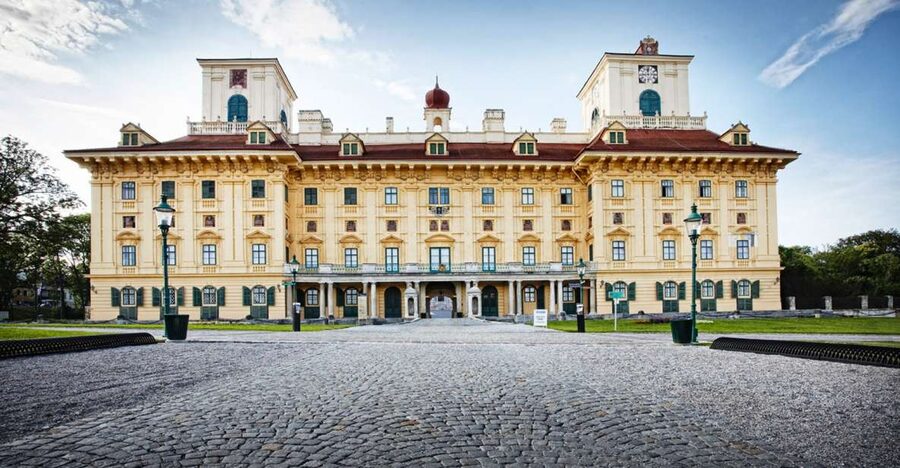
Eisenstadt is the capital of Burgenland, and Esterházy Palace sits at the heart of the city. The building is tied to the Esterházy dynasty, a powerful noble family whose influence shaped the region’s political, cultural, and musical life.
The palace is not simply a pretty Baroque shell. Its rooms and exhibitions explain how the Esterházy family lived, entertained, collected art, supported music, and cultivated wine. That range makes the visit more satisfying than a quick walk through decorated chambers.
You can think of the palace as several museums in one. The bel étage gives you ceremonial splendor. The Haydn exhibition explains the household’s musical importance. The Melinda Esterházy display offers a more modern and intimate story. The cellars bring you down to barrels, presses, and the practical work of wine production.
That mix also helps you decide how much time to allow. You could rush through the palace in a short visit, but you would miss the connections between the rooms, the family, the music, and Burgenland’s wine culture.
A few more options to weigh up in Austria
- Vienna: Classic Ensemble Vienna in St. Peter’s Church Ticket
★ 4.7 · 4,819 reviews - Vienna Kunsthistorisches Museum Day Admission Ticket
★ 4.6 · 3,690 reviews - Vienna: Tickets for Mozarthaus Vienna with Audio Guide
★ 4.2 · 2,344 reviews
The bel étage and the Esterházy silver
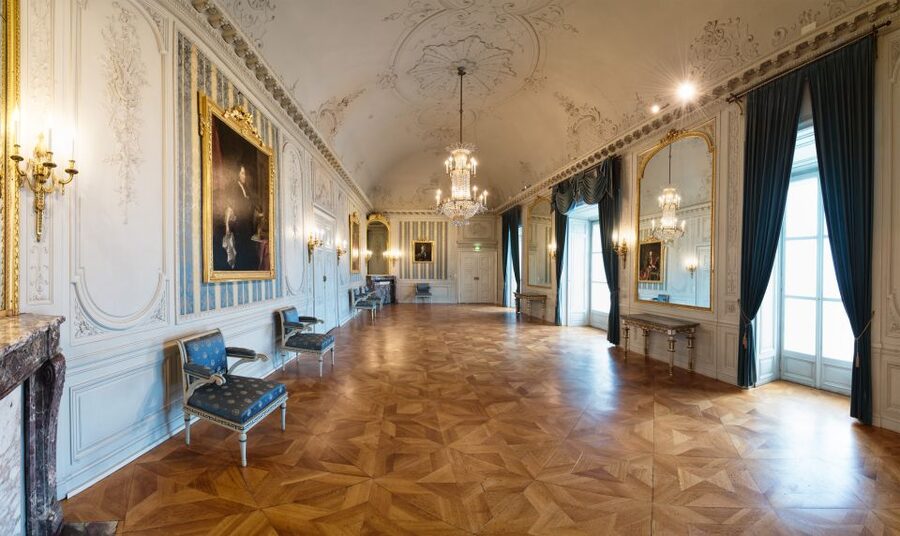
Your visit begins with the palace’s grand rooms on the bel étage, the principal floor designed for formal living and entertaining. Here, the focus is on the building itself and the objects that help explain the family’s status.
The Esterházy silver collection is one of the strongest reasons to take your time. It includes the world’s largest surviving ensemble of Neoclassical silverware preserved as a set. That detail matters because a single silver dish can be beautiful, but a complete ensemble shows how a noble household presented itself at the table.
Look closely at the scale and finish of the objects. The collection is not only about precious metal. It reflects ceremony, hospitality, rank, and the importance of dining in courtly life. The silver helps you picture the palace as a working residence, not just a monument.
The rooms also give you a chance to understand the palace as a building. You can see how the spaces were arranged for display and formal use, and how the architecture supported the public image of the Esterházy princes. If you enjoy decorative interiors, this is likely to be the visual high point of the visit.
The possible drawback is that art-historical collections can feel formal if you prefer personal stories. That is why the other exhibitions matter. They add people, music, and daily practices to the elegant rooms.
Joseph Haydn’s years with the Esterházy princes
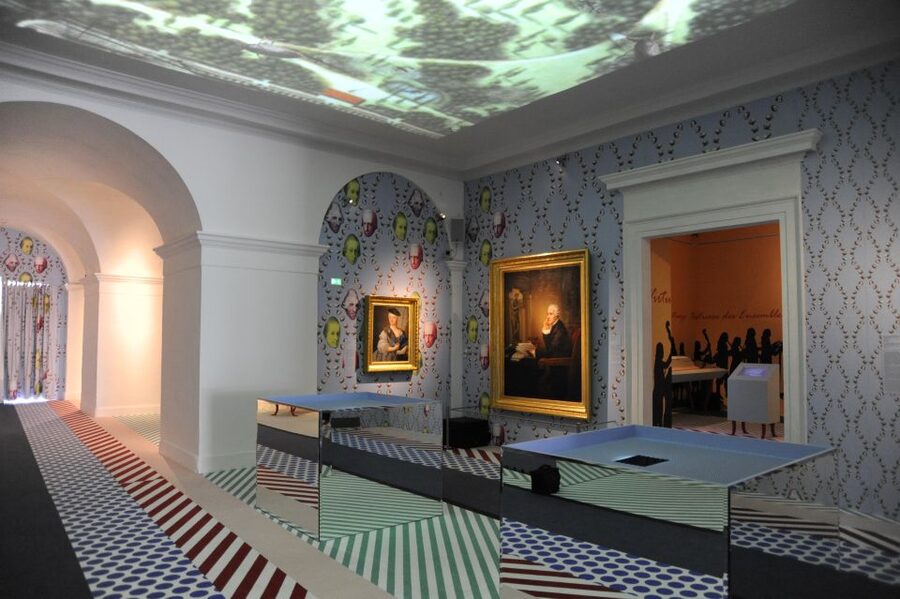
On the ground floor, the exhibition turns to Joseph Haydn. He served as director of music and composer for the Esterházy princes, and the display follows his work from his beginnings in Eisenstadt and Eszterháza through his later music.
This section gives the palace a special place in European musical history. Haydn was not simply a famous composer who happened to visit. His career was closely tied to the Esterházy household, and the exhibition explains that working relationship.
You will find multimedia stations, project installations, and objects that help tell the story. These features should make the section easier to follow if you do not already know Haydn’s music or biography. Instead of expecting you to read a long wall of text, the exhibition uses several ways to present his development.
I like this part because it gives context to the palace’s cultural life. Grand rooms can seem empty without an idea of what happened in them. Haydn’s story suggests a palace filled with rehearsals, performances, commissions, and musical duties.
It is also useful for visitors who come to Eisenstadt specifically because of Haydn. The exhibition connects the composer to the city and to the Esterházy court. You get more than a general biography. You see how his work developed within a particular household and place.
If music is not your main interest, you can move through this section fairly quickly. Still, I would not skip it. It explains one of the clearest reasons Esterházy Palace remains important beyond its architecture.
Melinda Esterházy’s career and personal life
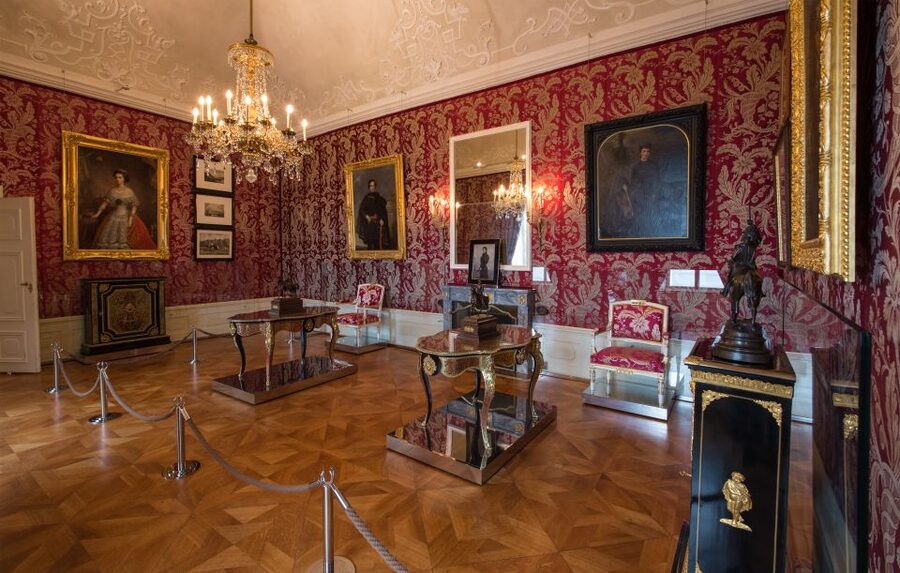
The first-floor exhibition focuses on Melinda Esterházy, presenting her as both a ballerina and a woman whose life included major successes and difficult personal periods.
This display changes the mood of the visit. The palace rooms show inherited power and formal tradition. Melinda’s story brings in ambition, performance, career pressure, and private experience. You are no longer looking only at objects connected to an old dynasty. You are following one person’s path through public achievement and personal strain.
Her work as a ballerina gives the exhibition a clear focus. You can consider what it meant to build a demanding career while connected to one of Austria’s best-known aristocratic families. The exhibition also looks beyond her stage work, presenting the highs and lows of her life.
That personal approach makes this stop valuable even if you are not especially interested in ballet. It offers a more recent chapter in the palace’s story and shows that the Esterházy name did not end with the Baroque era.
The exhibition is also a good counterweight to the formal silver and state rooms. If you visit with someone who finds traditional palace displays distant, Melinda’s story may provide the most relatable part of the experience.
Allow enough time to read and reflect here. The subject is not just a list of dates and titles. It concerns a career, a public identity, and a turbulent private life. The exact depth of your visit will depend on how much of the exhibition you choose to study.
A completely different kind of day:
- Vienna: Vivaldi’s Four Seasons Concert in Karlskirche
★ 4.7 · 14,951 reviews - Vienna: Spanish Riding School Training
★ 3.9 · 9,281 reviews - Vienna: Skip-the-cashier-desk-line Giant Ferris Wheel Ride
★ 4.5 · 7,859 reviews - Vienna: Schönbrunn Palace & Gardens Skip-the-Line Tour
★ 4.7 · 7,739 reviews
Down to the 300-year-old wine cellars
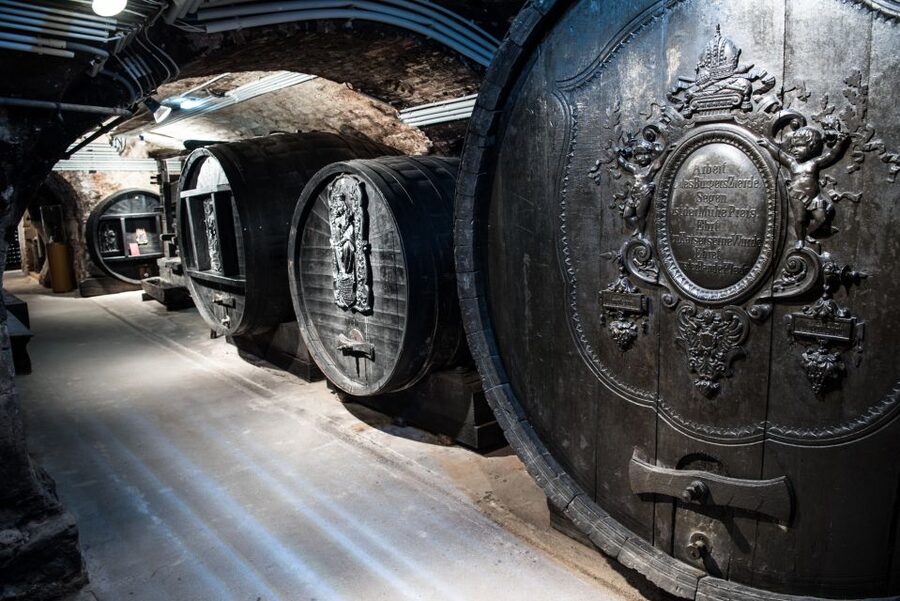
The Wine Museum takes you into the old palace cellars, where the Esterházy family’s connection to wine is presented through more than 700 objects.
This is where the palace’s so-called bacchanalian side comes into focus. The display traces winemaking under the Esterházy princes and shows the tools behind the finished bottle. Historic barrels and viticulture equipment make the subject concrete.
One of the most unusual objects is Burgenland’s oldest Baumpresse, a type of basket press. It is the sort of item that can be easy to overlook in a palace full of silver and grand rooms, but it helps explain how wine was actually produced.
I like the cellar because it changes your sense of scale. Upstairs, you see objects made for formal presentation. Down here, you encounter the storage and equipment that supported the household’s wine culture. It is a reminder that aristocratic life depended on large networks of work and production.
The collection of more than 700 objects also gives the museum real substance. This is not just a cellar with a few old barrels placed for decoration. It presents winemaking as a long-running part of Esterházy life and Burgenland culture.
You should expect the cellar section to feel different from the palace rooms. It is more practical and atmospheric, with the focus on tools, storage, and wine production rather than polished interiors. If you prefer everyday history to courtly display, this may be your favorite section.
How much time should you allow?
The ticket is valid for one day, so you do not need to force every section into a rushed visit. The practical benefit is flexibility. You can take time with the bel étage, return to an exhibition, or fit the palace into a broader day in Eisenstadt.
The exact starting times depend on availability, so check before booking. The meeting point may also vary according to the option you choose. These details are small, but they matter if you are planning several activities in the city.
A careful visit should include all four main areas:
- The bel étage rooms and art-historical collection
- The Esterházy family silver
- The Melinda Esterházy exhibition
- The Joseph Haydn exhibition
- The Wine Museum in the old cellars
The admission ticket includes entry to Esterházy Palace. The audio guide is optional and costs €2 more. It is offered in German, Hungarian, and English, which makes it a useful choice if you want more background while moving through the rooms.
One booking experience specifically praised Rebeca for her explanations and obvious affection for the palace. If your selected option includes a guide, that kind of personal interpretation could add a great deal. If you are purchasing admission only, the audio guide may help fill that gap.
Is $22 good value?
At $22 per person, this is not a bargain-basement museum ticket, but the price looks fair for the amount of material included. You are not paying only to see a few palace rooms. You also get access to exhibitions on Haydn and Melinda Esterházy, plus the Wine Museum.
The value depends on how fully you use the ticket. If you spend only a short time in the bel étage and leave, the cost may feel high. If you explore the palace’s several themes at a steady pace, the admission becomes easier to justify.
The strongest value comes from the variety. You get architecture, decorative arts, music, biography, and wine culture in one place. That makes the palace a practical choice for a day in Eisenstadt, especially if your interests are mixed.
The €2 audio guide charge is modest, but it is still worth knowing about before you arrive. Add it to your budget if you want structured explanations in English, German, or Hungarian.
Free cancellation up to 24 hours in advance and the reserve-now-pay-later option also reduce the risk of booking ahead. You can keep plans flexible, which is helpful when building a day around changing schedules.
Who will enjoy this palace visit most?
I would recommend Esterházy Palace to anyone who enjoys historic houses but wants more than furniture and paintings. The exhibitions give you several ways into the story, so you do not need to be an expert in Austrian history, classical music, or wine.
It suits:
- Architecture and Baroque interior enthusiasts
- People interested in aristocratic collections and silverware
- Joseph Haydn fans
- Visitors curious about ballet and Melinda Esterházy
- Wine lovers interested in old tools and production methods
- Families or groups with varied interests
You may enjoy it less if you want a hands-on activity or a short, purely entertainment-focused attraction. Much of the value comes from looking closely, reading, and making connections between the rooms and exhibits.
The palace also works well for visitors who want a cultural stop in Eisenstadt without committing to a full guided day trip. You control the pace, and the one-day validity gives you room to plan around the rest of your time in Burgenland.
My verdict: book it if you want the full story
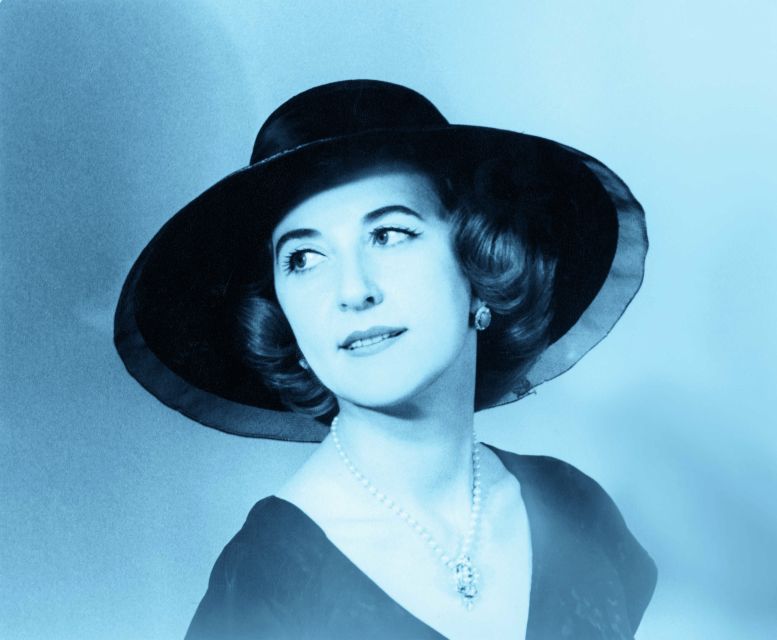
I would book this ticket if you want to understand why Esterházy Palace matters, not just photograph its grand rooms. The combination of Neoclassical silver, Haydn’s career, Melinda Esterházy’s life, and the old wine cellars gives the visit unusual range.
Choose the audio guide for €2 if you want a clear explanation in English, German, or Hungarian. If a guided option is available for your date, the praise for Rebeca suggests that personal interpretation can make the palace even more engaging.
Skip it only if you have very little time in Eisenstadt or have no interest in museums, historic houses, music, or wine culture. For most visitors with half a day or more to spare, the $22 admission offers a thoughtful look at Burgenland’s aristocratic and cultural past.
FAQ
Where is Esterházy Palace located?
Esterházy Palace is in Eisenstadt, the capital of Burgenland, Austria.
How much does admission cost?
The listed price is $22 per person.
How long is the ticket valid?
The admission ticket is valid for one day.
What does the admission ticket include?
It includes admission to Esterházy Palace and its featured areas, including the palace rooms, the Haydn exhibition, the Melinda Esterházy exhibition, and the Wine Museum.
Is an audio guide included?
No. The audio guide is optional and costs an additional €2.
What languages are available for the audio guide?
The audio guide is available in German, Hungarian, and English.
Can I cancel my booking?
Yes. You can cancel up to 24 hours in advance for a full refund.
Can I reserve now and pay later?
Yes. The reserve-now-pay-later option lets you book without paying at the time of reservation.
Does the meeting point always stay the same?
No. The meeting point may vary depending on the option you book.
Just added in Austria
- Zurich: Private Liechtenstein, Austria, and Germany Day Trip★ 5.0 · 16 reviews
- Zurich: Liechtenstein, Austria, Germany and Swiss Day Trip★ 5.0 · 2 reviews
- Zell am See: Paragliding Tandem Flight★ 5.0 · 31 reviews
- Vienna: Austrian Wine Tasting Experience★ 4.2 · 2 reviews
- Zurich: Liechtenstein, Austria and Germany Private Day Tour★ 5.0 · 6 reviews
- Vienna: UNESCO Schönbrunn Palace Guided Tour with Entry★ 4.5 · 94 reviews
- World War II History Vienna Old Town Private Walking Tour★ 4.8 · 9 reviews
- From Krems: Wachau Valley River Cruise on the Danube★ 4.6 · 95 reviews
Tickets, compared.
Classic Ensemble Vienna in St. Peter’s Church Ticket
Read our review →
Vienna Kunsthistorisches Museum Day Admission Ticket
Read our review →
Tickets for Mozarthaus Vienna with Audio Guide
Read our review →
Skip-the-Line Entrance Ticket to the Danube Tower
Read our review →