
Reviewed · CLASSICAL CONCERTS AND OPERA
Concerts at Mozarthouse Vienna – Chamber Music concerts.
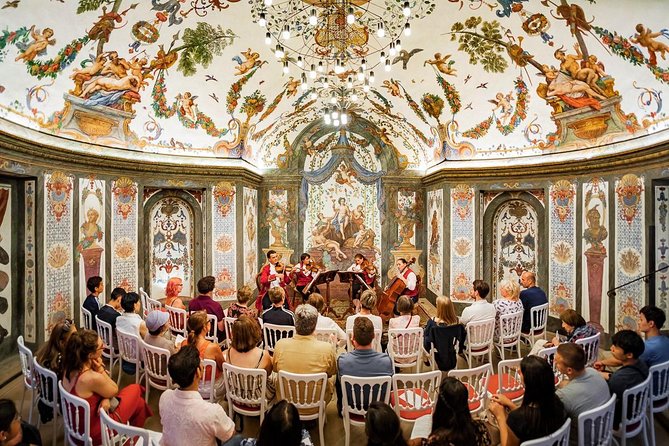
Classical music feels different at arm’s length. This intimate concert at Vienna’s Sala Terrena pairs a historic room with familiar works by Mozart, Bach, Beethoven, Schubert, Haydn, and others. I like the beautiful frescoed setting and the chance to hear skilled musicians close enough to see their technique and expression.
I also like the period costumes, keepsake program, included coat check, and short break in a venue tied to Mozart. The main drawback is space: the room is small, chairs can feel tight, and some ticket holders have found the seating or category arrangement confusing.
In This Review
- Key points to know before booking
- Why the Sala Terrena matters
- The arrival and ticket collection
- What you hear during the 90-minute program
- String quartet or piano trio, depending on the day
- The break, coat check, and program
- Seating categories and the comfort question
- Is the $50.81 price good value?
- How the music feels in such a small room
- Who should book this concert?
- Booking tips that make the evening easier
- Should you book the Mozarthaus concert?
- FAQ
- How long does the concert last?
- Where does the concert take place?
- Did Mozart perform at the Sala Terrena?
- Which musicians perform at the concert?
- Are the musicians dressed in historical costumes?
- What is included in the ticket?
- Are drinks included?
- How early should I arrive?
Key points to know before booking
- The Sala Terrena is the heart of the experience: You hear music in Vienna’s oldest concert hall, a room where Mozart once played.
- The program lasts about 90 minutes: Expect music in two sections, often with a short intermission.
- The lineup changes by day: A string quartet performs on Wednesday, Friday, Saturday, and Sunday, while a piano trio is scheduled for Tuesday and Thursday.
- The sound is intimate and clear: The small room gives the instruments surprising power, though it also means close seating.
- Category A is the best choice for sightlines: Rows 1 to 3 are Category A, rows 4 to 6 are Category B, and student tickets can be in any row.
- Bring cash for interval drinks: Alcoholic drinks are available for purchase, except on Saturdays, but drinks are not included and cash may be needed.
Why the Sala Terrena matters
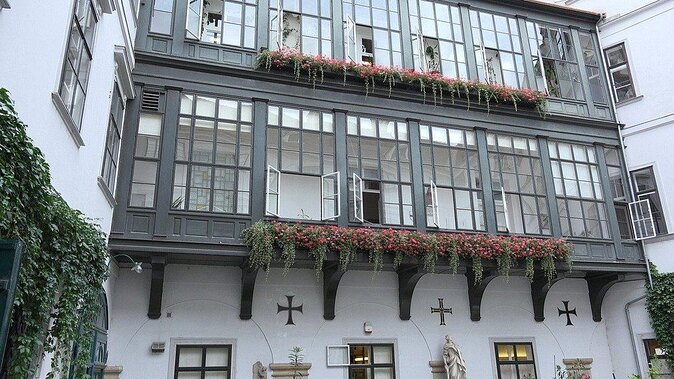
The setting is not just a place to put chairs and music stands. The Sala Terrena is inside the Deutschordenshaus, in central Vienna, and is described as the city’s oldest concert hall. Mozart once performed there, so the room gives the concert a direct link to the musical life of eighteenth-century Vienna.
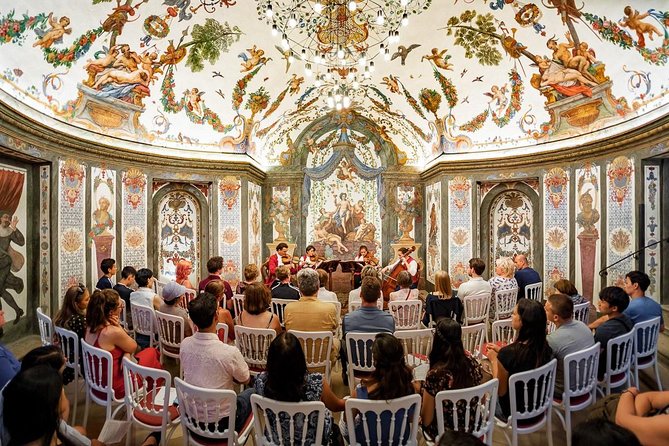
Look up before the music begins. Historic frescoes decorate the hall, and their worn, ornate character is part of the appeal. You are not sitting in a modern auditorium with perfect sightlines and generous legroom. You are sitting in a small historic room that has been used for music for centuries.
That trade-off matters. The room creates a close connection between audience and performers, but it also has limited capacity. Several seats are placed close together, and some positions near the back or corner can feel less comfortable. If you prefer space, broad views, and plush theater seating, this may not be your ideal concert.
If you enjoy old buildings and small-scale performances, the Sala Terrena gives the evening a strong sense of place. The history is part of what you are paying for, not just decoration around a standard concert.
More Classical Concerts in Vienna
- Vienna: Vivaldi’s Four Seasons Concert in Karlskirche
★ 4.7 · 14,951 reviews - Vienna: Classical Concert in the World-Famous Musikverein
★ 4.6 · 6,673 reviews - Vienna: Classical Concert at St. Stephen’s Cathedral
★ 4.1 · 4,177 reviews
The arrival and ticket collection
You make your own way to the venue in central Vienna. The location is near public transportation, so it fits easily into an evening of sightseeing, dinner, or a walk through the old center.
Your mobile booking confirmation does not mean you simply walk straight to your seat. Tickets are held at the theater box office for collection on the day of the performance. Arrive at least 15 minutes before the listed starting time so you have time to collect them and find the hall.
This is worth taking seriously. One concertgoer described a slow ticket allocation process, with the performance starting later than expected. That may not happen every evening, but arriving early is sensible. It also gives you time to inspect the room instead of rushing in as the musicians prepare to play.
The entrance process has received mixed impressions. Staff members have also been praised for greeting people warmly and helping with registration and seating. The practical advice is simple: keep your confirmation ready, allow a little extra time, and do not plan an appointment immediately after the concert.
What you hear during the 90-minute program
The advertised program lasts about an hour and a half. The music draws from well-known classical composers, including Mozart, Bach, Beethoven, Schubert, and Haydn. The exact pieces can vary, so you should come for the style and setting rather than one specific composition.
The selection is designed to give casual listeners an accessible introduction to chamber music. Familiar melodies may appear alongside less familiar works, creating a program with enough variety to hold your attention. You might hear a piano-centered piece such as Beethoven’s Moonlight Sonata, or a work that gives the cello a strong moment, such as Ave Maria, depending on the evening’s program.
The performance is not simply background music for a historic room. The musicians explain pieces before playing them on some evenings, which helps if you do not know the difference between a quartet, trio, sonata, or chamber arrangement. That small amount of context can make the music easier to follow without turning the event into a lecture.
The intimate scale also changes how you listen. In a large concert hall, you hear a blended sound from a distance. Here, you can watch the players communicate with one another, notice the bowing and hand movements, and hear individual instruments more clearly.
String quartet or piano trio, depending on the day
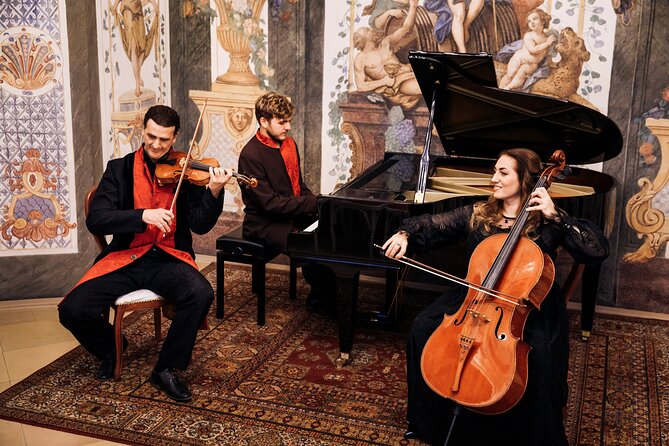
Your day of booking affects the shape of the performance. The scheduled format is a string quartet on Wednesday, Friday, Saturday, and Sunday. On Tuesday and Thursday, the program is performed by a piano trio.
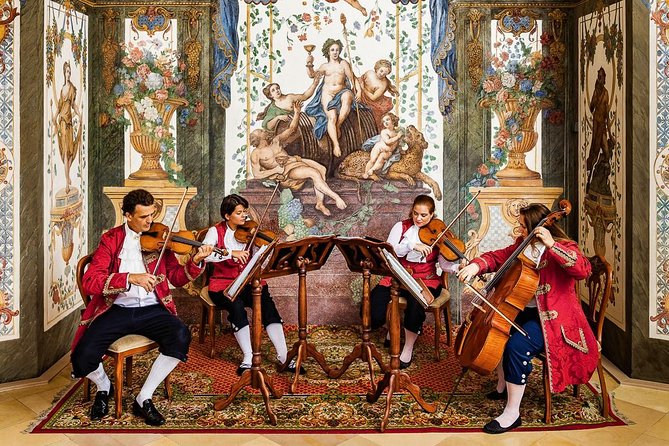
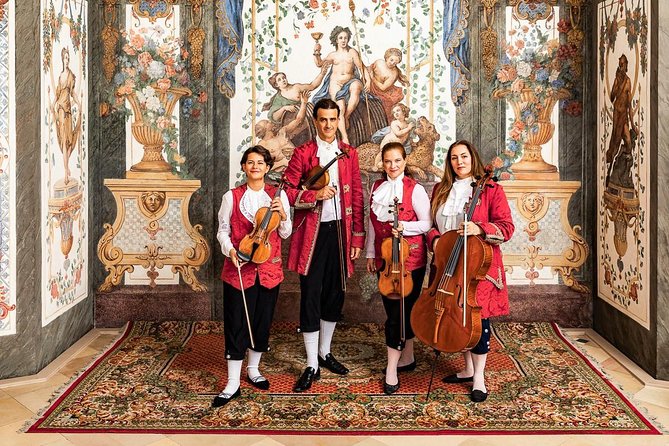
A string quartet normally features two violins, viola, and cello. That format gives you the close, conversational sound associated with chamber music, with melodies passing between instruments. A piano trio brings piano, violin, and cello together, giving the program a different balance and allowing the piano to fill more of the room.
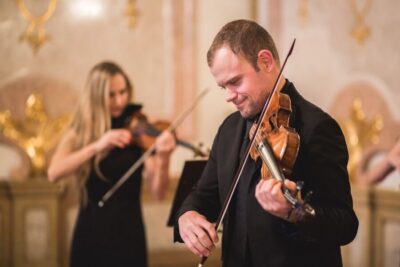
The performers wear original historical costumes on the string quartet evenings. This adds visual charm and helps connect the concert with Vienna’s earlier musical life. It is theatrical, but not in a way that replaces the music. The strongest praise has focused on the musicians’ skill, energy, and clear affection for what they play.
The small ensemble may seem modest compared with a full orchestra. That is precisely the point. You get fewer instruments, but more detail. The Sala Terrena’s acoustics help the sound fill the room, even when only three musicians perform.
A completely different kind of day:
- Vienna: Spanish Riding School Training
★ 3.9 · 9,281 reviews - Vienna: Schönbrunn Palace & Gardens Skip-the-Line Tour
★ 4.7 · 7,739 reviews - Vienna: Light of Creation Votive Church Immersive Light Show
★ 4.8 · 6,779 reviews - Vienna Spanish Riding School Guided Tour
★ 4.7 · 6,765 reviews
The break, coat check, and program
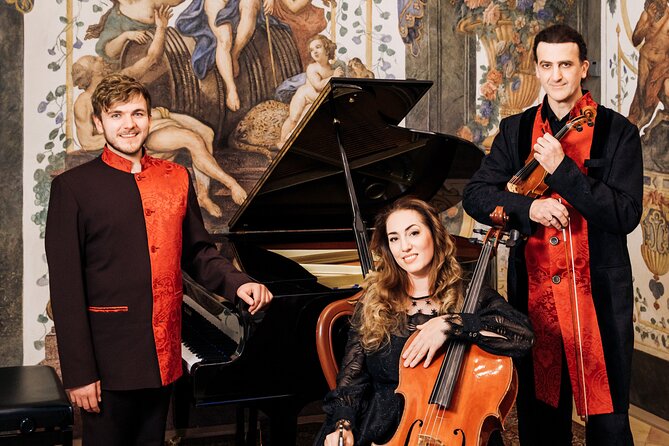
The concert commonly runs in two parts, with roughly 45 minutes of music before a short break and another section afterward. The interval makes the 90-minute format feel less demanding, especially if you are fitting classical music into a busy sightseeing day.
Drinks may be available during the break for a nominal fee. Champagne has been offered on some evenings, but alcoholic drinks are not included in the ticket and are not available on Saturdays according to the stated conditions. Cash is the safest option because payment by card may not be accepted for interval drinks.
Food and drinks are otherwise not included. CDs may also be available for purchase, but they cost extra. A keepsake program is included, which is useful if you want to remember the evening or identify pieces later.
The coat check is included as well. That is a small but welcome benefit in Vienna’s colder months. You can leave a coat rather than hold it through the performance, though the room itself has been described as comfortably warm compared with some church concerts.
Seating categories and the comfort question
Tickets are divided into three types:
- Category A: rows 1 to 3
- Category B: rows 4 to 6
- Students: all rows
Category A costs more, but it should give you a closer view of the musicians. For a performance built around seeing and hearing a small ensemble, that can be worthwhile. If you mainly want the music and do not mind being farther back, Category B may offer better value.
Pay close attention to the ticket type shown during booking. One person found that a booking appeared to be for student seating and then paid extra to upgrade. The resulting seat still did not feel like a true first-row position. That does not mean every booking will have the same problem, but it is a good reason to check the category and row details before completing payment.
The seating is one of the clearest compromises. Some people have found the chairs comfortable enough and appreciated having chairs rather than church pews. Others felt that too many seats had been placed in a room that was already small.
If you are tall, dislike close seating, or need generous personal space, choose your category with care and arrive early. The hall’s intimacy is wonderful for the sound, but it leaves little room to spread out.
Is the $50.81 price good value?
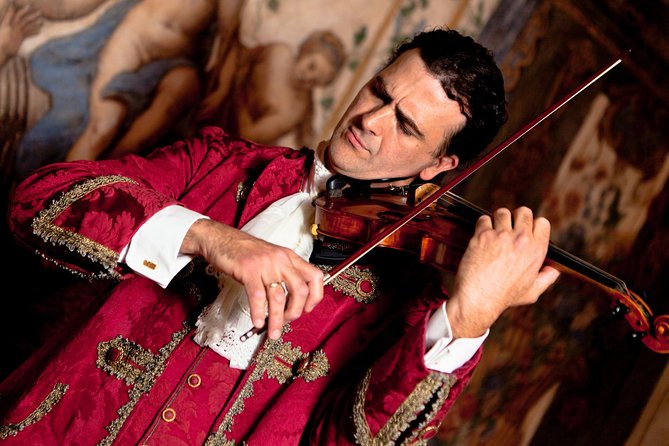
At about $50.81 per person, this is not the cheapest way to hear classical music in Vienna. You can find less expensive concerts in churches or larger public spaces. You are paying here for more than a selection of famous composers.
The ticket includes live entertainment, the bilingual German and English program, a keepsake program, and coat check. It also guarantees admission to a historic venue with a direct Mozart connection. For someone who wants a short, polished evening rather than a long formal concert, the package is reasonably balanced.
Value depends heavily on what you want. If you are mainly seeking a world-class orchestra, a grand hall, or a long symphonic program, this will feel limited. If you want a manageable introduction to classical music in a memorable room, the price is easier to justify.
The strongest value comes from the combination of close musicianship and historic atmosphere. You can see the performers work together, hear individual instruments, and sit in a room linked to Mozart. That is a more personal experience than watching an orchestra from the back of a large hall.
Keep possible extra costs in mind. Drinks are not included, CDs cost extra, and interval purchases may require cash. There is no food included, so plan dinner before or after the concert.
How the music feels in such a small room
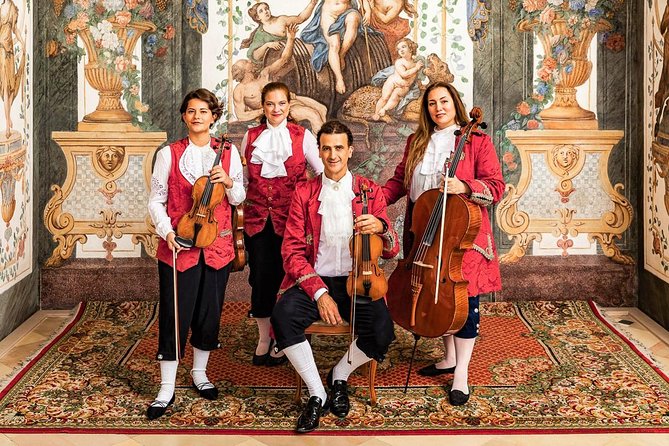
The acoustics are one of the evening’s major strengths. The Sala Terrena is compact, yet the sound can fill the space without requiring amplification. A piano trio or quartet does not need to fight against a huge hall, so quiet passages remain intimate and stronger passages have real force.
The proximity also lets you see the musicians’ expressions and interaction. This can make the performance feel more immediate than a standard concert from a distant balcony. You are close enough to notice the musicians responding to one another, not just producing a polished final sound.
Several comments have praised the players as talented, passionate, and energetic. That matters more here than elaborate staging. The evening depends on the musicians’ ability to hold attention, and the program seems designed to give each instrument moments to shine.
The format also works for people who do not usually listen to classical music. Famous melodies provide an easy entry point, while lesser-known selections add variety. You do not need a detailed musical background to follow the evening.
Still, intimacy is not the same as luxury. The room can feel crowded, and a seat in the corner or back may reduce the visual benefit. Go for the close musical contact, not for spacious comfort.
Who should book this concert?
I would point this experience toward several kinds of visitors:
- You want an evening of classical music without committing to a long opera or symphony.
- You enjoy historic interiors and prefer a small room to a grand modern venue.
- You are new to classical music and want familiar composers with a manageable running time.
- You are looking for a quiet date-night activity in central Vienna.
- You value seeing musicians up close and hearing the detail of a small ensemble.
- You want a concert connected directly to Mozart’s Vienna.
It may be less suitable if you need accessible seating information that is not provided in advance, dislike tight rows, or expect a large ensemble. The available information says most people can participate and lists no health restrictions, but it does not provide detailed accessibility arrangements.
The program is bilingual in German and English, which helps with introductions and practical announcements. The music itself needs no translation.
Booking tips that make the evening easier
Book ahead if your Vienna dates are fixed. This experience is often reserved about 35 days in advance, suggesting that popular evenings can fill before the last few days of a trip.
Choose the performance day based on the ensemble you want. Select Wednesday, Friday, Saturday, or Sunday for the string quartet in historical costume. Select Tuesday or Thursday for the piano trio, according to the stated schedule.
Arrive 15 minutes early for box-office collection. If you want a better view, inspect the Category A and Category B description carefully before paying. Do not assume that an upgrade automatically means a front-row seat.
Carry cash for interval drinks. Saturday is different because alcoholic drinks are excluded that day. Your ticket includes the coat check and program, but not drinks, food, or CDs.
You can cancel for a full refund up to 24 hours before the local start time. Changes or cancellations made less than 24 hours before the performance are not accepted for a refund.
Should you book the Mozarthaus concert?
Book it if you want a short, intimate concert in a remarkable historic room, especially if Mozart, chamber music, and old Vienna are central to your plans. The music, acoustics, and close view of the performers are the main rewards.
Before booking, accept the seating compromise. The Sala Terrena is small, and the room can feel crowded. Check your ticket category, arrive early for collection, and bring cash if you want a drink during the interval.
For casual classical listeners, couples, and anyone seeking a more personal concert than a large hall can offer, this is a strong choice. For those who want maximum comfort or a full orchestra, spend your concert budget elsewhere.
FAQ
How long does the concert last?
The concert lasts approximately 1 hour and 30 minutes. It is commonly presented in two sections with a short intermission.
Where does the concert take place?
The concert takes place at the Sala Terrena in the Deutschordenshaus, in the heart of Vienna.
Did Mozart perform at the Sala Terrena?
Yes. The venue is associated with Mozart, who once played there.
Which musicians perform at the concert?
A string quartet performs on Wednesday, Friday, Saturday, and Sunday. A piano trio is scheduled for Tuesday and Thursday.
Are the musicians dressed in historical costumes?
The string quartet performances on Wednesday, Friday, Saturday, and Sunday feature musicians dressed in original historical costumes.
What is included in the ticket?
The ticket includes live entertainment, a program in German and English, a keepsake program, coat check, and admission to the performance.
Are drinks included?
No. Food and drinks are not included. Alcoholic drinks may be available for purchase, except on Saturdays, and cash may be required.
How early should I arrive?
Arrive at least 15 minutes before the start time to collect your tickets from the theater box office.
Just added in Vienna
- Vienna: Austrian Wine Tasting Experience★ 4.2 · 2 reviews
- World War II History Vienna Old Town Private Walking Tour★ 4.8 · 9 reviews
- Vienna_ Meet Beethoven Life Private Guided Walking Tour★ 5.0 · 1 review
- Vienna: Wine Tasting Tour★ 4.8 · 61 reviews
- Vienna: Wine Tasting E-Bike Tour★ 4.9 · 46 reviews
- Vienna: Wine Tasting at Schönbrunn Palace★ 4.3 · 71 reviews
- Vienna: Winery and Wine Tasting Tour with a Wine Expert★ 5.0 · 5 reviews
- Vienna: Concert by the Vienna Baroque Orchestra★ 4.6 · 56 reviews
Classical Concerts and Opera, compared.
Vivaldi’s Four Seasons Concert in Karlskirche
Read our review →
Classical Concert in the World-Famous Musikverein
Read our review →
Classical Concert in St. Anne’s Church (Annakirche)
Read our review →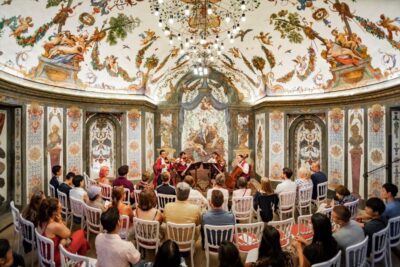
Browse the lists this tour appears in