
Reviewed · EXPLORATION GAMES
City game scavenger hunt Vienna – independent city tour I discovery tour
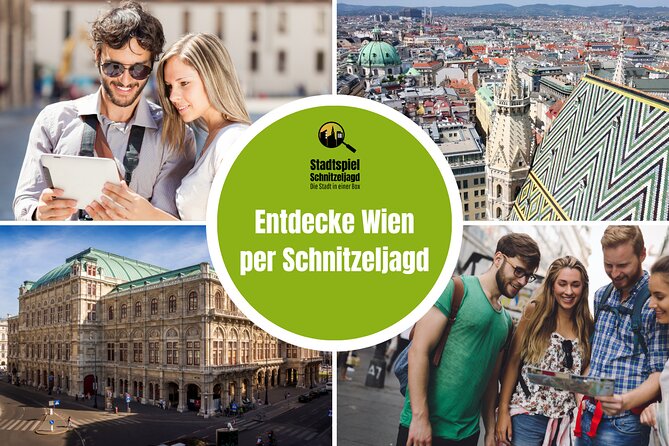
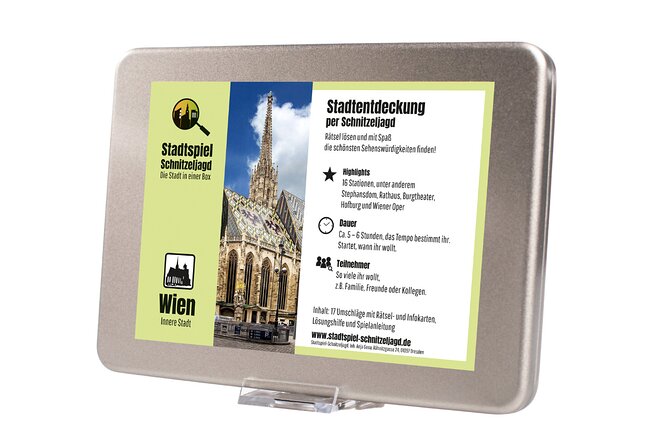
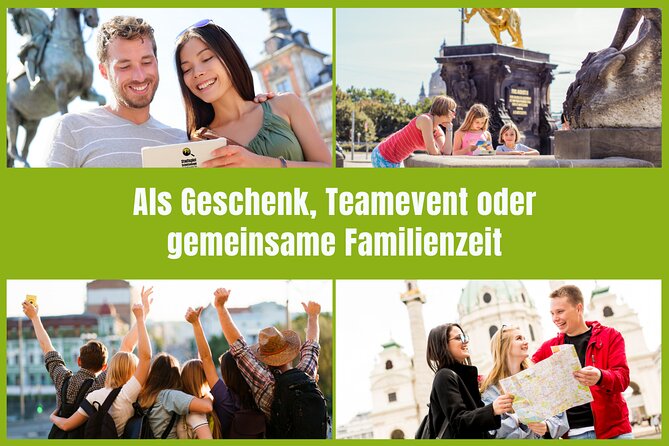
Vienna rewards curious walkers. This independent city game turns the center into a puzzle trail, linking St. Stephen’s Cathedral, the Hofburg, the Opera, and grand squares at your own pace. I like the freedom to start anytime between 8 a.m. and 7 p.m., and I like that one box covers up to ten people for $52.23.
The sealed envelopes add a sense of occasion without forcing you to follow a guide’s schedule. The main drawback is practical: the activity is non-refundable, and the box must be shipped in advance to an address in Germany or Austria, so last-minute bookings will not work.
In This Review
- Key points at a glance
- What this Vienna scavenger hunt actually is
- Beginning at Stephansplatz and St. Stephen’s Cathedral
- The Austrian Parliament and its Greek design
- Vienna’s elegant shopping mile and the plague column
- A grand civic building with a garden-first story
- The Hofburg, former home of the imperial family
- Sachertorte and the culinary stop near the Opera
- Finishing at the Vienna Opera
- Puzzles, information cards, and the right group size
- Timing, delivery, and practical planning
- Who will enjoy this city game most
- Should you book the Vienna scavenger hunt?
- FAQ
- Where does the Vienna scavenger hunt start?
- Where does the activity end?
- How long does the scavenger hunt take?
- How many people can join one booking?
- What is included in the price?
- Are admission tickets included?
- Are food and drinks included?
- Is transport included?
- Can I cancel or change the booking?
Key points at a glance
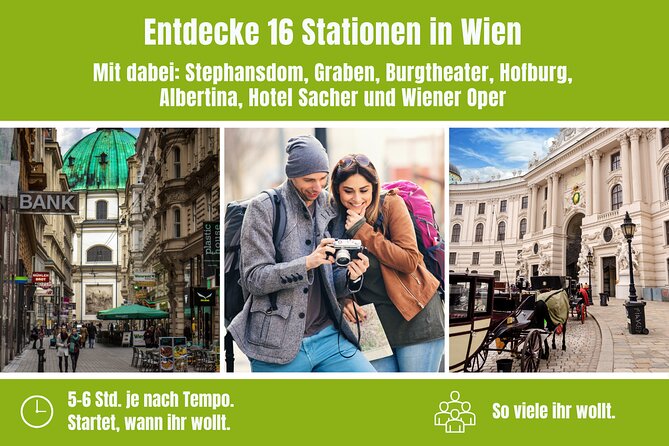
- Sixteen sealed envelopes: Each contains a puzzle, directions to the next station, and facts about the attraction ahead.
- Start at Stephansplatz: The route begins beside St. Stephen’s Cathedral and ends near the Vienna Opera.
- A self-guided three to five hours: You choose the pace, take breaks when you like, and decide how long to linger.
- A good group price: The $52.23 rate covers one private group of up to ten people.
- Vienna icons with a playful twist: The route includes the Austrian Parliament, the Hofburg, an elegant shopping street, a grand civic building, and the birthplace of Sachertorte.
- No admission tickets included: Food, drinks, transport, and entry fees are extra, so plan the outing as an outdoor city walk.
What this Vienna scavenger hunt actually is
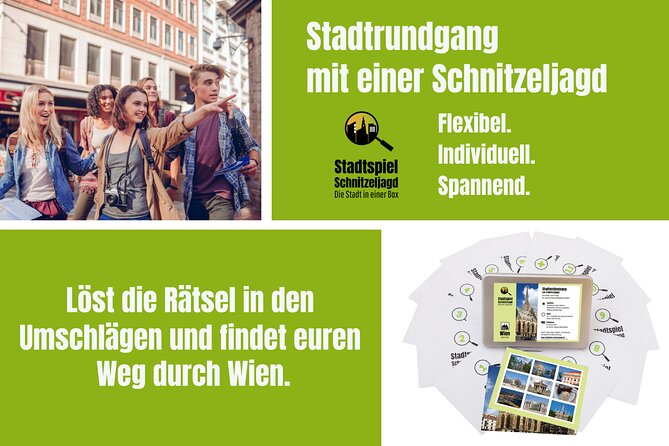
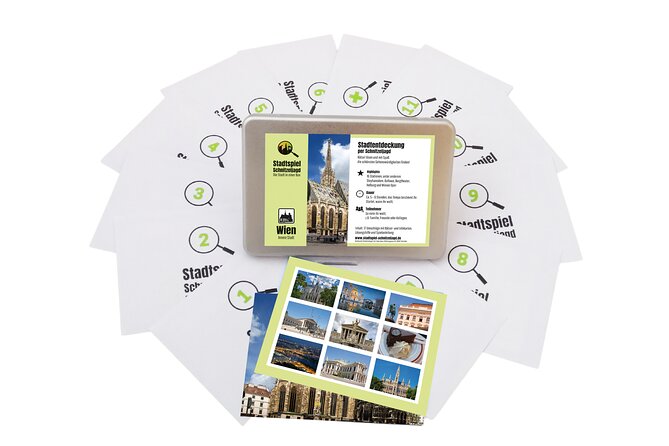
This is not a guided walking tour with someone leading you from one sight to another. It is a self-guided city game delivered in a physical box. Inside are 16 sealed envelopes, each meant to be opened as you progress.
The envelopes contain three useful things: a puzzle, directions to the next stop, and an information card about the attraction. That combination matters. You are not simply solving clues with little context, and you are not reading a dry booklet while walking past the sights. The puzzle gives you a reason to look closely, while the information card supplies the background.
The activity is designed for a private group. You can bring as many people as the booking allows, up to ten in one group, and you do not share the experience with other participants. That makes it especially appealing for a family, a group of friends, or a small private gathering that wants a little structure without hiring a guide.
The expected duration is three to five hours. That is a wide range, but it makes sense for a city game where you set the pace. A quick group that reads only the essential information may finish sooner. A group that stops for coffee, photographs, food, or extra sightseeing can use much of the day.
More exploration games in Vienna:
- Vienna: Scavenger Hunt Self-Guided Tour
★ 4.7 · 83 reviews - Vienna: The Great Plague Exploration Game
★ 4.5 · 60 reviews - Mystery rally Vienna: The scary city
★ 4.5 · 23 reviews
Beginning at Stephansplatz and St. Stephen’s Cathedral
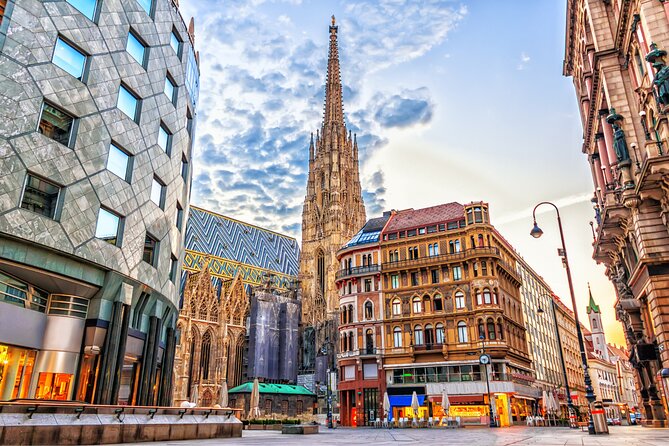
The stated meeting point is Stephansplatz, in Vienna’s 1010 district. This puts you at a strong starting point in the city center, with St. Stephen’s Cathedral as the natural first landmark.
The square gives the game an immediate sense of place. You are not beginning at an anonymous street corner or a distant transport stop. You start among one of Vienna’s best-known buildings, with the historic center already around you.
The first puzzle and directions are designed to get the group moving. I would treat this opening as a warm-up. Read the instructions carefully, agree on who will hold the envelopes, and avoid opening ahead. The game depends on the sequence, and the sealed format is part of the fun.
The cathedral is also useful for orientation. If you are new to Vienna, Stephansplatz helps you understand the compact nature of the central district. From here, the route connects major sights on foot rather than sending you across the city by bus or train.
The drawback is that central Vienna can be busy, especially around famous sights and shopping streets. A puzzle that sounds easy at a quiet table can take longer when you are reading directions in a crowded square. Give yourself room to stop at the edge of the foot traffic instead of blocking the main flow.
The Austrian Parliament and its Greek design
One stop focuses on the Austrian Parliament, a building designed to resemble a Greek temple. The choice is more than a photo opportunity. Its classical form was intended to connect modern government with the ideals of ancient democracy.
For the game, this is a good example of how the route moves beyond the most familiar imperial sights. Vienna is often reduced to palaces, cafés, and music, but the Parliament introduces the city’s political face. The information card should help you notice architectural details that could easily pass without a second look.
This stop may appeal to adults and older children who enjoy visual clues. The building offers a clear theme for a puzzle: columns, symmetry, symbols, and the relationship between architecture and public life. I would encourage your group to look up from the clue sheet before trying to solve everything on paper.
The experience does not include a guided interior visit or an admission ticket. If you want to see inside the Parliament, that would be a separate plan and expense. The scavenger hunt gives you the outdoor stop and its supporting facts, not a formal building tour.
Vienna’s elegant shopping mile and the plague column
Another part of the route leads through an exclusive old shopping street marked by an impressive plague column. This section combines everyday city life with a reminder of Vienna’s past.
The shopping street is useful as a change of mood. After grand government buildings and imperial spaces, you get a closer look at how the center feels at street level. The shops, façades, and pedestrian setting give you time to walk, browse, and watch Vienna’s polished public style.
The plague column adds a solemn historical marker to the route. It is an ornate piece of public art connected with a difficult period, and it gives the puzzle a detail-rich subject. Look closely at the sculpture rather than treating it as a quick backdrop for photographs.
This is also a natural place to pause. The activity lets you stop whenever you want, and an old shopping street gives you more practical options than a formal monument. You could take a short break, continue browsing, or use the surrounding area to find food or a drink.
Keep in mind that those purchases are not included. The price covers the scavenger hunt box and shipping under the stated conditions, not refreshments, meals, or shopping. That is easy to manage, but it is worth remembering when you compare the experience with a standard guided tour.
A few more options to weigh up in Vienna
- Vienna: Vivaldi’s Four Seasons Concert in Karlskirche
★ 4.7 · 14,951 reviews - Vienna: Spanish Riding School Training
★ 3.9 · 9,281 reviews - Vienna: Schönbrunn Palace & Gardens Skip-the-Line Tour
★ 4.7 · 7,739 reviews - Vienna: Light of Creation Votive Church Immersive Light Show
★ 4.8 · 6,779 reviews
A grand civic building with a garden-first story
The itinerary includes a large building surrounded by a notable park and garden, with the unusual detail that the garden came first and the building followed. The clue points toward the Vienna City Hall, suggested by the reference to becoming mayor.
This stop gives the game a nice bit of narrative. You are not just asked to identify a grand façade. You are encouraged to think about how the surrounding public space shaped the building that came later.
City Hall is the sort of sight that benefits from a slow look. It has many small details, and a puzzle can make you pay attention to turrets, decorations, windows, and the way the structure meets the open space around it. I like this kind of stop because it rewards observation rather than prior knowledge.
The mayor reference also gives families a clear entry point. Children may not care much about municipal architecture, but they can understand the idea of a building connected to running a city. Adults get the civic setting, while younger players get a role-playing angle.
Again, this is an exterior discovery experience rather than an advertised interior visit. Do not assume that the game includes access to City Hall or a scheduled tour inside. The attraction is part of the route, and the facts come through the information card.
The Hofburg, former home of the imperial family
No central Vienna walk would feel complete without the Hofburg. The former seat of the imperial family is one of the route’s essential stops, and it gives the game its strongest connection to Vienna’s imperial past.
The Hofburg is not one simple palace building. It is a large complex with different sections and functions, which makes it well suited to a clue-based visit. An information card can help you sort out what you are seeing, while the puzzle encourages you to inspect the details instead of simply taking a quick photograph.
This is likely to be one of the more rewarding points for first-time visitors. If you are already familiar with Vienna’s imperial story, the game still gives you a reason to move through the complex with fresh attention. If you know little about it, the supplied facts provide a useful introduction without turning the outing into a lecture.
The Hofburg area can also slow the group down. There is plenty to see, and you may be tempted to add an interior museum or another palace visit. That can be a good choice, but it will extend the three to five hour estimate and create extra costs because admissions are not included.
I would decide before starting how much time you want to reserve for optional sightseeing. The city game works best when you keep enough energy for the final stops instead of spending the whole morning inside the Hofburg complex.
Sachertorte and the culinary stop near the Opera
The route includes a very Viennese food landmark: Sachertorte. The cake is treated as a required part of the city experience, and this stop identifies the birthplace of the famous chocolate cake.
That makes the final stretch more than a sequence of buildings. You get a simple culinary connection to the city, one that you can enjoy even if you are not especially interested in architecture. Sachertorte is also a practical excuse for a pause during a long walking game.
The cake itself is not included in the price. You will need to pay separately if you choose to order it, and food and drinks are specifically outside the package. Still, this is one of the easiest extra costs to understand because the stop naturally invites a café break.
The Sachertorte stop also helps explain the route’s endpoint near the Opera. Vienna’s musical reputation and café culture come together in this part of the center. After several puzzles, a slice of cake may be exactly the reward your group needs.
I would not make the mistake of treating the cake stop as mandatory spending. You can complete the activity without ordering food, but the route gives you a well-timed opportunity if your schedule and budget allow it.
Finishing at the Vienna Opera
The stated end point is the Opera, also in Vienna’s 1010 district. Ending here gives the route a clear finish rather than leaving you somewhere vague in the center.
The Opera is one of the city’s defining cultural buildings, so it makes a fitting final sight after the Parliament, shopping street, City Hall, Hofburg, and Sachertorte stop. The sequence covers several sides of Vienna: government, commerce, civic life, imperial power, food, and music.
You may want to plan your next activity before reaching the end. The Opera area is central, so it can work as a handoff point for dinner, a performance, more walking, or transport to another part of Vienna. The supplied information does not promise tickets or entry, so any show or interior visit requires separate arrangements.
Because the route ends in the same central district where it begins, you remain well placed for onward sightseeing. The game is best viewed as a structured introduction to the inner city, not a complete replacement for Vienna’s museums, palaces, and performances.
Puzzles, information cards, and the right group size
The strongest feature is the balance between play and information. The puzzles are reported as neither too hard nor too easy, which is the sweet spot for a mixed group. You should have to think, but you should not need specialist knowledge of Vienna to move ahead.
The information cards add substance. One positive assessment specifically praised them as interesting and detailed, while also finding the clues well judged. That matters because a city game can fail in two ways: it can become a thin treasure hunt with no context, or it can bury the fun under too much text. This one aims for a middle path.
Sixteen envelopes also help pace the activity. You have a sequence of smaller tasks rather than one large challenge. That makes it easier to keep a group involved, particularly if different people take turns solving clues.
The price is particularly attractive for a full group. At $52.23 for up to ten people, the per-person cost can be low if you fill the booking. For two people, the same price is less of a bargain, although a private three to five hour activity with no guide tipping requirement can still make sense.
I would recommend a maximum of ten only if the group enjoys working together. Ten people crowded around one clue can become noisy and slow. A smaller group may solve faster, while a larger family or friend group can split the reading, searching, and note-taking roles.
Timing, delivery, and practical planning
The box must be sent before your visit, so choose a date far enough in the future for delivery. The stated delivery time is about four working days, and you must provide your full address by email at the end of booking.
Shipping is included only to Germany and Austria. If you are staying elsewhere, do not assume the box can be sent there under the same terms. This restriction is the most important planning point for international visitors.
The opening hours listed for the activity are Monday through Sunday, 8 a.m. to 7 p.m. You can select a start within that window rather than meeting at a fixed tour time. That flexibility is valuable if you have a morning museum booking, a late arrival, or children who need a slower start.
The mobile ticket is useful for the reservation, but the core activity arrives in the physical box. Keep the box and envelopes together, and do not open everything at once. Since transport is not included, the advertised route is intended as a walk through the center.
Most people can participate, and service animals are allowed. The activity is near public transport, though no particular line or station is specified. If someone in your group needs a very precise accessibility assessment, you should ask the provider before booking rather than assume every pavement, square, or stop will suit them.
Who will enjoy this city game most
I would choose this experience for people who like to control their own day. You can stop for coffee, linger at the Hofburg, pause over Sachertorte, or move quickly through a familiar area without waiting for a guide.
It is also a good fit for families and friends who want a shared task. The private format removes the pressure of keeping up with strangers, and the moderate puzzle difficulty should work for a mixed group.
First-time visitors will get the clearest value because the route introduces several major central sights in one outing. Repeat visitors may enjoy it as a different way to notice details they previously ignored.
I would be less likely to recommend it if you want a specialist guide, detailed interior access, or a tightly timed history lesson. You will receive facts on information cards, but you will not have a person beside you to answer follow-up questions or adjust the story to your interests.
Should you book the Vienna scavenger hunt?
Book it if you want a flexible private walk with puzzles, major sights, and enough historical information to make the route worthwhile. The $52.23 group price is strongest for several people, and the 16-envelope format gives the day a clear rhythm without locking you into a guide’s timetable.
Think twice if your Vienna visit is last-minute, if you are outside Germany or Austria and cannot receive the box there, or if you want a fully guided experience. The strict non-refundable policy also means you should be confident about your dates before paying.
For families, couples who enjoy games, and friends who like sightseeing with a little friendly competition, this is a smart way to explore the center. Just plan ahead, bring patience for the puzzles, and leave room for a café stop.
FAQ
Where does the Vienna scavenger hunt start?
It starts at Stephansplatz, 1010 Vienna, Austria.
Where does the activity end?
The stated end point is the Vienna Opera, also in 1010 Vienna.
How long does the scavenger hunt take?
The expected duration is approximately three to five hours.
How many people can join one booking?
One booking covers a private group of up to ten people.
What is included in the price?
The price includes one scavenger hunt box with 16 sealed envelopes containing puzzles and directions, plus information cards about the attractions.
Are admission tickets included?
No. Entrance fees are not included.
Are food and drinks included?
No. Food and drinks are separate expenses, including any Sachertorte you choose to order.
Is transport included?
No. Transport is not included in the experience.
Can I cancel or change the booking?
No. The experience is non-refundable and cannot be changed for any reason.
Just added in Vienna
- Vienna: Austrian Wine Tasting Experience★ 4.2 · 2 reviews
- World War II History Vienna Old Town Private Walking Tour★ 4.8 · 9 reviews
- Vienna_ Meet Beethoven Life Private Guided Walking Tour★ 5.0 · 1 review
- Vienna: Wine Tasting Tour★ 4.8 · 61 reviews
- Vienna: Wine Tasting E-Bike Tour★ 4.9 · 46 reviews
- Vienna: Wine Tasting at Schönbrunn Palace★ 4.3 · 71 reviews
- Vienna: Winery and Wine Tasting Tour with a Wine Expert★ 5.0 · 5 reviews
- Vienna: Concert by the Vienna Baroque Orchestra★ 4.6 · 56 reviews
Exploration Games, compared.
Vienna Scavenger Hunt and Highlights Self Guided Audio Tour
Read our review →
Browse the lists this tour appears in