
Reviewed · EXPLORATION GAMES
Vienna: The Great Plague Exploration Game
History becomes a city-wide puzzle in Vienna. This self-guided game leads you from St. Rupert’s Church through quiet old lanes, famous landmarks, and medieval oddities, using your smartphone to reveal clues and audio stories. I like the private format, which lets your own group set the pace, and I like the way the route mixes major sights with small details you could easily miss. The main catch is simple: there is no physical guide, so you need a working phone, patience with the app, and a willingness to solve the occasional fussy answer.
At $7.23 per person, this is an inexpensive way to spend about 90 minutes in central Vienna. You can also pause for coffee, stop longer at a church or museum, and continue later. That freedom is excellent for families and independent visitors, but anyone looking for a full history lecture should choose a traditional guided walk instead.
In This Review
- Five things to know before you start
- Starting at St. Rupert’s Church
- Griechenbeisl and Vienna’s musical past
- Bäckerstrasse and the strange medieval mural
- Stephansplatz and the Nails Tree
- St. Stephen’s Cathedral and the best-known landmark
- Albertina and the Habsburg setting
- Ending at the Hofburg Palace
- How the app and puzzles work
- How much time should you allow?
- Price, group size, and value
- Who should choose this Vienna game?
- Should you book The Great Plague Exploration Game?
- FAQ
- How long does Vienna: The Great Plague Exploration Game take?
- Is a physical guide included?
- Is the activity private?
- What language is offered?
- Where does the game begin?
- Where does the game end?
- Are children allowed to play for free?
- Are entrance tickets included?
- Can I stop during the game?
- What happens if my group has more than 15 people?
- Can I cancel for a full refund?
Five things to know before you start
- The route begins at a 13-century-old church: St. Rupert’s Church offers an atmospheric opening and some of Vienna’s oldest religious details.
- You solve clues instead of following a guide: Questions and puzzles send you from one location to the next.
- The path links famous sights with odd little discoveries: Look for the backgammon-playing wolf and spectacled cow on Bäckerstrasse.
- You can stop whenever you like: Take a coffee break, enter a museum, or stretch the game across a longer part of the day.
- It works best for families and small private groups: Kids are free, and easily distracted children have a reason to keep moving.
- The app needs careful handling: Most puzzles are straightforward, but exact spelling and wording may matter.
Starting at St. Rupert’s Church
The game opens at Ruprechtskirche, at Ruprechtsplatz 1. This small church is a fitting first stop because it feels far older and quieter than the grand boulevards nearby.
St. Rupert’s Church is about 13 centuries old and was built with stone taken from an ancient Roman settlement. It is dedicated to St. Rupert of Salzburg, patron saint of the Danube salt merchants, a reminder of how trade shaped Vienna long before imperial palaces filled the city.
Inside, look for the old stained-glass window in the vaulted apse. It shows Christ on the cross, with the Madonna and Child below, and dates from the 13th century. The church also has some of Vienna’s oldest bells. In summer, it hosts concerts of ancient music, with evening performances in July.
The opening puzzle asks you to look around and find information that sends you onward. You get roughly 10 minutes here, though the flexible setup means you are not pushed out when the clock says so. This is one of the best features of the format. You can study the building, take a seat, or simply get your bearings before the streets become busier.
More Self-Guided Tours in Vienna
- Vienna: Tickets for Mozarthaus Vienna with Audio Guide
★ 4.2 · 2,344 reviews - Vienna: New Hofburg Palace Audio-Guided Tour & Entry Ticket
★ 4.1 · 566 reviews - Vienna: Schlumberger Wine Cellar Guided or Self-Guided Tour
★ 4.8 · 285 reviews
Griechenbeisl and Vienna’s musical past
From the church, the game moves to Griechenbeisl, one of Vienna’s oldest restaurants. Its name means Greek Inn, referring to the Greek merchants and Levant travelers who once settled in this part of the city.
The tavern is also tied to Vienna’s musical past. Mozart, Beethoven, and Schubert ate here, and the Mark Twain room displays framed signatures from famous diners. Luciano Pavarotti and Johnny Cash are also connected with the restaurant’s celebrity roll.
The challenge here sends you searching for an answer among the details of the place. It is a clever way to make you look closely instead of simply passing by. You are not just told that the tavern is old and famous. You need to notice something before the next stage opens.
Allow about 15 minutes. Admission to the game stop is free, but you should not assume a restaurant visit is included. The route gives you a reason to pause, and you can choose to eat or have a drink if the timing suits you.
Bäckerstrasse and the strange medieval mural
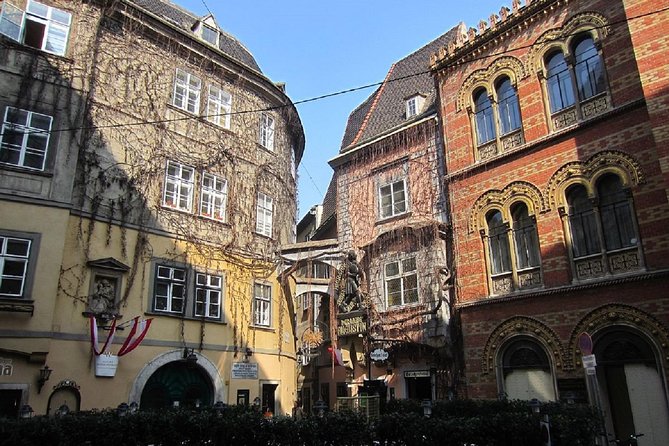
Bäckerstrasse is one of the most enjoyable parts of the route. Its old façades and interior courtyards offer a change from Vienna’s grand imperial image. Here, the city feels more intimate and slightly mischievous.
At Bäckerstrasse No. 2, look for the mural on the façade of the Hasenaus, or Hare House. It shows a wolf and a cow wearing spectacles while playing backgammon. That is not the sort of image you expect on a medieval building, which is exactly why it works so well as a puzzle stop.
The meaning is uncertain. The scene may have been part of a larger painting about medieval life, or it may represent the conflict between Protestants and Catholics. You do not need to settle the question to enjoy it. The image gives you a small visual mystery, and the app uses it to move the story along.
The Bäckerstrasse area also rewards a slow look at the architecture. No. 2 has a 17th-century tower, No. 8 was the Palace of Count Seilern from 1722, and No. 16 has an older façade. At No. 7, the Schwanenfeld Haus has a Renaissance courtyard with arcades and galleries.
The puzzle itself takes about five minutes, but this is a good place to wander slightly off the direct path. The game works best when you allow room for those small detours.
Stephansplatz and the Nails Tree
The route then reaches Stephansplatz, Vienna’s central square. You arrive by following a clue and solving another puzzle, then receive the instructions for the next location.
This part is less about a long stop and more about orientation. Stephansplatz is a useful point in the city because it connects several important streets and puts Vienna’s most famous church directly in front of you. The game gives you a reason to look around rather than simply cross the square.
Nearby, at the corner of Kärntner Strasse, you find Stock im Eisen, sometimes called Vienna’s Nails Tree. It is the middle section of a medieval tree trunk, placed on a pedestal about 1.5 meters high and surrounded by an iron ring with a dummy lock.
Hundreds of nails were hammered into the trunk over the years. The custom was meant to bring good luck, though the strange object was once blamed on Satan. It is a wonderfully peculiar piece of Vienna, and the game makes sure you do not walk past it without asking why it is there.
You get about 10 minutes at this stop, but you can stay longer before taking the next clue. That flexibility matters here because the surrounding streets can tempt you into shops, cafés, and side lanes.
More exploration games in Vienna:
- Vienna: Scavenger Hunt Self-Guided Tour
★ 4.7 · 83 reviews - Mystery rally Vienna: The scary city
★ 4.5 · 23 reviews - Fun & mobile scavenger hunt through Vienna
★ 4.5 · 17 reviews - Vienna: Freud, Mozart & Beethoven Exploration Game
★ 4.0 · 14 reviews
St. Stephen’s Cathedral and the best-known landmark
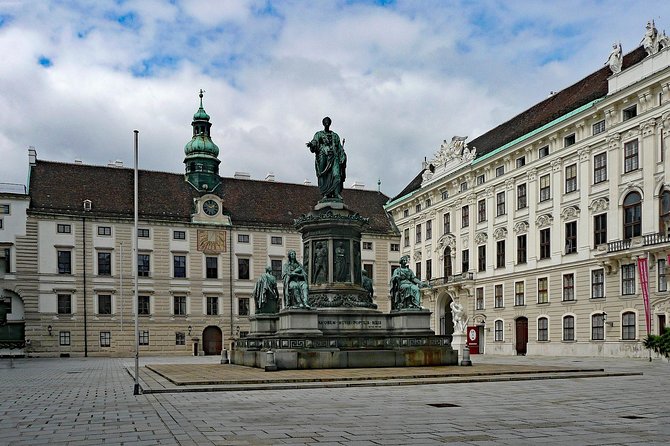
St. Stephen’s Cathedral, or Stephansdom, is the grand centerpiece of the route. The cathedral has roots reaching back to the 12th century and is one of Austria’s most important Gothic buildings.
The colored roof is the first thing most people notice. It rises about 38 meters and uses roughly 230,000 glazed tiles arranged in patterns. The roof includes the double-headed eagle associated with the Austrian Habsburg Empire, along with symbols for Vienna and the Republic of Austria.
The tower room contains 13 bells and offers a view across the city. The game does not include admission, so you will need to pay separately if you want to enter areas that require a ticket. The cathedral stop itself takes about 15 minutes, enough to examine the exterior and solve the challenge, but not enough for a thorough visit to every part of the building.
There is also a useful coffeehouse option nearby. Café Frauenhuber on Rauhensteingasse dates to 1746 and is considered Vienna’s oldest coffeehouse. Mozart and Beethoven reportedly played table music there for diners between 1782 and 1791. The café is known for a calm, unpretentious Viennese coffeehouse mood.
This is exactly the kind of pause the game allows. Stop for coffee, take your time, and resume when you are ready. You do not have to treat the experience like a race.
Albertina and the Habsburg setting
The next major stop is the Albertina, housed in the largest Habsburg residential palace within the Hofburg complex. The museum has been part of Vienna’s cultural life since 1805.
Its collections cover modern art, graphic art, architecture, and photography. The holdings include more than 50,000 drawings and over 1 million master prints, shown on a rotating basis. Works connected with Impressionism, Fauvism, German Expressionism, and the Russian avant-garde are part of the museum’s program. Monet’s The Water Lily Pond is one well-known work associated with the collection.
The game gives you about 10 minutes here and uses the building and its surroundings for another observation puzzle. Museum admission is not included. If you want to see the galleries properly, plan a separate visit and treat the game as a brief introduction to the building.
I like this pairing because it connects street exploration with Vienna’s imperial interiors. You can spot the palace from outside, solve the clue, then decide if the museum deserves a longer visit. The game does not try to replace the Albertina, and that is the right call.
Ending at the Hofburg Palace
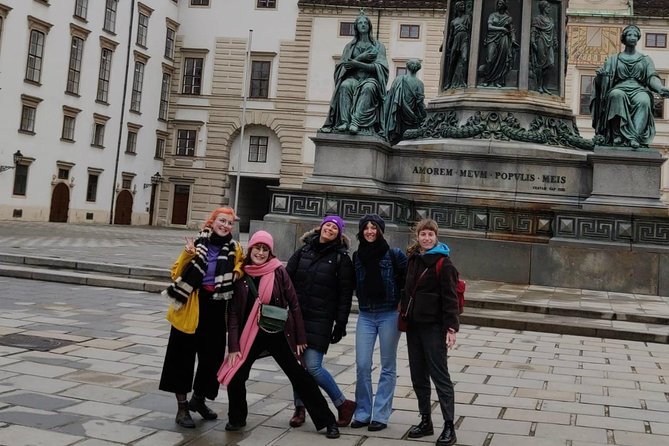
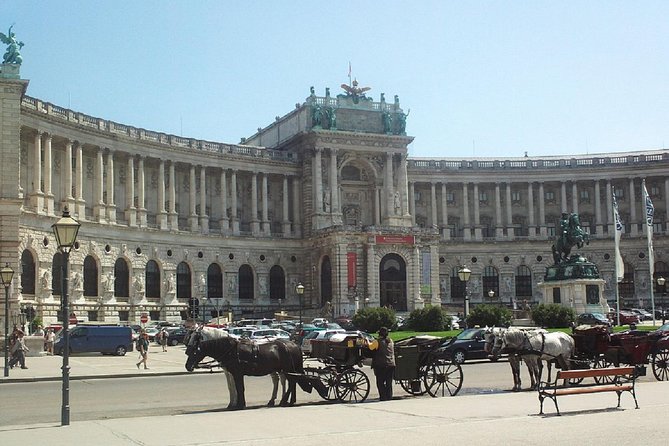
The final stop is the Hofburg, the former residence and seat of the Habsburg emperors until 1918. It remains a working center of government and is currently the home and workplace of Austria’s president.
The palace complex includes the Imperial Apartments, the Sisi Museum, the Silver Collection, and the Austrian National Library. The Hall of Ceremonies, built in the 19th century, is still used for Viennese balls.
The game ends here after one final challenge. You get about 10 minutes of game content at the stop, but the palace area can easily occupy much more of your time. Admission to the palace attractions is not included, so budget separately if you want to visit the interiors.
Ending at the Hofburg makes practical sense. You finish in a central part of Vienna, surrounded by museums, historic buildings, and routes to other sights. The experience does not force you into a return trip to the starting point.
How the app and puzzles work
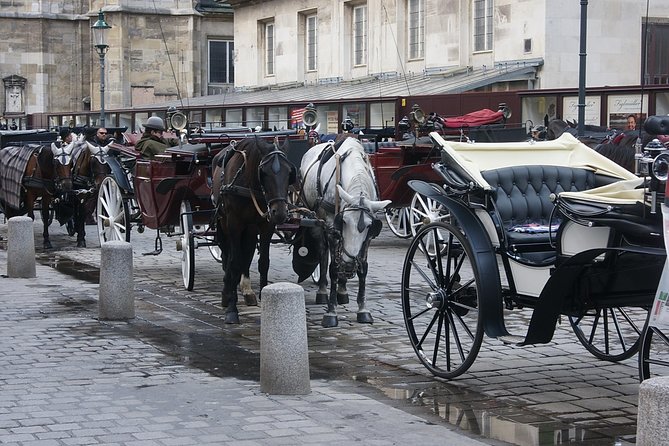
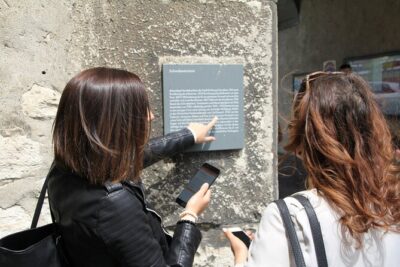
You play with your own smartphone, and audio stories are included. There is no physical guide waiting at the start, and the activity is private for your group. That means you can discuss the answers among yourselves without keeping up with strangers.
The questions are generally designed to be solved by looking carefully at the place around you. This gives the route a scavenger-hunt feel rather than a standard walking-tour rhythm. The story also connects the stops through the Great Plague theme and the history of the song about dear Augustin. The storyline adds a thread to what might otherwise be a series of disconnected sights.
You should type answers carefully. Exact wording, capitalization, or a missing connecting word has caused frustration for some players. The app setup has also been tricky for a few people, although customer support was able to sort out one reported problem within about 15 minutes.
My practical advice is to install and open the app before reaching Ruprechtskirche. Make sure your phone is charged, read each clue closely, and do not rush to enter an answer. If the app rejects a response that seems right, check spelling and phrasing first.
How much time should you allow?
The stated playing time is about 90 minutes. That is realistic if you move directly from stop to stop and spend only the suggested time at each location.
In real use, you may take much longer. The route passes cafés, churches, museums, historic streets, and major squares. One group stretched the activity across the day, stopping whenever they wished. That is not a flaw. It is one of the main reasons to choose this format.
The official playing hours run daily from 7:00 a.m. to 10:00 p.m. The experience is offered in English. It is near public transportation, and most people can take part. Service animals are allowed.
Price, group size, and value
At $7.23 per person, the game is priced well below most guided city walks. You are paying for the app, puzzles, audio material, and the route design, not for a guide’s live commentary or museum entry.
That price is especially good for a small private group. Kids play free, and group discounts are available. For groups larger than 15, you need to make multiple bookings.
The value depends on what you want. If you enjoy solving clues and finding details on your own, this is a low-cost way to add structure to an afternoon in Vienna. If you want detailed explanations of Gothic architecture, Habsburg politics, or plague history at every stop, the information may feel too light.
The 4.5 rating from 60 reviews reflects that split fairly well. The strongest praise centers on the route, the flexibility, the back streets, and the way the game reveals details people might otherwise miss. The main complaints concern the app and the limited amount of historical explanation.
Who should choose this Vienna game?
I would recommend it most strongly to:
- Families with children who lose interest during ordinary sightseeing
- Couples or friends who enjoy puzzles and self-guided walks
- Repeat visitors who want a different route through central Vienna
- Independent visitors who prefer to stop for coffee or museums
- Budget-conscious groups looking for a private activity
I would be more cautious if you dislike phone-based activities, want a live guide, or prefer a steady stream of historical facts. The puzzles are not described as highly difficult, so experienced escape-room players may find some answers easy.
The route is also not only about the plague. It uses the theme to connect Vienna’s medieval objects, churches, songs, and historic sites. You should book it for the playful city walk, not as a substitute for a specialist history tour.
Should you book The Great Plague Exploration Game?
Book it if you want Vienna to feel like a place to investigate rather than a checklist of famous buildings. The route gives you a reason to notice an old window, a strange mural, a nailed tree trunk, and the details around Stephansplatz. I especially like that you can pause for Café Frauenhuber, enter the Albertina, or linger at the Hofburg without losing the whole afternoon.
Skip it if you want a guide beside you, detailed historical narration, or included admission to the cathedral, Albertina, or Hofburg attractions. For $7.23, the risk is small, and free cancellation is available up to 24 hours before the start time. Just prepare your phone, accept that a few answers may require exact wording, and let the route lead you through Vienna at your own pace.
FAQ
How long does Vienna: The Great Plague Exploration Game take?
The game takes approximately 1 hour and 30 minutes if played directly. You can also pause, take breaks, have coffee, and continue later.
Is a physical guide included?
No. The experience is self-guided and requires your own smartphone. Audio stories are included.
Is the activity private?
Yes. Only your own group participates.
What language is offered?
The game is offered in English.
Where does the game begin?
It begins at St. Rupert’s Church, Ruprechtspl. 1, 1010 Vienna, Austria.
Where does the game end?
The game ends at the Hofburg in central Vienna.
Are children allowed to play for free?
Yes. Children are free.
Are entrance tickets included?
No. Admission is not included for St. Stephen’s Cathedral, the Albertina, or the Hofburg.
Can I stop during the game?
Yes. You can pause at any time, take a break, have coffee, and continue whenever you choose.
What happens if my group has more than 15 people?
You need to make multiple bookings for groups larger than 15 people.
Can I cancel for a full refund?
Yes, if you cancel at least 24 hours before the experience start time. Cancellations made less than 24 hours before the start time are not refunded.
Just added in Vienna
- Vienna: Austrian Wine Tasting Experience★ 4.2 · 2 reviews
- World War II History Vienna Old Town Private Walking Tour★ 4.8 · 9 reviews
- Vienna_ Meet Beethoven Life Private Guided Walking Tour★ 5.0 · 1 review
- Vienna: Wine Tasting Tour★ 4.8 · 61 reviews
- Vienna: Wine Tasting E-Bike Tour★ 4.9 · 46 reviews
- Vienna: Wine Tasting at Schönbrunn Palace★ 4.3 · 71 reviews
- Vienna: Winery and Wine Tasting Tour with a Wine Expert★ 5.0 · 5 reviews
- Vienna: Concert by the Vienna Baroque Orchestra★ 4.6 · 56 reviews
Exploration Games, compared.
Vienna Scavenger Hunt and Highlights Self Guided Audio Tour
Read our review →

Browse the lists this tour appears in