
Reviewed · HISTORICAL TOURS
Wilhering Abbey: Discover 875 years of history!
Quiet places still speak. Wilhering Abbey gives you a compact way to explore 875 years of Cistercian history, admire one of Europe’s finest rococo churches, and pause over coffee in a handsome courtyard. I especially like the museum’s seven-room structure and the easy access to the church, cloister, park, and abbey courtyard.
The $7 admission is good value if you take time with the exhibits rather than rush through them. The main drawback is the short 30-minute validity period after activation, so you need to visit during opening hours and keep an eye on the clock.
In This Review
- Key points to know before you go
- Why Wilhering Abbey is worth your time
- Seven rooms that connect the abbey’s story
- Two levels of information make the museum easier to use
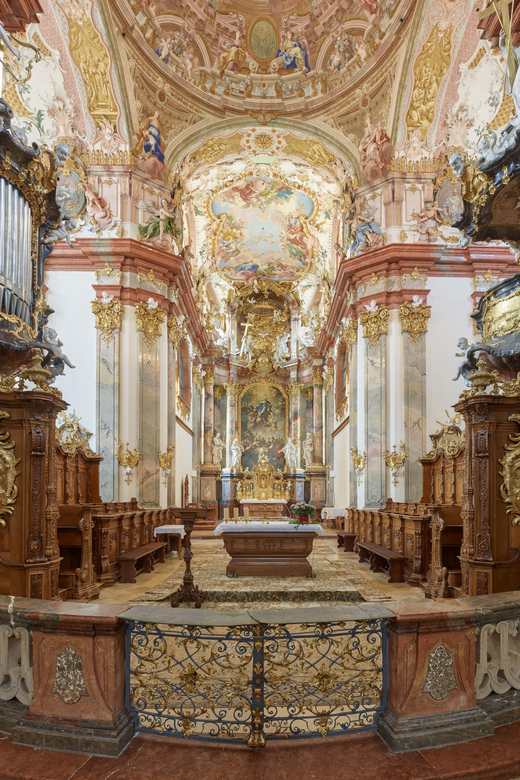
- The rococo collegiate church is the visual highlight
- Cloister, courtyard, and park: the slower side of the visit
- The Abbey Gate brings together the practical pieces
- Is $7 a fair price for 30 minutes?
- Who will enjoy Wilhering Abbey most?
- Timing your stop around opening hours
- Booking flexibility and practical details
- Should you book Wilhering Abbey?
- FAQ
- Where is Wilhering Abbey located?
- How much does admission to the museum cost?
- How long is the museum admission valid?
- What does the museum ticket include?
- Are the church and cloister included?
- Where do I enter the museum?
- Is Wilhering Abbey wheelchair accessible?
- Can I cancel my booking?
- Is the Abbey Café open to museum visitors?
Key points to know before you go
- Seven rooms, seven themes: The museum moves from Wilhering Abbey’s past to Cistercian spirituality, the motto ora et labora, and important figures connected with the abbey.
- A superb rococo church: The collegiate church is freely accessible, even though the museum requires admission.
- A visit with two speeds: Each room offers a quick overview, with extra material for anyone who wants more detail.
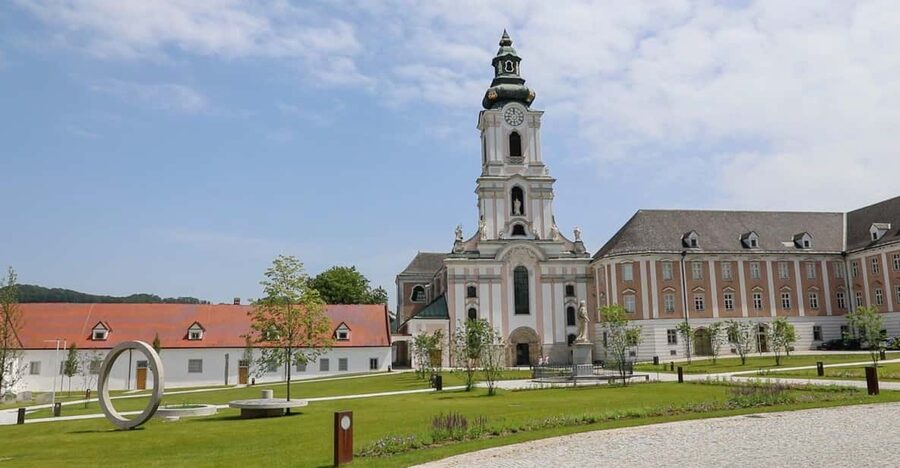
- A calm courtyard stop: The Stiftshof courtyard and Abbey Café give you a pleasant place to rest after the museum.
- Useful for families: Interactive features add a more playful layer for younger visitors.
- Good practical value: Admission costs $7 per person, and wheelchair access is available.
Why Wilhering Abbey is worth your time
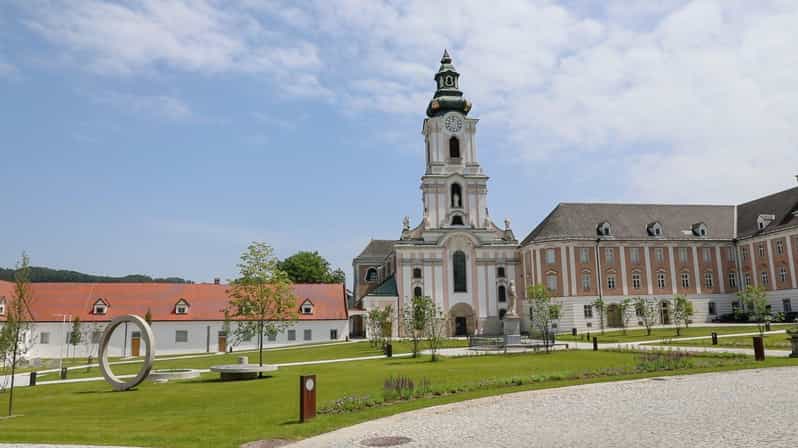
Wilhering Abbey is not only a museum. It is a working religious and cultural site where several parts of the complex can be visited without a museum ticket. You can enter the collegiate church, walk through the cloister, look around the abbey courtyard, and spend time in the park freely.
That matters because the $7 ticket buys you a focused museum experience rather than access to every corner of the property. You can shape the visit around your interests. If church interiors are your main reason for coming, the free church access may be enough. If you want context about the monks, the abbey, and Cistercian life, the museum adds the substance.
I like this arrangement. It keeps the visit flexible and lets you enjoy the site even if your schedule is tight. You can also pair the museum with a coffee, cake, or abbey snack instead of treating the experience as a quick look and leave.
The setting invites you to slow down. The stated aim is rest, reflection, and lingering, and that fits the layout. This is not a loud attraction built around spectacle. It is better suited to people who enjoy architecture, religious history, thoughtful displays, and a quiet pause during a day in Upper Austria.
More Linz trips:
- Linz: Harbor Cruise
★ 4.3 · 204 reviews - Customized Private Tour to Salzburg for Cruise Guests from Linz or Passau
★ 5.0 · 19 reviews - KZ Mauthausen Private Trip from Linz
★ 4.5 · 15 reviews
Seven rooms that connect the abbey’s story
The museum is organized into seven exhibition rooms, each with its own theme. You can treat the rooms as separate chapters, but together they explain how Wilhering Abbey developed and what life in a Cistercian monastery means.
The first major thread is the abbey itself. You learn about Wilhering’s long past and the forces that shaped the institution. The museum then turns toward Cistercian spirituality, giving you a clearer idea of the values behind monastic life.
The motto ora et labora, or prayer and work, receives special attention. This is useful context because it turns the abbey from a beautiful building into a place with a clear daily purpose. The church, cloister, work, hospitality, and connection with the surrounding area all make more sense when viewed through that idea.
The museum also highlights important personalities from the abbey’s past. These figures give the story a human scale. Instead of seeing only dates and architecture, you get reminders that Wilhering was shaped by individual people, decisions, beliefs, and work.
You should not expect a huge museum. Seven rooms make this a manageable stop, not an all-day commitment. The benefit is focus. You can learn the main story in a short visit, then decide if you want to spend extra time with particular topics.
Two levels of information make the museum easier to use
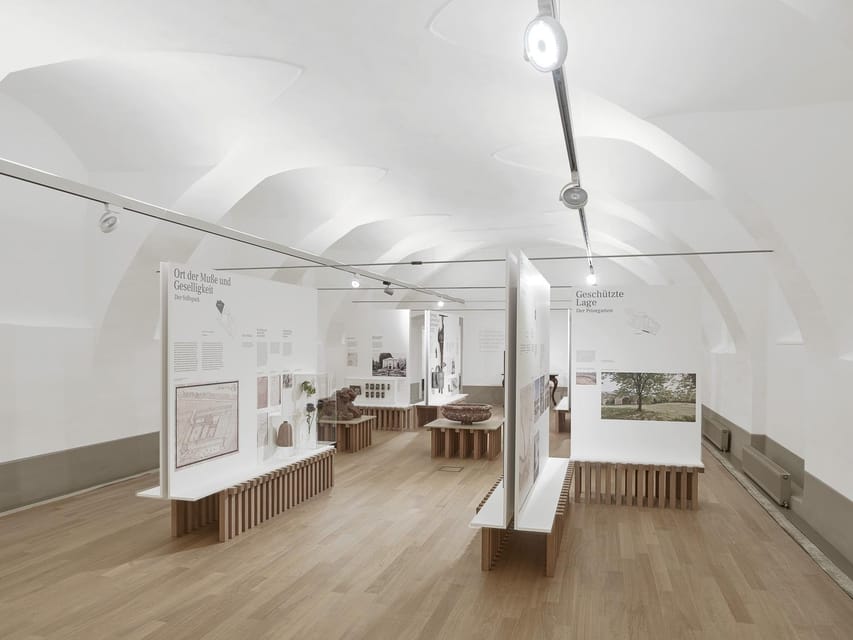
The exhibition is designed for different kinds of attention. Each room offers overview information first, giving you the basic point without demanding a long reading session.
If you want more, you can pursue additional information on selected subjects. This two-level system is one of the strongest parts of the museum because it avoids a common problem in historic sites: either too little explanation or walls of text that exhaust you before the final room.
I would use the overview material as a guide, then choose a few subjects for closer reading. That works especially well if you are visiting with family or with someone who prefers architecture to written history.
Younger visitors also have interactive elements to keep the experience active. The available information does not specify the exact format of every interaction, so it is best to think of these as added opportunities rather than a separate children’s program. Still, their presence makes the museum more approachable for families.
This flexible design also helps if your time is limited. You can get the main story in 30 minutes, but you are not forced to rush through every extra detail.
The rococo collegiate church is the visual highlight
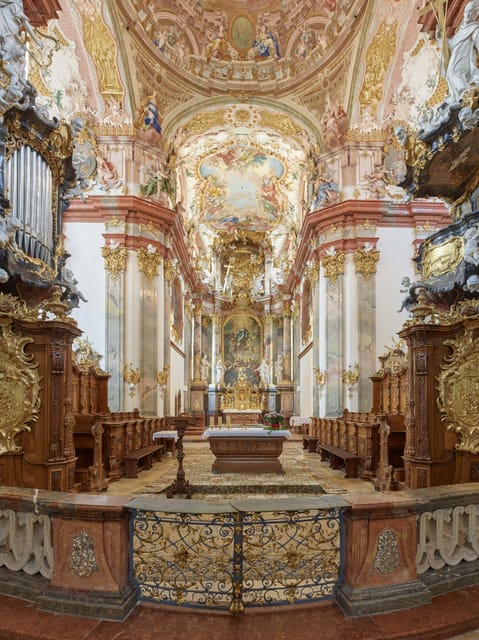
The collegiate church is likely to be the emotional high point of your visit. The church interior is described as one of Europe’s finest rococo examples, and its free access makes it an essential part of the experience.
Rococo interiors are known for movement, decoration, and a strong sense of visual drama. At Wilhering, you should give yourself time to look upward and around rather than treating the church as a quick doorway between the museum and café.
The contrast with the museum is part of the appeal. The exhibits explain the abbey’s religious life and history, while the church presents that world through architecture and decoration. One asks you to read and think. The other asks you to look and absorb.
Because church access is free, you can visit even if you decide not to buy museum admission. That makes Wilhering a particularly useful stop for anyone interested in sacred art and historic interiors but working with a limited budget.
Keep in mind that a church remains a religious space. A quiet approach is appropriate, especially if services or prayer are taking place. The supplied information does not give a service schedule, so checking current opening details before you arrive is sensible.
More History Tours in Linz:
- Vienna: Time Travel and Magic Vienna History Tour
★ 4.6 · 3,879 reviews - Vienna: World War II Historical Walking Tour
★ 4.8 · 1,772 reviews - Vienna Historic Center Small Group Walking Tour
★ 5.0 · 1,746 reviews - Time Travel-Magic Vienna History Tour Ticket
★ 4.5 · 1,099 reviews
Cloister, courtyard, and park: the slower side of the visit
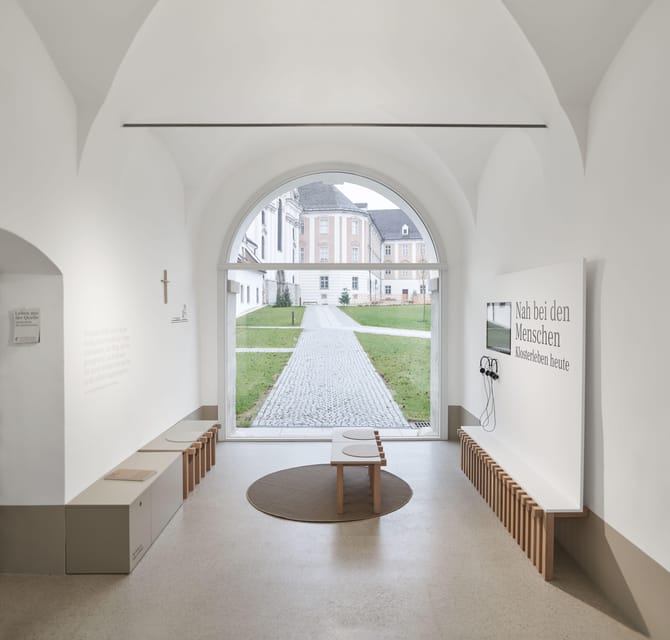
The cloister is also freely accessible. Cloisters often provide the clearest sense of a monastery’s rhythm because they link important parts of the complex and create a sheltered route for walking and reflection.
At Wilhering, the cloister is best paired with the museum rather than treated as a separate attraction. After learning about Cistercian life, the space gives you a physical setting in which to consider the abbey’s emphasis on prayer, work, and community.
The abbey courtyard adds another change of pace. It is connected with the Abbey Café, where you can order self-service cakes, coffee, drinks, and abbey snacks. The café prefers regional suppliers, which gives the stop a stronger local connection than a generic snack counter.
I would plan a little time for the courtyard instead of squeezing it in at the last moment. Even a short pause can make the visit feel less like a museum appointment and more like time spent at an active abbey.
The abbey park is also freely accessible. The information provided does not list specific garden features, so I would not visit expecting a formal garden tour. Think of it as an open area for a quiet walk or a few minutes outdoors.
The Abbey Gate brings together the practical pieces
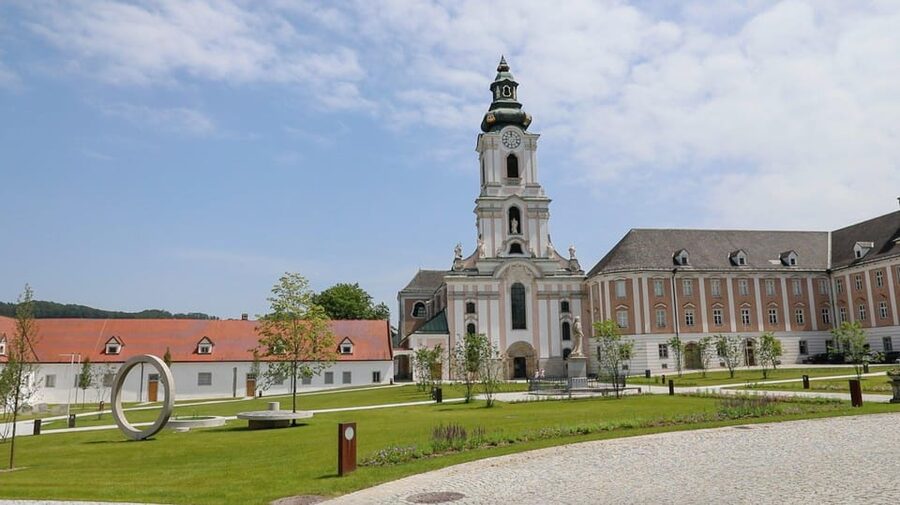
The museum entrance is located in the monastery gate or in the monastery café. Staff in the café can direct you, which is helpful because the complex includes several connected spaces rather than one obvious modern entrance.
The Abbey Gate occupies what was formerly the farm area of the abbey. It now serves as a place of arrival, hospitality, and meeting. That mix of old function and current use gives the entrance a useful role in the visit.
The same area includes the café, monastery store, Benedict Hall, and abbey museum. You can therefore handle several parts of your stop in one place: find the entrance, ask for help, buy admission, have refreshments, and browse local products.
The Monastery Store sells items including wine from the abbey’s leased vineyards near Krems. That detail gives the shop a clear regional connection. It is more interesting than a store filled only with generic souvenirs, though the available information does not list the full range of products or current prices.
Is $7 a fair price for 30 minutes?
At $7 per person, the museum offers solid value, especially when you consider that the church, cloister, courtyard, and park are freely accessible. The price is not simply for a short look inside a building. It supports access to seven themed rooms and the additional material within them.
The key question is how you use the 30-minute validity period. The ticket is valid for 30 minutes from first activation, so you should enter when you are ready to begin. Do not activate it while you are still arranging coffee, browsing the shop, or waiting for companions.
You can cover the central story in that period if you read the overview material and move at a steady pace. If you want to study every extra topic, the time may feel tight. In that case, make a plan: prioritize the rooms that interest you most, then continue with the church and outdoor areas at your own pace.
The free parts of the abbey improve the overall value. Even if the museum takes only half an hour, you can extend the visit with the rococo church, cloister, park, and café without paying another admission fee.
Who will enjoy Wilhering Abbey most?
I would recommend this experience to anyone who likes historic religious sites but does not want a large, tiring museum. It suits visitors who appreciate architecture, church art, monastic life, and a quiet setting.
It is also a good choice for families because the exhibition includes interactions intended to make the visit more entertaining for younger people. The two levels of information help mixed groups travel together without forcing everyone to read at the same pace.
The experience works well for people with limited time, too. A 30-minute museum visit can fit into a wider day in Upper Austria, while the free-access areas let you add time if the abbey captures your interest.
Wheelchair access is available, which makes the site more practical for many visitors. The information does not describe specific routes, surfaces, or accessible facilities, so anyone needing detailed access information should ask the abbey directly before arrival.
I would be less enthusiastic if you want a long guided tour, a packed program, or extensive entertainment. The listed experience is self-directed and compact. Its strength is its calm, focused approach.
Timing your stop around opening hours
The museum can only be visited during opening hours. Current hours are provided through the abbey’s homepage, so check them before setting out. This is especially important because the church and outdoor areas may not follow exactly the same access pattern as the museum.
Once you arrive, ask the café staff if you are unsure where to begin. The entrance arrangement is practical, but it may not be immediately obvious to someone seeing the complex for the first time.
A sensible order is:
- Start at the monastery gate or café and get oriented.
- Visit the seven-room museum while your 30-minute admission is active.
- Step into the collegiate church and take time with the rococo interior.
- Walk through the cloister and abbey courtyard.
- Finish with the park or a café stop.
You can change that order, of course. If the church is your priority, begin there while you wait for the museum entrance. If you are arriving close to closing time, ask staff which areas remain open and how best to use your time.
Booking flexibility and practical details
The experience offers free cancellation up to 24 hours in advance for a full refund. You can also reserve now and pay later, which helps if your Upper Austria plans are still changing.
The ticket is valid for 30 minutes from first activation. That is the most important practical detail to remember. The museum entrance is at the monastery gate or monastery café, and café staff can help you locate it.
The experience is wheelchair accessible. The available information does not state a specific tour language, so you should confirm language support with the provider if that matters to you.
One verified booking from Germany, dated May 26, 2024, gave the experience five out of five and praised the impressive complex, its story, and the friendly staff. The overall rating is 4.6 from five reviews. That is a small sample, so I would treat it as encouraging rather than final proof, but it supports the strongest practical point: the site combines a worthwhile setting with helpful service.
Should you book Wilhering Abbey?
Book it if you want a short, affordable cultural stop with real architectural weight. The $7 museum ticket gives you seven connected themes, while the free church, cloister, courtyard, and park make the full visit more generous than the price suggests.
I would especially choose Wilhering if you enjoy quiet religious buildings, rococo decoration, and museums that let you control the amount of information you read. The Abbey Café is another reason to linger, particularly if you like pairing a historic site with regional food and drink.
Skip the museum ticket if you only have a few minutes or if you mainly want to see the church. Since the church and several outdoor areas are free, you can still have a worthwhile stop without buying admission.
For most visitors with enough time to use the 30-minute museum ticket properly, Wilhering Abbey is an easy recommendation. Arrive during opening hours, start the museum only when you are ready, and leave room for the church and courtyard afterward.
FAQ
Where is Wilhering Abbey located?
Wilhering Abbey is in Upper Austria, Austria.
How much does admission to the museum cost?
Admission costs $7 per person.
How long is the museum admission valid?
The museum admission is valid for 30 minutes from first activation.
What does the museum ticket include?
The ticket includes admission to the Museum of Wilhering Abbey.
Are the church and cloister included?
The collegiate church and cloister are freely accessible. The abbey courtyard and abbey park are also free to enter.
Where do I enter the museum?
The museum entrance is in the monastery gate or in the monastery café. Staff at the café can help you find the correct entrance.
Is Wilhering Abbey wheelchair accessible?
Yes, the experience is wheelchair accessible.
Can I cancel my booking?
Yes. You can cancel up to 24 hours in advance for a full refund.
Is the Abbey Café open to museum visitors?
The Abbey Café offers self-service cakes, coffee, drinks, and abbey snacks. The available information advises checking the abbey’s opening hours before visiting the museum.
Just added in Linz
- Vienna: Private tour Mauthausen and Linz★ 4.1 · 3 reviews
- Vienna: Private Tour Mauthausen and Linz★ 5.0 · 5 reviews
- CITY QUEST LINZ: uncover the secrets of this city!★ 4.5 · 6 reviews
- Private one way transfer from Linz to Cesky Krumlov★ 5.0 · 1 review
- Linz harbour tour by boat★ 5.0 · 1 review
- Private day trip from Linz to Cesky Krumlov and back★ 5.0 · 1 review
- Linz Old Town Highlights Walking Tour with Pöstlingbergbahn★ 5.0 · 1 review
- Linz Private Walking Tour★ 4.8 · 11 reviews
Historical Tours, compared.
Vienna Historic Center Small Group Walking Tour
Read our review →
Skip-the-Line Schonbrunn Palace Guided Tour and Vienna Historical City Tour
Read our review →
Vienna Mozart Concert in Historical Costumes at the Musikverein
Read our review →
Browse the lists this tour appears in