
Reviewed · CLASSICAL CONCERTS AND OPERA
Vienna Private Walking Tour including State Opera
Vienna packs centuries into a walk. This private three-hour tour links Roman Vindobona, Habsburg power, classical music, wartime history, and the city’s grandest streets. I like the private format, which lets your group of up to 15 set the pace, and I like the broad route from the State Opera to Stephansplatz. The main concern is the unclear Opera visit, since some bookings have included only the lobby or required a separate fee.
You meet at Stephansplatz 8A, near Vienna Cathedral, and the tour is offered in English or German. I also like the chance to hear the city explained as one connected story rather than as a string of disconnected monuments. Still, the mixed feedback about one guide’s political and historical comments is serious, so I would confirm the guide and Opera arrangements before paying.
In This Review
- Key points about this Vienna walking tour
- Starting at Stephansplatz, Vienna’s great city center
- The State Opera and Vienna’s musical identity
- Mozart, the Habsburgs, and imperial Vienna
- Michaelerplatz and the layers beneath Vienna
- Graben, Peterskirche, and the road to Stephansdom
- Vienna’s wars, republic, and difficult memories
- Guide quality and the private group format
- Is $323 a fair price for three hours?
- Who should book this Vienna walk?
- Final call: book only after confirming the Opera
- FAQ
- How long is the Vienna Private Walking Tour?
- Where does the tour meet?
- Is the tour private?
- What languages are available?
- Is a professional guide included?
- Is the State Opera included?
- Are entrance fees included?
- What sights are covered?
- What should I bring?
- Is the tour suitable for people with mobility impairments?
- What is the price?
- Can I cancel the tour?
Key points about this Vienna walking tour
- State Opera is the opening highlight: Learn about the former Vienna Court Opera, famous directors, and its role in the city’s musical life.
- The route covers Vienna’s central core: See the Mozart Monument, Hofburg, Michaelerkirche, Graben, Peterskirche, and Stephansdom.
- The history reaches from Roman Vindobona to the Second Republic: This is more than an imperial sightseeing walk.
- The group is private: One price covers up to 15 people, which can be good value for a family or small group.
- Opera access needs careful checking: The published description says a visit is included, but actual access has been described as only the lobby, with at least one booking requiring an extra payment.
- The tour is not suited to mobility impairments: Expect three hours on foot over central Vienna streets.
Starting at Stephansplatz, Vienna’s great city center
Although the tour begins at Stephansplatz 8A, the route’s advertised focus opens at the State Opera. That means you should check the exact meeting instructions carefully before setting out. Vienna’s center is compact, but a wrong corner or a rushed crossing can make the start needlessly awkward.
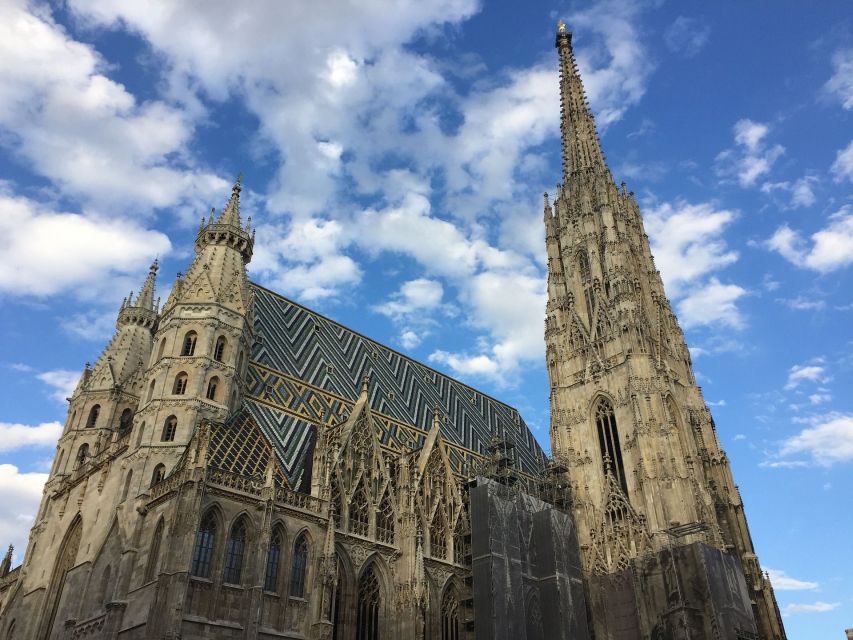
Stephansplatz is one of the best places to begin understanding Vienna. Stephansdom, or St. Stephen’s Cathedral, dominates the square with its Roman-Gothic design and great height. The building is described as one of the tallest churches in the world, and its scale gives the city center a useful sense of proportion. I would take a moment here before the walking begins, because the cathedral helps explain how religious authority once shared space with imperial power.
The tour is private, so you are not joining a large public group. For a family, a group of friends, or a company of colleagues, that can make the three hours feel more personal. You can ask why a street matters, pause to look at a façade, or request more attention to music, architecture, or political history.
The trade-off is price. The group rate is $323 for up to 15 people. A full group pays about $21.53 per person, while two people effectively pay $161.50 each. That is reasonable for a private guide if you fill most of the places, but expensive for a couple unless personalized guiding is a priority.
More Classical Concerts in Vienna
- Vienna: Vivaldi’s Four Seasons Concert in Karlskirche
★ 4.7 · 14,951 reviews - Vienna: Classical Concert in the World-Famous Musikverein
★ 4.6 · 6,673 reviews - Vienna: Classical Concert at St. Stephen’s Cathedral
★ 4.1 · 4,177 reviews
The State Opera and Vienna’s musical identity
The State Opera is the tour’s most important promise and the detail you should clarify first. The building dates from the 1860s, when it was known as the Vienna Court Opera. Its name changed in 1920, during the formation of the early Austrian Republic.
That name change gives your guide a natural way to explain Vienna’s shift from imperial capital to republic. The Opera was not simply a performance hall. It reflected the court, the Habsburg monarchy, and the city’s claim to be one of Europe’s great centers of classical music.
The program connected with the Opera includes works such as La Traviata, La Clemenza di Tito, and Verdi’s Don Carlo. The institution has also been led by figures such as Gustav Mahler, Herbert von Karajan, and Claudio Abbado. Even if you do not attend a performance, those names help you see the building as a working part of Vienna’s culture rather than a decorative monument.
The description says the tour visits the State Opera, but you should not assume that means a full backstage or auditorium tour. One booking described the Opera stop as a visit to the lobby only. Another account said the Opera tour had to be booked and paid for separately, despite the way the experience was presented.
That is the biggest practical warning here. Ask two direct questions before booking:
- Does the price include any Opera admission?
- Does the visit go beyond the lobby?
The answer may affect the value more than the walking route itself. If you receive only a lobby introduction, you are paying mainly for the city tour and guide. That can still be worthwhile, but it is not the same as a full Opera house tour.
Mozart, the Habsburgs, and imperial Vienna
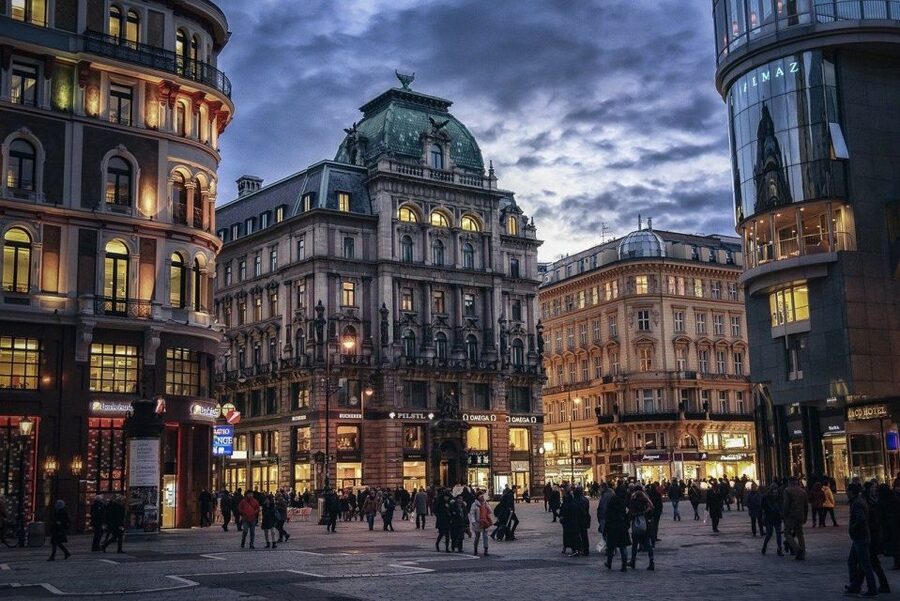
From the Opera, the route takes in the Mozart Monument and the grand façades of the Art History Museum and Hofburg. These stops place Vienna’s musical fame beside its imperial power.
The Mozart Monument offers a natural entry point into the city’s musical story. Vienna’s connection to Wolfgang Amadeus Mozart is well known, but the tour also includes Josef Haydn, Ludwig van Beethoven, Franz Schubert, Johann Strauss the elder and younger, Johannes Brahms, and Gustav Mahler. You get a wider picture here: Vienna’s music was not built around one famous composer.
The Hofburg was the opulent home of the Habsburg Empire for centuries. Its buildings spread through the central city, making the old imperial government feel less like a single palace and more like an entire district. I like this part of the walk because a guide can connect the architecture to the political systems that once operated inside it.
The tour is designed to cover both the Holy Roman Empire and the later Austro-Hungarian Empire. Those are large subjects, and three hours is not enough for a full political history. Still, the route gives you a useful framework: Roman beginnings, medieval growth, Habsburg expansion, imperial ceremony, and the eventual arrival of republican Austria.
You should expect a brisk overview rather than a specialist seminar. If you already know Vienna well, the value will depend heavily on the guide’s ability to add fresh detail. If this is your first visit, the wide historical sweep can help you understand what you see for the rest of your stay.
Michaelerplatz and the layers beneath Vienna
Michaelerplatz brings several periods together in one compact area. You pass through the Michaelertor gate and see Michaelerkirche, or St. Michael’s Church, which served for years as the official church of the Emperors.
The square also contains ancient Roman ruins, remains of medieval walls, and remnants of the old Burg Theatre. This is one of the best parts of the route for showing how Vienna was built in layers. You do not need to leave the center to move from Roman military history to medieval fortification and imperial culture.
The reference to Roman Vindobona gives the tour an early starting point. Vienna did not begin as a Habsburg capital. Its central story reaches back to the Roman settlement, then moves through medieval walls and dynastic rule. I appreciate this ordering because it prevents the city from being reduced to palaces and waltzes.
The route also touches on Richard the Lionheart and the Roman origins of Graben Street. The Graben, or Der Graben, is one of central Vienna’s best-known streets. The tour connects it to the Roman era and to Richard’s entry into the city, giving a busy modern shopping street an older political story.
Because the walk is in the historic center, you will be moving through active city streets rather than a quiet museum setting. Comfortable shoes are essential. The experience is specifically not suited to people with mobility impairments, and you should take that warning seriously for a three-hour walk.
More Walking Tours in Vienna
- Vienna: Guided Walking Tour of City Center Highlights
★ 4.7 · 4,989 reviews - Vienna: Vienna Central Cemetery Guided Walking Tour
★ 4.8 · 3,307 reviews - Vienna: Guided Walking Tour of City Highlights & Hidden Gems
★ 4.9 · 2,180 reviews - Vienna: Viennese Underworld Guided Walking Tour
★ 4.7 · 1,865 reviews
Graben, Peterskirche, and the road to Stephansdom
Peterskirche, or St. Peter’s Church, adds another religious landmark to the route. The church is described as having been present since the fourth century, which reinforces the long continuity of Vienna’s central district.
The route then reaches Stephansplatz and Stephansdom. Ending near the cathedral makes practical sense, since you finish at one of the city’s clearest orientation points. From here, you can continue exploring central Vienna on your own, although no onward plan is included in the experience.
I would pay attention to how the guide handles the churches. Their value is not only in the façades. They help show how Christianity, imperial ceremony, and urban growth shaped the center over many centuries. A good explanation should connect the buildings without turning the walk into a list of dates.
The route covers a lot: Opera, Mozart, museums, Hofburg, an imperial church, Roman ruins, medieval walls, Graben, Peterskirche, and the cathedral. That range is its strength, but it also creates a pacing issue. Three hours can feel short when every stop deserves time. One positive account described the tour as lively and said the guide allowed time to look around. That is exactly the balance you want: enough explanation to make the sights meaningful, but not so much talking that you never get to see them.
Vienna’s wars, republic, and difficult memories
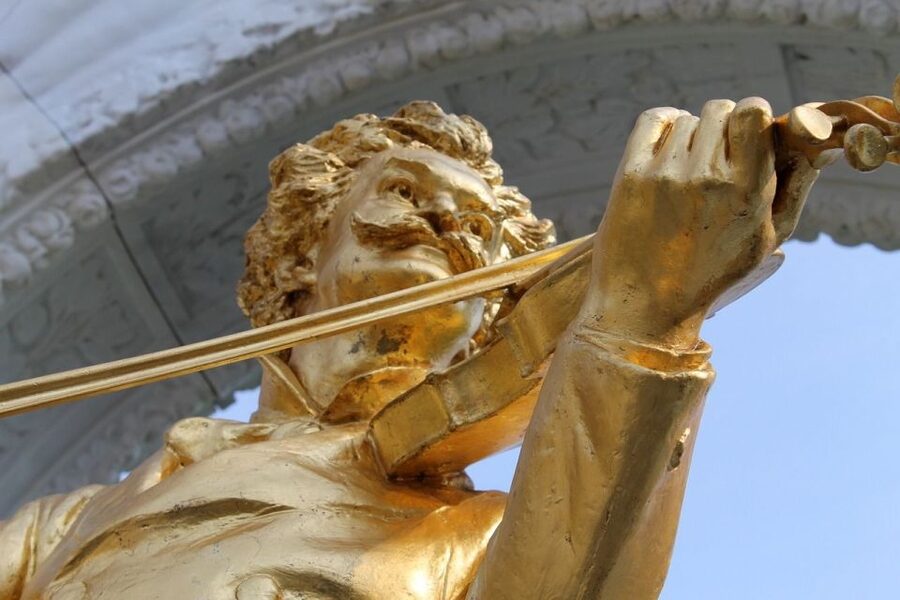
The tour also promises discussion of the World Wars and the birth of the Second Republic. This is important because Vienna’s imperial image can hide the city’s more difficult twentieth-century story.
The period after the Habsburg monarchy brought major political change. The early Austrian Republic was forming when the Opera’s name changed in 1920, and the Second Republic followed the upheavals of the World Wars. A strong guide should explain these transitions with care and clear language.
The route includes the Jewish quarter, according to one account of the experience. This can be an important part of the walk, but it requires precise historical wording. The systematic murder of Jewish people during the Holocaust should never be reduced to vague phrases about people simply dying in camps. If this subject is part of your tour, you deserve a guide who treats it with accuracy and respect.
One highly negative account described a guide named Franziska Pfisker making offensive comments about foreigners, Jews, political figures, and social housing. I cannot know how representative that guide’s performance was, but the complaint is serious enough to affect my recommendation. Ask who will lead your tour if that information is available, and consider contacting the provider in advance to state that you expect respectful treatment of twentieth-century history.
This is also where the private format cuts both ways. A private group can ask questions and steer the discussion. It can also leave you more exposed to one guide’s personal opinions. The guide’s tone matters as much as the route.
Guide quality and the private group format
The strongest positive account described the guide as very competent and said the three hours passed quickly. Another said the guide was pleasant and allowed time to take in the sights. Those are the qualities I would want here: clear historical structure, a relaxed pace, and enough room for questions.
The tour is available in English and German. If you book in English, confirm that the guide assigned to you is comfortable explaining complex subjects in that language. The same applies to German. A walking tour built around history needs more than directions and dates.
A private group of up to 15 is a useful size for flexibility, but 15 people is not especially small on narrow central streets. If your group is near the maximum, ask how the guide manages stops and questions. With only two or three people, you may receive a much more conversational experience, but the per-person cost rises sharply.
I would also use the booking notes to set priorities. Tell the guide if you care most about the Opera, music, Habsburg politics, architecture, Roman Vienna, or twentieth-century history. The route contains enough material to support different interests, but the guide cannot give equal weight to everything in three hours.
Is $323 a fair price for three hours?
The $323 group price makes the most sense when shared by a larger party. At 10 people, the cost is $32.30 per person. At 15, it drops to about $21.53. For a family or group of friends already planning to see these sights, that can be a fair price for a dedicated guide.
For one or two people, the value is less obvious. You are paying for privacy and a broad historical explanation, not for a long list of included admissions. Entrance fees are not included, and the Opera arrangement may involve a separate payment.
I would compare this with the value of booking a general central Vienna walking tour and arranging the Opera separately. If the Opera visit is only a lobby stop, the private format and guide quality become the main reasons to choose this experience.
Free cancellation is available up to 24 hours before the tour, and you can reserve now and pay later. Those policies make it easier to hold a place while you confirm the Opera details. They do not, however, solve the question of what you will actually enter.
Who should book this Vienna walk?
I would recommend this tour most readily to a group of friends or family members who want a private introduction to central Vienna. It suits you if you enjoy connecting monuments to political history and musical culture rather than spending the whole morning inside one museum.
It is also useful for a first visit, especially if you want an orientation walk that covers the city’s main central sights. The route can give you a framework for later visits to the cathedral, Hofburg, museums, or Opera.
I would hesitate if your main goal is a full State Opera tour. The available information does not make that access clear, and the practical accounts point to a lobby-only visit or a separate Opera booking in some cases.
I would also avoid booking without clarification if you are particularly interested in sensitive twentieth-century history. You should be confident that your guide will present the World Wars, the Holocaust, immigration, and Austrian politics with care and restraint.
Final call: book only after confirming the Opera
This is a potentially useful private introduction to Vienna, with a strong central route and a wide historical range. I especially like the links between Roman Vindobona, Habsburg rule, classical music, the Opera, and the modern Austrian Republic.
My recommendation is conditional. Book it if you value a private guide, can share the $323 cost across a group, and are satisfied after confirming exactly what the Opera visit includes. If you are booking mainly for the Opera interior, choose another arrangement unless the provider gives you clear written confirmation.
Also ask about the assigned guide. The positive reports describe a capable, personable leader, but the complaint involving Franziska Pfisker raises a real concern about tone and historical accuracy. Vienna deserves a thoughtful guide, and you should insist on one.
FAQ
How long is the Vienna Private Walking Tour?
The tour lasts three hours.
Where does the tour meet?
The meeting point is Stephansplatz 8A, 1010 Vienna, Austria.
Is the tour private?
Yes. It is offered as a private group experience for up to 15 people.
What languages are available?
The tour is available in English and German.
Is a professional guide included?
Yes. A local professional guide is included.
Is the State Opera included?
The experience description includes a visit to the State Opera, but the exact access needs confirmation. One booking described the visit as only the lobby, while another account said an Opera tour required separate booking and payment.
Are entrance fees included?
No. Entrance fees are not included in the stated price.
What sights are covered?
The route includes the State Opera, Mozart Monument, Art History Museum façades, Hofburg, Michaelerkirche, Roman ruins, medieval walls, the old Burg Theatre remains, Graben, Peterskirche, Stephansplatz, and Stephansdom.
What should I bring?
Bring comfortable shoes. The experience involves three hours of walking.
Is the tour suitable for people with mobility impairments?
No. The experience is specifically marked as unsuitable for people with mobility impairments.
What is the price?
The listed price is $323 per group of up to 15 people.
Can I cancel the tour?
You can cancel up to 24 hours in advance for a full refund. You can also reserve now and pay later.
Just added in Vienna
- Vienna: Austrian Wine Tasting Experience★ 4.2 · 2 reviews
- World War II History Vienna Old Town Private Walking Tour★ 4.8 · 9 reviews
- Vienna_ Meet Beethoven Life Private Guided Walking Tour★ 5.0 · 1 review
- Vienna: Wine Tasting Tour★ 4.8 · 61 reviews
- Vienna: Wine Tasting E-Bike Tour★ 4.9 · 46 reviews
- Vienna: Wine Tasting at Schönbrunn Palace★ 4.3 · 71 reviews
- Vienna: Winery and Wine Tasting Tour with a Wine Expert★ 5.0 · 5 reviews
- Vienna: Concert by the Vienna Baroque Orchestra★ 4.6 · 56 reviews
Classical Concerts and Opera, compared.
Vivaldi’s Four Seasons Concert in Karlskirche
Read our review →
Classical Concert in the World-Famous Musikverein
Read our review →
Classical Concert in St. Anne’s Church (Annakirche)
Read our review →
Browse the lists this tour appears in