Reviewed · TOURS
Small Group Tour; The Balkans & Central Europe – Tirana to Vienna
Fourteen days, eight countries, one moving classroom. This ambitious overland trip links Albania, Kosovo, Montenegro, Bosnia and Herzegovina, Serbia, Hungary, Slovakia, and Austria in one carefully packed route. I like the maximum group size of 10, which should make border crossings and city walks easier than on a large coach tour. I also like the mix of famous sights and less expected stops, from Kruja’s old bazaar to Subotica’s Art Nouveau streets.
The main tradeoff is pace. You will cover a great deal of ground, and several city visits last only an hour or two. The $4,876.33 price is reasonable only if you value private transport, 3-star hotels, breakfasts, a tour leader, and the convenience of handling eight countries without organizing the route yourself.
In This Review
- What makes this route worth considering
- A strong opening in Kruja and Prizren
- Kosovo’s bazaars, monastery, and wine country
- Food and northern Albania before the Adriatic
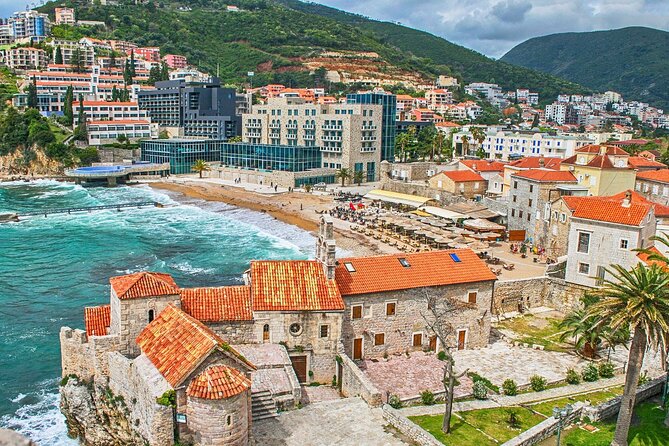
- Montenegro’s coast: Sveti Stefan, Budva, and Kotor
- Mostar and Blagaj: dramatic views with a difficult past
- Serbia by the Drina and Danube
- Subotica, Budapest, and the shift north
- Győr, Bratislava, and the final handoff in Vienna
- What the $4,876.33 price really covers
- Who will enjoy this fast-moving journey
- Should you book this Tirana to Vienna tour?
- FAQ
- How long is the tour?
- How many people can join the group?
- What accommodation is included?
- Is breakfast included?
- Is transportation included?
- Are lunches and dinners included?
- Where does the tour start and finish?
- Is travel insurance included?
What makes this route worth considering
- Kruja begins the trip with Albanian character: Its medieval bazaar and hilltop castle offer a strong start, with handmade carpets, jewelry, and mountain views.
- Prizren and Sarajevo bring layered cultures together: Mosques, churches, synagogues, Ottoman streets, Austro-Hungarian buildings, and war-era reminders all appear within compact old towns.
- The scenery changes constantly: You move from Albanian mountains and Adriatic viewpoints to the Drina River, Danube cities, vineyards, and Central European squares.
- The small group keeps logistics manageable: With no more than 10 people and private transportation, the journey should feel more flexible than a standard bus tour.
- The final stretch shifts into grand European cities: Budapest, Bratislava, and Vienna provide a polished finish after the rougher edges and strong local character of the Balkans.
A strong opening in Kruja and Prizren
The tour starts at 9:00 a.m. with pickup in Tirana, then heads to Kruja, one of Albania’s most important historic towns. Set on rocky ground about 560 meters above sea level, Kruja is closely tied to Albanian resistance against Ottoman expansion in the 15th century.
I would give the town more than a passing glance. The Medieval Old Bazaar is the first real treat, with narrow lanes, wooden buildings, carpets, jewelry, and handmade souvenirs. You have about an hour here, enough for a walk and some shopping, though not enough for leisurely browsing every stall.
Kruja Castle adds a more dramatic setting. The tour leader takes you along lesser-used paths associated with local escape routes during periods of siege. The castle visit lasts about an hour, and admission is included. Expect some uneven ground and a hilltop setting, but the payoff is a clear sense of place rather than another quick photo stop.
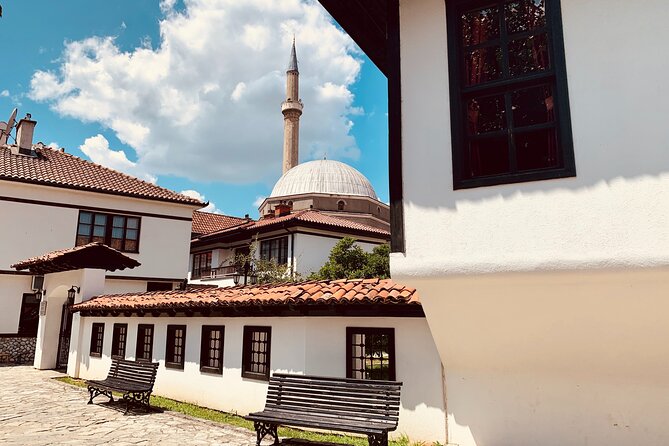
After crossing into Kosovo, you reach Prizren. Its river, stone bridges, elegant old houses, Ottoman buildings, and lively food scene make it one of the most appealing towns on the route. The short city visit includes the Sinan Pasha Mosque, known for its colorful arabesque decoration, and Prizren Fortress, which sits above town and gives you a broad view.
The schedule leaves a free afternoon in Prizren. That matters. This is one of the few points where you can wander without being moved immediately to the next attraction. If your trip falls in August, the Dokufest short film festival can add a strong international feel to the town, although the tour does not include festival admission.
Other trips worth a look in Austria:
- Vienna: Vivaldi’s Four Seasons Concert in Karlskirche
★ 4.7 · 14,951 reviews - Vienna: Spanish Riding School Training
★ 3.9 · 9,281 reviews - Vienna: Skip-the-cashier-desk-line Giant Ferris Wheel Ride
★ 4.5 · 7,859 reviews
Kosovo’s bazaars, monastery, and wine country
Day two continues through Gjakova, Decan, and Rahovec. Gjakova’s old bazaar was damaged several times during regional conflicts, then rebuilt. Its shops sell local crafts, and the hour here works well for a meal or a short look at the traditional market streets.
The Monastery of Decan offers a sharp change of mood. Its pale exterior is easy to recognize, but the real reason to visit is inside: 14th-century frescoes linked to the Byzantine painting tradition. Orthodox monks still live there and produce food such as cheese. The visit lasts about an hour and admission is listed as free.
The final stop is the Rahovec Valley, a wine-producing area where grapes have been cultivated since ancient times. Vineyards sit on gentle hills between 350 and 520 meters in elevation. The tour gives you about an hour in the area, but the details do not promise a formal winery tasting, so do not book this trip mainly for wine tourism.
The first three days reveal the route’s best quality: you are not simply ticking off capitals. You see working towns, religious sites, farming areas, and old commercial districts alongside major landmarks.
Food and northern Albania before the Adriatic
Day three returns to Albania for a visit to Mrizi i Zanave, an agricultural tourism project near Lezhe. You walk around the farm, hear how the family business created employment for more than 400 people nearby, and see how former communist buildings were reused to store local products.
This is one of the tour’s most useful cultural stops because it connects food with modern rural life. You have free time to eat a traditional lunch or buy fresh produce, but lunch is not included. Budget separately for it.
Later, Shkodra introduces northern Albania. The city has been inhabited for around a thousand years and takes its name from the great lake shared by Albania and Montenegro. Rozafa Castle offers views toward the lake and the three rivers that flow toward the Adriatic.
Shkodra also has strong Venetian influence. If you visit in February, the city’s carnival may be taking place, and the masks are handmade locally. That is a seasonal bonus, not something you should expect on every departure.
Montenegro’s coast: Sveti Stefan, Budva, and Kotor
Day four moves into Montenegro. The viewpoint near Sveti Stefan is a quick stop, just 30 minutes, but it is perfectly suited to the famous coastal view. The island is now an exclusive residential resort and cannot be visited as part of this tour, so think of this as a photograph stop rather than an island excursion.
Budva follows, with a one-hour visit split between its modern section and old town. The newer part has offices, shopping, restaurants, and bars, while the older center contains churches and medieval streets. The contrast is useful: you see how a coastal resort grows around its historic core.
Kotor is the day’s major sight. The UNESCO-listed old town is a maze of narrow cobblestone lanes, designed in part to confuse attackers. You visit St. Luke’s Church, which has special meaning locally as a symbol of unity. One hour is enough for an orientation walk, but not enough for a slow exploration of every lane or a climb up the steep fortifications above town.
This is an important point about the itinerary. The tour gives you a good first look at Kotor, but it does not turn you into an expert on the bay. If Kotor is your main reason for visiting Montenegro, consider adding private time before or after the group journey.
A completely different kind of day:
- Vienna: Schönbrunn Palace & Gardens Skip-the-Line Tour
★ 4.7 · 7,739 reviews - Vienna: Light of Creation Votive Church Immersive Light Show
★ 4.8 · 6,779 reviews - Vienna Spanish Riding School Guided Tour
★ 4.7 · 6,765 reviews - Vienna: Classical Concert in the World-Famous Musikverein
★ 4.6 · 6,673 reviews
Mostar and Blagaj: dramatic views with a difficult past
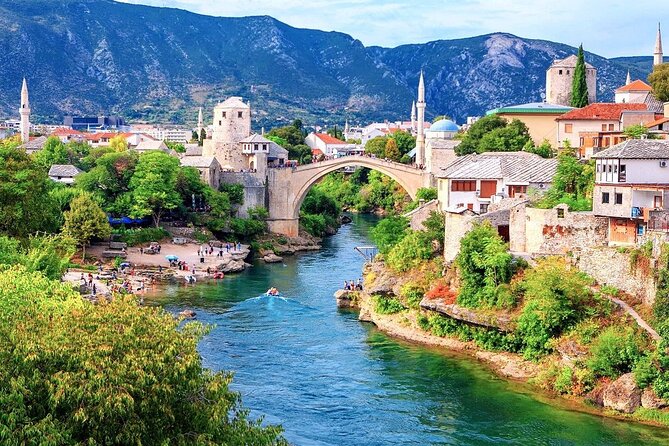
Crossing into Bosnia and Herzegovina, you reach Mostar on day five. Stari Most, the famous Old Bridge, is the centerpiece. Built in the 16th century in an Islamic architectural style, it links the old parts of town across the river and forms part of the UNESCO-listed historic area.
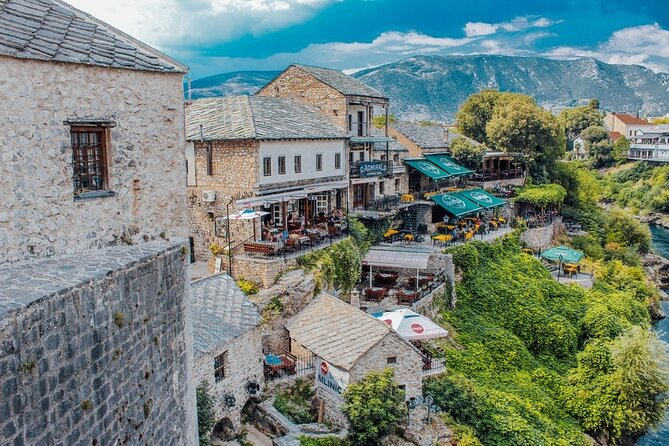
The nearby bazaar is full of stone lanes, shops, old mosques, and Turkish-style market details. You will also see reminders of the city’s wartime destruction, including repeated Don’t Forget messages around town. The one-hour visit to the bridge and another hour in the old city provide a useful introduction, with free time later for your own walk.
Blagaj Tekija is a calmer stop outside Mostar. The monastery sits beneath a cliff beside the blue-green spring of the Buna River. The setting is one of the most memorable natural and cultural combinations on the route, although the hour allotted here will feel brief if you want to sit by the water.
Day six brings Sarajevo, where uneven ground and war damage are part of the experience. Bullet holes and cannon marks remain visible in parts of the city. The tour explains the origins of Sarajevo, the medieval Bosnian kingdom, and the later Ottoman and Austro-Hungarian periods.
The city is often described as a European Jerusalem because mosques, churches, and synagogues appear within the same urban story. At the Latin Bridge, you learn how the 1914 assassination connected Sarajevo to the outbreak of World War I. You also get free time for Bosnian meat dishes and desserts, which is reason enough to avoid filling every minute with sightseeing.
Serbia by the Drina and Danube
Day seven includes a stop in Zvornik, a town on the Drina River. You have an hour for lunch or a short walk before continuing to Belgrade. This breaks up the long drive and gives you a view of a smaller Serbian town rather than only the capital.
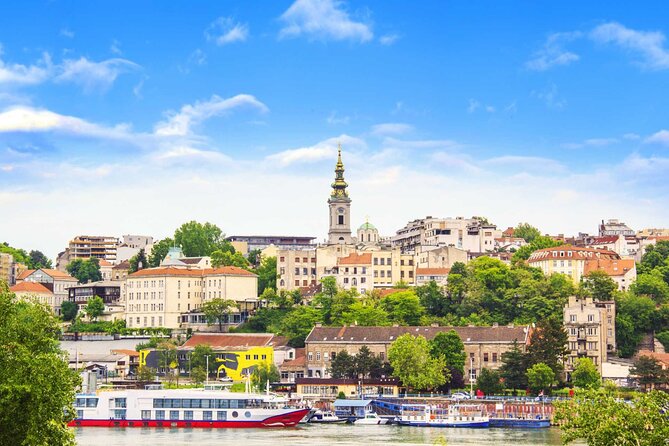
In Belgrade, the route focuses on the fortress and Kalemegdan Park, set above the meeting point of the Sava and Danube rivers. The Pobednik monument dates to 1913, and the park offers trees, walking paths, and broad views. You continue along Knez Mihailova, the city’s main social street, toward Republic Square.
The Belgrade visit is more of an orientation than a full city tour. The capital has enough museums, neighborhoods, and nightlife to fill several days, but this schedule gives you its strongest first impression: rivers, fortress walls, a central pedestrian street, and public spaces.
Sremski Karlovci on day eight is a gentler stop. The Baroque town was a center of Serbian culture in the 18th century and remains known for wine cellars. You have two hours to see the town and taste regional specialties if you choose to pay for them.
The Four Lions fountain comes with a local legend: drink from it and you will return to Karlovci, perhaps to marry there. It is a charming detail, but the real pleasure is the compact town center and nearby vineyards.
Day nine is devoted to Novi Sad, the cultural capital of northern Serbia. The city reflects its position between the former Ottoman and Austro-Hungarian spheres. Its Baroque buildings, pedestrian streets, and mix of cultural influences make it easy to explore on foot.
Petrovaradin Fortress, often called the Gibraltar on the Danube, is the main sight. Zmaj Jovina and Dunavska streets provide the best setting for free time, food, and people-watching. The itinerary includes an overnight in Novi Sad, which gives you a little more breathing room than the shorter city stops.
Subotica, Budapest, and the shift north
Subotica is one of the most distinctive stops in Serbia. Its City Hall dominates the central square rather than a cathedral, and the surrounding parks, fountains, and colorful buildings reflect the city’s former importance within the Austro-Hungarian Empire.
You have three hours here, making it one of the better-paced visits. Use the time to look upward at the decorative façades, eat local food, and explore the side streets. The town is known for wine and a relaxed feel, and it provides a welcome contrast to the larger capitals.
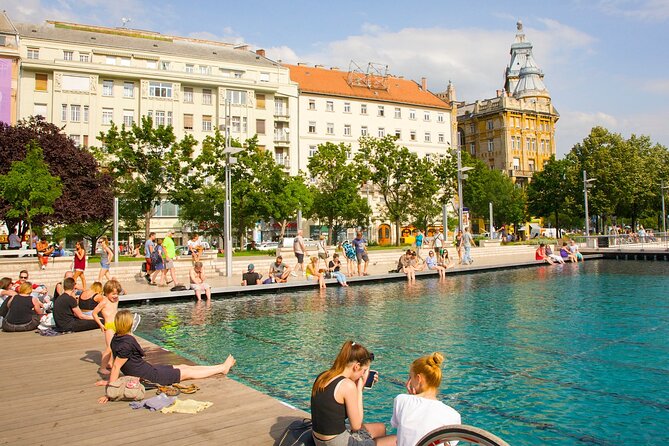
Later, the group crosses into Hungary and reaches Budapest. The next day covers the city’s major sights: St. Stephen’s Basilica, the Opera, Parliament, Heroes’ Square, Fisherman’s Bastion, and the Danube views. The city is divided by the river into Buda and Pest, and the tour gives you a broad introduction to both sides.
Buda Castle is included, with its UNESCO status and Baroque streets. The evening is free, and you should use it. Budapest after dark is one of the tour’s best chances to set your own pace, find dinner, and enjoy the city lights.
The drawback is familiar: one hour for the main Budapest orientation cannot cover a city of this size. If you want thermal baths, museums, or a proper Parliament visit, add extra nights if possible.
Győr, Bratislava, and the final handoff in Vienna
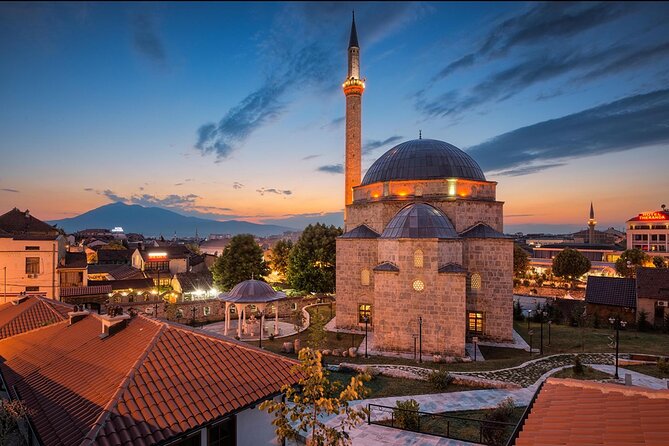
Győr is the day twelve stop, known as the City of Rivers. Its historic center has colorful homes, churches, and Baroque streets. You see the 59-meter Town Hall tower, the Cathedral of the Virgin Mary, and the old synagogue with its large gray dome.
Baross Gábor Way provides free time for cafés, shops, and Hungarian food. The itinerary specifically mentions blueberry beer, an unusual local tasting opportunity, though food and drinks are at your own expense.
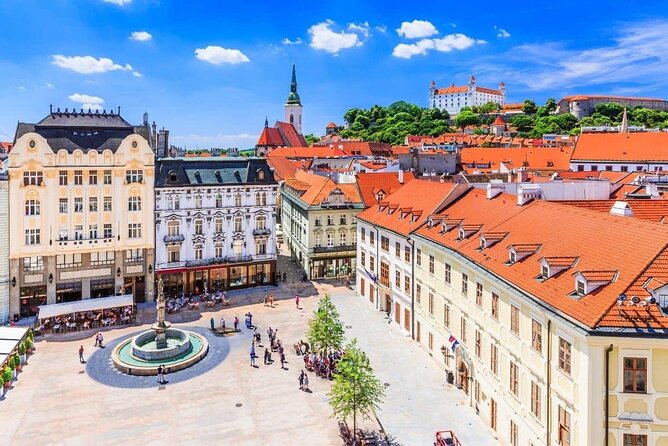
The drive then continues to Bratislava. Day thirteen begins in the Slovak capital’s old town, with the Old Town Hall, churches, cultural institutions, and foreign embassies. Michael’s Gate is the only surviving medieval gate in the city’s fortifications.
Bratislava Castle requires a walk uphill, but the view over the Danube and city is worth the effort. The afternoon returns you to the center for café time. This is another good chance to slow down after several days on the road.
On day fourteen, the tour leader drops you at your hotel in Vienna. The tour does not include a Vienna sightseeing program, so arrange your hotel and onward plans with that in mind. The final drop-off is convenient, but Vienna itself is the beginning of your next chapter, not part of the main sightseeing schedule.
What the $4,876.33 price really covers
The cost includes private transportation, a professional tour leader, 3-star hotel accommodation, breakfast, tourist taxes, road taxes, petrol, selected entry tickets, Tirana hotel pickup, and Vienna hotel drop-off.
That package can offer solid value for you if you would otherwise need to arrange multiple hotels, transport links, border crossings, and local guides across eight countries. Private transport is especially useful here because the route includes smaller towns such as Rahovec, Zvornik, Sremski Karlovci, and Győr.
The price is based on double, twin, triple, or quadruple room occupancy. Solo visitors should confirm the single-room cost before booking, since the advertised figure is not necessarily the final amount for one person traveling alone.
Lunches, dinners, drinks, snacks, souvenirs, and personal spending are extra. Plan for these costs, especially on days with free time in Mostar, Sarajevo, Budapest, Novi Sad, and Bratislava.
Who will enjoy this fast-moving journey
I would recommend this trip to you if you want a broad first look at Southeast and Central Europe, prefer private road transport, and enjoy historic towns more than long stays in one city. It suits people who like having the major logistics handled and still want some free afternoons.
It is also a good choice for history-minded visitors. The route connects Ottoman, Byzantine, Austro-Hungarian, Yugoslav, and modern national stories without confining you to museums.
You may want a slower trip if you dislike early starts, border crossings, long drives, or short visits. Several stops are only 30 minutes or one hour, and even major cities receive a quick introduction. Walking shoes are sensible because old towns have cobblestones, castles sit on hills, and Sarajevo includes uneven ground.
The small group cap of 10 is one of the strongest practical features. Past praise for Choose Balkans has singled out guides Sokol and Mandi on other tours, with special appreciation for their organization and ability to make the experience personal. Your assigned leader may be different, but that gives you a useful sense of the company’s best potential strength.
The company has also helped arrange practical needs such as a COVID test for a returning passenger on a separate tour. That does not guarantee the same service here, but it suggests you should ask early if you need help with travel paperwork.
Should you book this Tirana to Vienna tour?
Book it if your priority is range, convenience, and cultural variety. In two weeks, you will see Albania, Kosovo, Montenegro, Bosnia and Herzegovina, Serbia, Hungary, Slovakia, and Austria, with UNESCO sites, wine areas, old bazaars, river cities, and major capitals all included.
Skip it if you want deep time in Budapest, Kotor, Sarajevo, or Vienna. The tour offers a strong overview, not a slow study. At this price, the decision comes down to how much you value having transport, hotels, breakfasts, and border-to-border planning bundled together.
The experience is non-refundable and cannot be amended after booking, so check your dates, room arrangement, insurance, and passport requirements before paying. For an energetic first sweep through the Balkans and Central Europe, this is a well-targeted route with plenty of memorable stops and just enough free time to make it feel like your trip too.
FAQ
How long is the tour?
The tour lasts approximately 14 days, beginning with pickup in Tirana and ending with hotel drop-off in Vienna.
How many people can join the group?
The group has a maximum of 10 travelers.
What accommodation is included?
Accommodation is included in 3-star hotels, with the advertised price calculated for double, twin, triple, or quadruple room occupancy.
Is breakfast included?
Yes. The package includes accommodation and breakfast, listed as 14 breakfasts.
Is transportation included?
Yes. Private transportation, petrol, road taxes, and tourist taxes are included.
Are lunches and dinners included?
No. Lunches, dinners, drinks, snacks, souvenirs, and personal spending are not included.
Where does the tour start and finish?
The tour starts with hotel pickup in Tirana at 9:00 a.m. and finishes with hotel drop-off in Vienna.
Is travel insurance included?
No. All participants are responsible for arranging their own health and travel insurance.
Just added in Austria
- Zurich: Private Liechtenstein, Austria, and Germany Day Trip★ 5.0 · 16 reviews
- Zurich: Liechtenstein, Austria, Germany and Swiss Day Trip★ 5.0 · 2 reviews
- Zell am See: Paragliding Tandem Flight★ 5.0 · 31 reviews
- Vienna: Austrian Wine Tasting Experience★ 4.2 · 2 reviews
- Zurich: Liechtenstein, Austria and Germany Private Day Tour★ 5.0 · 6 reviews
- Vienna: UNESCO Schönbrunn Palace Guided Tour with Entry★ 4.5 · 94 reviews
- World War II History Vienna Old Town Private Walking Tour★ 4.8 · 9 reviews
- From Krems: Wachau Valley River Cruise on the Danube★ 4.6 · 95 reviews
Tours, compared.
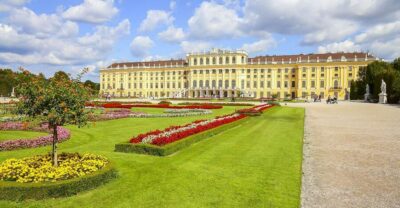
Schönbrunn Palace & Gardens Skip-the-Line Tour
Read our review →

Skip-the-Line Sisi Museum, Hofburg and Gardens Tour
Read our review →
Skip-the-Line Schönbrunn Palace & Gardens Tour
Read our review →
Guided Walking Tour of City Center Highlights
Read our review →