Reviewed · TOURS
Small Group Tour; Balkans & Central Europe – Dubrovnik to Vienna
Europe changes quickly on this road. This 10-day journey links Dubrovnik, Mostar, Sarajevo, Belgrade, Budapest, Bratislava, and Vienna in one small-group trip, giving you a broad look at the Balkans and Central Europe without the work of arranging every border crossing and hotel. I especially like the personal scale, with no more than 10 people, and the combination of guided sightseeing and free time. The main concern is serious: the opening description promises Komani Lake and Valbona Valley in Albania, but the day-by-day route provided here does not include Albania.
I also like that breakfast, 3-star accommodation, fuel, road taxes, tourist taxes, insurance, and listed entry fees are covered. Guides such as Bilbil, Mira, Sokol, Armando, and Ani have been praised for being helpful, flexible, and good at adding local context. Still, the price of $3,773.83 per person is substantial, and lunch, dinner, drinks, snacks, and personal expenses remain your responsibility.
In This Review
- Key Points to Know Before Booking
- The First Morning: Dubrovnik to Mostar
- Sarajevo: Ottoman Streets and 20th-Century Memory
- Zvornik and Belgrade’s Riverfront Fortress
- Sremski Karlovci and Novi Sad’s Austro-Hungarian Face
- Subotica, the Hungarian Border, and Budapest
- Győr and Bratislava Along the Danube
- What the Price Includes, and What It Does Not
- The Biggest Question: Where Are Komani Lake and Valbona Valley?
- Who Will Get the Most From This Road Trip?
- Should You Book the Dubrovnik to Vienna Tour?
- FAQ
- Where does the tour start and finish?
- How long does the tour last?
- How many people can join the group?
- What type of accommodation is included?
- Is breakfast included?
- Are lunch and dinner included?
- Is the tour physically demanding?
- Are the Komani Lake and Valbona Valley visits included?
Key Points to Know Before Booking
- The route crosses several borders: You travel from Croatia through Bosnia and Herzegovina and Serbia, then into Hungary, Slovakia, and Austria.
- The Albanian Alps description does not match the listed route: Komani Lake and Valbona Valley appear in the overview, but not in the 10 daily stops.
- A maximum of 10 people keeps the trip personal: That is useful for border crossings, walking tours, and asking your guide for help.
- Accommodation is in 3-star hotels with breakfast: Room prices are based on double, twin, triple, or quadruple occupancy.
- You get both structure and breathing room: Guided city walks are mixed with free hours for food, coffee, shopping, and independent wandering.
- The first day begins early: Hotel pickup in Dubrovnik is scheduled for 7:00 a.m., with drop-off at your Vienna hotel on the final day.
The First Morning: Dubrovnik to Mostar
The trip begins with a 7:00 a.m. pickup at your Dubrovnik hotel. A local driver takes you to the border, where you meet the tour leader who continues with the group. That handoff is worth noting, since border arrangements can shape the pace of any multi-country road trip.
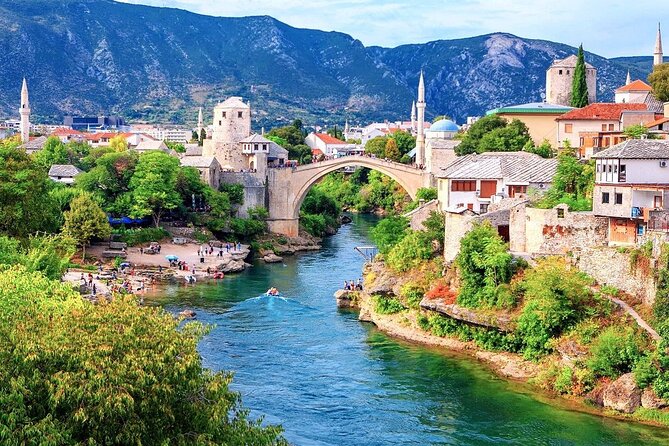
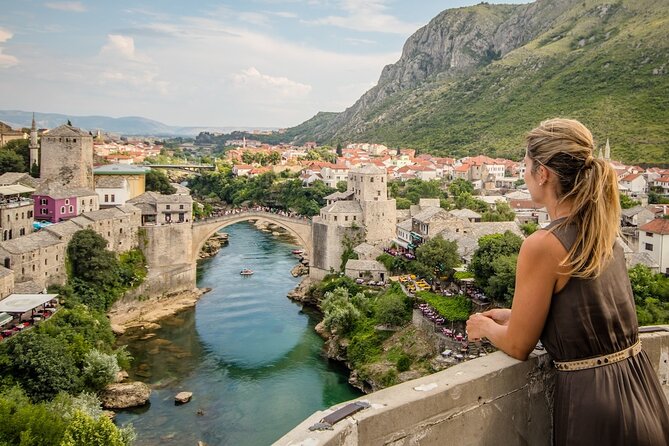
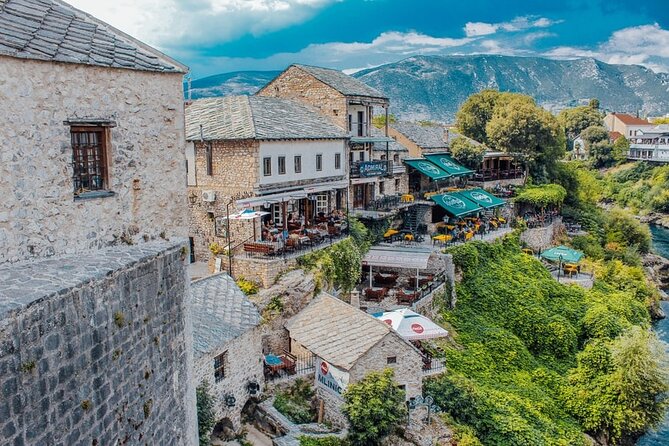
The first major stop is Mostar in Bosnia and Herzegovina. You have about an hour at the famous Old Bridge, or Stari Most, a UNESCO World Heritage site built in the 16th century in an Islamic architectural style. The bridge is the visual centerpiece, but the setting matters just as much: stone buildings, the river below, and the old lanes rising around it.
You then walk through Mostar’s Old Bazaar. Expect cobbled alleys, old mosques, Turkish-style market streets, and shops selling local goods. The city also carries visible reminders of the war, including the repeated words Don’t Forget. That contrast between Ottoman-era streets and the scars of recent conflict gives Mostar its emotional weight.
Blagaj is the day’s quieter stop. The Blagaj tekija, or monastery, sits at the foot of a cliff beside the blue waters of the Buna spring. You have about an hour here, with admission included. I like the change of pace: after Mostar’s busy old center, Blagaj offers water, rock, and a more peaceful setting.
There is another hour of free time in Mostar before the day ends. That sounds generous on paper, but keep expectations realistic. This is a sightseeing introduction, not a long, unhurried exploration of the city. If you want time for museums, shopping, or a slow meal, you may need to use the free hour carefully.
Other trips worth a look in Austria:
- Vienna: Vivaldi’s Four Seasons Concert in Karlskirche
★ 4.7 · 14,951 reviews - Vienna: Spanish Riding School Training
★ 3.9 · 9,281 reviews - Vienna: Skip-the-cashier-desk-line Giant Ferris Wheel Ride
★ 4.5 · 7,859 reviews
Sarajevo: Ottoman Streets and 20th-Century Memory
After breakfast, the road continues to Sarajevo. The walking portion includes uneven ground and some wartime ruins, so the stated requirement for moderate physical fitness is not just a formality. Comfortable shoes will matter.
Sarajevo’s appeal comes from its layers. You move through areas shaped by the Ottoman period and the Austro-Hungarian era, passing markets, mosques, churches, and synagogues. This mix helps explain why the city is often described as a European Jerusalem. The tour also covers the origins of Sarajevo and the medieval Bosnian Kingdom, giving the walking route more context than a simple photo stop.
The Latin Bridge is a key historical point. Here, you learn how the assassination of Archduke Franz Ferdinand helped trigger the First World War. The bridge itself is modest, but its place in European history is enormous.
You also get free time to try Sarajevo’s traditional meat dishes and desserts. That is an important part of the experience, since the food helps connect the city’s Ottoman and Balkan influences. The schedule allows roughly an hour at the principal stops, so the tour gives you an introduction rather than a full study of Sarajevo.
Zvornik and Belgrade’s Riverfront Fortress
Day three includes a stop in Zvornik, on the Drina River. You have time for lunch or a walk through the town, which offers a slower pause between larger cities. This is the kind of stop that can make a long road journey feel less mechanical, although the visit is limited to about an hour.
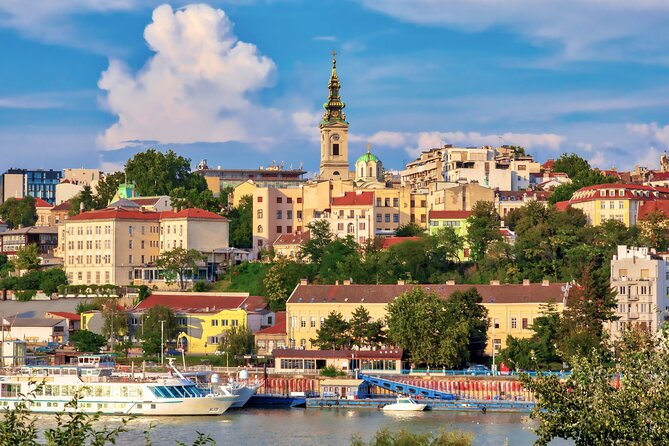
Belgrade brings a bigger change of scale. The group visits Belgrade Fortress and Kalemegdan Park, located where the Sava and Danube rivers meet. The fortress viewpoint is one of the strongest scenic moments on the route, and the park gives you room to walk among trees and open paths.
You continue along Knez Mihailova, the main social street for local residents, toward Republic Square. The total guided visit lasts about two hours. That is enough to get your bearings and understand the city’s central layout, but Belgrade is large and energetic enough to deserve more time than this tour provides.
The stop is strongest for first-time visitors who want an introduction before exploring on their own. It is less suitable if Belgrade is your main reason for booking. The route gives you a taste of the fortress, the park, and central pedestrian streets, not a deep look at the capital.
Sremski Karlovci and Novi Sad’s Austro-Hungarian Face
Sremski Karlovci receives about three hours, making it one of the more relaxed visits. The town is known for wine production and its role as a center of Serbian culture in the 18th century. Its Baroque center has a small-town, museum-like feel, with buildings and streets tied to local stories.
You have time to taste regional wine specialties and look toward the vineyards. The Four Lions fountain adds a bit of local folklore: according to the town’s legend, anyone who drinks from it will return and marry there. It is a cheerful detail in a place where history can otherwise feel formal.
The following day is devoted to Novi Sad, the cultural capital of northern Serbia. Its position between former Ottoman and Austro-Hungarian territories is visible in the architecture and street plan. You walk through the pedestrian areas around Zmaj Jovina and Dunavska, with time to explore independently.
Petrovaradin Fortress, often called the Gibraltar on the Danube, is the main sight. The fortress gives the city a strong visual identity and helps explain Novi Sad’s role along the river. Three hours is a useful amount of time here, especially because you are not rushed from one tiny stop to another.
Novi Sad is also an overnight stop. That matters. Staying in the city lets you enjoy the evening at a gentler pace rather than seeing it only through a bus window.
A completely different kind of day:
- Vienna: Schönbrunn Palace & Gardens Skip-the-Line Tour
★ 4.7 · 7,739 reviews - Vienna: Light of Creation Votive Church Immersive Light Show
★ 4.8 · 6,779 reviews - Vienna Spanish Riding School Guided Tour
★ 4.7 · 6,765 reviews - Vienna: Classical Concert in the World-Famous Musikverein
★ 4.6 · 6,673 reviews
Subotica, the Hungarian Border, and Budapest
Subotica is the final Serbian stop. Its center is shaped by Austro-Hungarian architecture, colorful façades, and a multicultural past. The City Hall dominates the central square, surrounded by a park, fountains, and open public space.
The tour also visits St. Teresa of Avila Cathedral and the synagogue. These stops give you a clearer sense of Subotica’s religious and cultural mix than a quick walk around the square would. You then have free time for coffee, food, or another look at the streets.
The pace is pleasant, but three hours goes quickly. If you care about architecture, you may want to stay close to the central area and avoid spending too much time on a long meal. The route later crosses into Hungary, with about 30 minutes listed for the transfer toward Budapest.
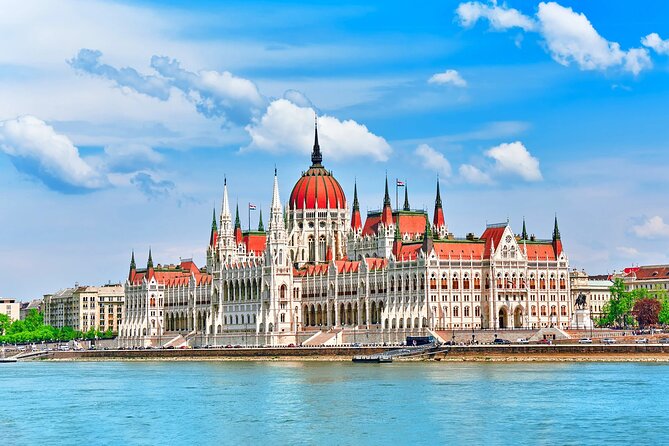
Budapest receives a full sightseeing day. You see St. Stephen’s Basilica, the Opera area, the Parliament building, Heroes’ Square, and Fisherman’s Bastion. The city’s mix of Baroque, Neoclassical, and Art Nouveau buildings gives this part of the trip a different feel from the Balkan towns.
A visit to Buda Castle is included, with admission listed as covered. You also cross Budapest’s bridges and walk along a Baroque-style street. The evening is free, which is exactly what you want in Budapest. The city changes character after dark, and you can choose your own meal or simply enjoy the Danube views.
The limitation is time. Two hours of general sightseeing and one hour at Buda Castle provide a good framework, but not enough for every major interior or museum. Think of this as an organized first look, with one evening to make the city your own.
Győr and Bratislava Along the Danube
Győr is a short but worthwhile stop on the way toward Slovakia. Known as the City of Rivers, it has a compact center lined with colorful homes, churches, and Baroque buildings.
The tour includes the Town Hall, whose 59-meter tower has a green roof, and the Cathedral of the Virgin Mary, which was built in the Roman style in the 11th century. You also see the Győr Synagogue, recognizable by its large gray dome. The walk continues along Baross Gábor Way, a pedestrian street with cafés, shops, bars, and restaurants.
You have time to try Hungarian food and the locally noted blueberry beer. That is a small but welcome chance to make the stop more than a photo break. Still, Győr receives only about three hours total, so it works best as a compact walking visit.
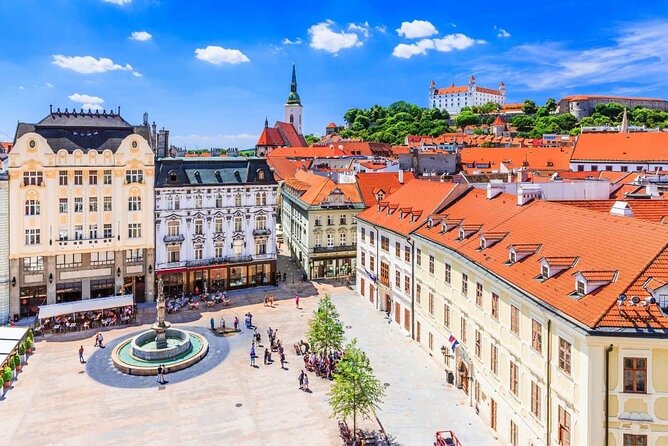
Bratislava follows. On day nine, you explore the Old Town Hall and the medieval center, then walk through Michael’s Gate, the only preserved gate from the old medieval fortifications. The old center is compact, making this one of the easier cities to cover on foot.
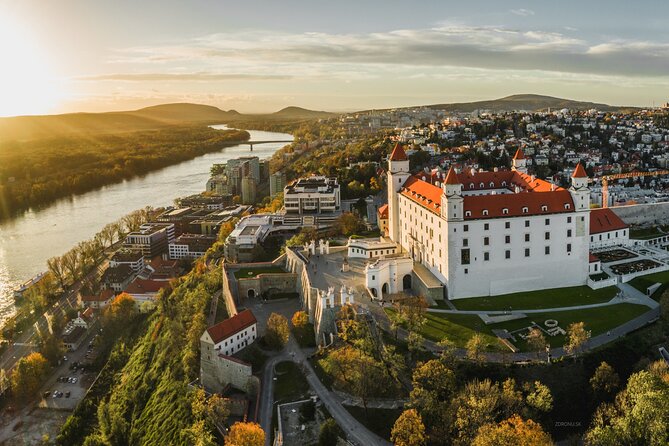
Bratislava Castle requires a walk uphill. The castle dates to the 9th century and overlooks the Danube, with good views across the city. Admission is listed as included. After returning to the center, you get free time in the café district.
The city’s coffee tradition is part of the appeal. Use this hour to sit down rather than racing through another sight. On a multi-day road trip, a proper coffee break is not wasted time. It is how you keep your energy for the next border and the next walking tour.
What the Price Includes, and What It Does Not
At $3,773.83 per person, this is not a budget bus trip. The value depends on how much you would otherwise spend arranging transport, hotels, border crossings, guided visits, and transfers between seven countries and several major cities.
The package includes:
- Nine overnight stays in 3-star hotels, based on the stated room occupancy
- Breakfast
- A professional tour leader
- Pickup in Dubrovnik
- Drop-off at your Vienna hotel
- International car insurance
- Fuel, road taxes, and tourist taxes
- Entry tickets for the listed included sites
Lunch, dinner, drinks, snacks, souvenirs, and personal spending are not included. That gives you food freedom, but it also means the final cost will be higher than the headline price. You should budget for regular meals and drinks across 10 days.
The small group is a major part of the value. With a maximum of 10 people, the guide can offer more direct help than on a large coach tour. Bilbil was praised for suggesting activities and even driving the group to various sites during free time. Mira was described as kind and helpful, while Sokol, Armando, and Ani received praise for their care and local explanations.
Those individual accounts suggest that the guide can shape the quality of the trip. That is also the risk: a road tour covering this much territory depends heavily on the person leading it.
The Biggest Question: Where Are Komani Lake and Valbona Valley?
You should resolve one issue before booking. The tour description presents a two-day Albanian Alps adventure, including Komani Lake and Valbona Valley, with hiking, meals, overnight accommodation, and a local guide. The supplied day-by-day program, however, goes from Dubrovnik to Mostar, Sarajevo, Zvornik, Belgrade, Novi Sad, Subotica, Budapest, Győr, Bratislava, and Vienna.
Albania is not listed in those daily stops. There is no stated ferry ride on Komani Lake, no Valbona hiking day, and no Albanian overnight in the detailed schedule. Since the price is high and the trip is non-refundable, ask the operator to confirm in writing which route applies, whether the Albanian section is included, and how the 10 days are divided.
The repeated praise for Komani Lake and Valbona Valley clearly relates to a separate or differently described Choose Balkans experience. Those comments highlight dramatic mountain scenery, a memorable boat ride, helpful guides, and strong support from staff including Brikena and Sirma. They are useful signs of the company’s Albania operation, but they do not confirm that those places are part of this Dubrovnik to Vienna journey.
Who Will Get the Most From This Road Trip?
I would recommend this tour to you if you want broad regional coverage, prefer a small group, and value having transport and hotels arranged. It suits someone who wants to compare Ottoman, Austro-Hungarian, Serbian, Croatian, Bosnian, Hungarian, Slovak, and Austrian influences in one trip.
It is also a good fit if you enjoy guided walking but still want some independent time. Most days include an hour or more for food, coffee, shopping, or your own wandering.
You should think twice if you dislike long drives, early starts, repeated border crossings, or short visits in major cities. The route is ambitious. You see a great deal, but you will not have the time for a full museum program in every capital.
The moderate fitness requirement matters because of uneven ground in Sarajevo and uphill walking at Bratislava Castle. The tour is not presented as a strenuous hiking trip in the detailed schedule, but it is still an active road journey with regular walking.
Should You Book the Dubrovnik to Vienna Tour?
Book it if the confirmed route matches your expectations and you want an efficient introduction to the western Balkans and Central Europe. Mostar, Sarajevo, Belgrade, Novi Sad, Budapest, and Bratislava make a strong sequence, and the small group, included transfers, breakfast, and helpful guide support add real convenience.
Do not book until the Albania contradiction is settled. If Komani Lake and Valbona Valley are your main reason for going, the detailed schedule does not currently support that promise. At this price, you deserve a clear written answer before committing, especially because cancellations and amendments are not refundable.
FAQ
Where does the tour start and finish?
The tour starts in Dubrovnik, Croatia, with hotel pickup at 7:00 a.m. It ends with drop-off at your hotel in Vienna, Austria.
How long does the tour last?
The experience lasts approximately 10 days.
How many people can join the group?
The group has a maximum of 10 people.
What type of accommodation is included?
Accommodation is provided in 3-star hotels. Pricing is based on double, twin, triple, or quadruple room occupancy.
Is breakfast included?
Yes. Breakfast is included for the overnight stays.
Are lunch and dinner included?
No. Lunch, dinner, drinks, snacks, souvenirs, and personal spending are not included.
Is the tour physically demanding?
A moderate level of physical fitness is required. The program includes walking on uneven terrain in Sarajevo and uphill walking to Bratislava Castle.
Are the Komani Lake and Valbona Valley visits included?
The overview describes a two-day Albanian Alps experience at Komani Lake and Valbona Valley, but those places do not appear in the detailed 10-day schedule provided. Confirm this directly with Choose Balkans before booking.
Just added in Austria
- Zurich: Private Liechtenstein, Austria, and Germany Day Trip★ 5.0 · 16 reviews
- Zurich: Liechtenstein, Austria, Germany and Swiss Day Trip★ 5.0 · 2 reviews
- Zell am See: Paragliding Tandem Flight★ 5.0 · 31 reviews
- Vienna: Austrian Wine Tasting Experience★ 4.2 · 2 reviews
- Zurich: Liechtenstein, Austria and Germany Private Day Tour★ 5.0 · 6 reviews
- Vienna: UNESCO Schönbrunn Palace Guided Tour with Entry★ 4.5 · 94 reviews
- World War II History Vienna Old Town Private Walking Tour★ 4.8 · 9 reviews
- From Krems: Wachau Valley River Cruise on the Danube★ 4.6 · 95 reviews
Tours, compared.
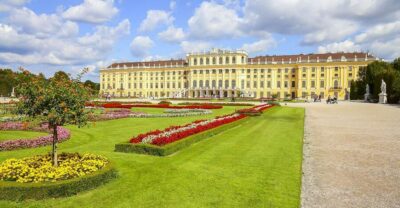
Schönbrunn Palace & Gardens Skip-the-Line Tour
Read our review →

Skip-the-Line Sisi Museum, Hofburg and Gardens Tour
Read our review →
Skip-the-Line Schönbrunn Palace & Gardens Tour
Read our review →
Guided Walking Tour of City Center Highlights
Read our review →