
Reviewed · SCHONBRUNN PALACE TOURS
Skip the Line:Imperial Carriage Museum by Schönbrunn Kaiserliche Wagenburg Wien
Royal history rolls on wheels. The Imperial Carriage Museum beside Schönbrunn Palace offers a close look at the coaches used by Maria Theresia, Napoleon, Franz Joseph, and Empress Elisabeth. I especially like the rare original carriages and the personal Sisi objects, including her coronation coach, riding saddle, and black funeral carriage. The $14.48 entrance price is reasonable for a focused museum visit, though the narrow galleries can feel cramped when groups gather around one display.
I also like that you can visit at your own pace rather than follow a long guided tour. The audio guide and written information help explain why each coach mattered, but you should allow more than the advertised 45 minutes if you want to read the displays carefully. A mobile ticket is convenient, although one visitor had trouble getting a ticket accepted at the entrance, so keep it easy to open on your phone.
In This Review
- Key points to know before you go
- Why this small museum deserves your time at Schönbrunn
- Entering the Imperial Carriage Museum near Schönbrunn
- The Imperial Coach and the public face of power
- The Sisi Trail, from wedding coach to funeral carriage
- Original objects that make Sisi feel real
- Children’s carriages and everyday court life
- How long to stay, and how to use the audio guide
- Is $14.48 good value?
- Practical drawbacks to keep in mind
- Who should book the Imperial Carriage Museum?
- FAQ
- Where is the Imperial Carriage Museum located?
- How much does admission cost?
- How long does the visit take?
- Is a guide included?
- What are the opening hours?
- Can I cancel for a full refund?
Key points to know before you go
- Sisi’s life is the museum’s emotional center: Follow her story from imperial bride to tragic death through carriages, clothing, portraits, and personal objects.
- The Imperial Coach is the grandest sight: The baroque coach shows the full ceremony and expense of Habsburg public life.
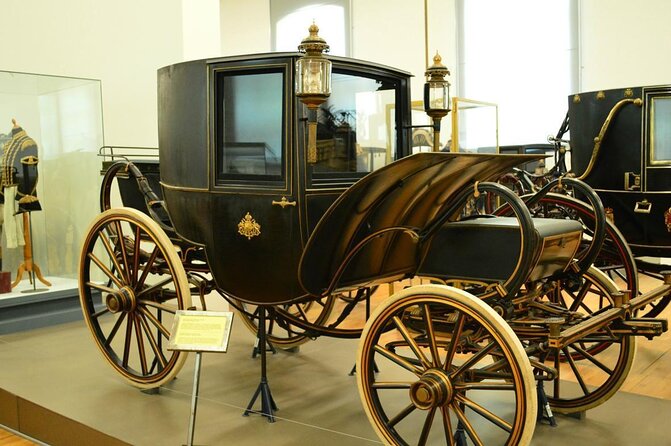
- You can see much more than formal state coaches: Travelling coaches, children’s carriages, a coronation coach, and a huge black hearse fill out the collection.
- The museum sits near Schönbrunn Palace: It is an easy addition after the palace or gardens, without committing to another large museum.
- Plan for 60 to 90 minutes if possible: Forty-five minutes works for a quick visit, but the labels and films reward a slower pace.
- The visit is self-guided: An audio guide and exhibit information provide context, while a private guide is optional and not included.
Why this small museum deserves your time at Schönbrunn
Schönbrunn Palace gets the grand rooms, the gardens, and most of the attention. The Imperial Carriage Museum gives you a different view of the Habsburg court. Instead of seeing where royalty lived, you see how royalty moved, appeared in public, celebrated ceremonies, travelled, and was finally carried to the grave.
That difference matters. A palace can make imperial life look polished and still. Coaches show the practical side of power. A coronation coach was not just transport. It was a moving stage, built to make a ruler appear larger than life. A travelling coach tells you that royal journeys involved comfort, staff, baggage, and long hours on the road. A child’s carriage makes the dynasty feel more human.
I find the museum most useful as a companion to Schönbrunn Palace. After rooms filled with portraits and furniture, the carriages help you picture the ceremonies outside. You can imagine the arrival of a monarch, the slow movement through a city, or the formal procession after a death.
The museum has a strong reputation, with a 4.6 rating and 97 percent of customers recommending it. Those numbers fit the experience: this is not a huge all-day institution, but it is focused, memorable, and filled with objects you cannot understand fully from palace paintings alone.
More Schonbrunn Palace tours:
- Vienna: Schönbrunn Palace & Gardens Skip-the-Line Tour
★ 4.7 · 7,739 reviews - Vienna: Skip-the-Line Schönbrunn Palace & Gardens Tour
★ 4.8 · 5,411 reviews - Vienna: Mozart and Strauss Concert at Schönbrunn
★ 4.5 · 2,364 reviews
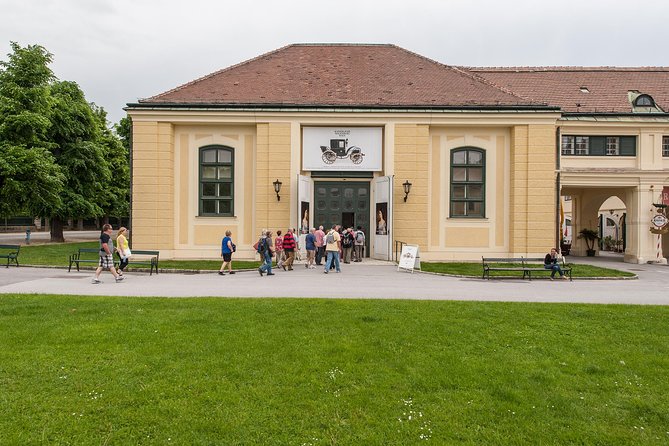
Entering the Imperial Carriage Museum near Schönbrunn
The museum is located near Schönbrunn Palace in Vienna, close to public transportation. That makes it simple to pair with a palace visit, a walk through the gardens, or a day focused on the Habsburg family.
The advertised opening hours are 10:00 AM to 4:00 PM every day. Since the museum closes in the afternoon, check your schedule before arriving at Schönbrunn. A late visit can work well if you are already in the palace area, but do not leave it until the last few minutes if you want to follow the Sisi displays properly.
The entry ticket is mobile, and confirmation is provided when you book. Keep your phone charged and have the ticket ready before you reach the entrance. One person reported a delay while staff checked and accepted the ticket, so do not panic if the scan is not immediate. Having the booking open, rather than searching through email at the door, should make the process easier.
The stated group limit is 10 people. That is helpful in a museum where the passages are not especially wide. If several people stop at the same coach, the viewing area can become crowded quickly. I would visit earlier in the day or allow extra time to return to displays that are blocked.
The Imperial Coach and the public face of power
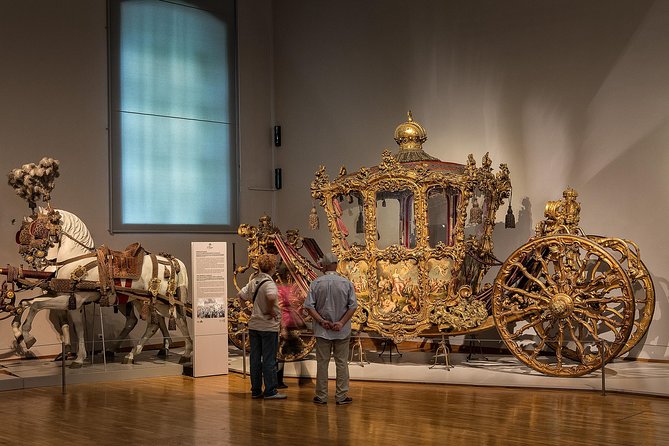
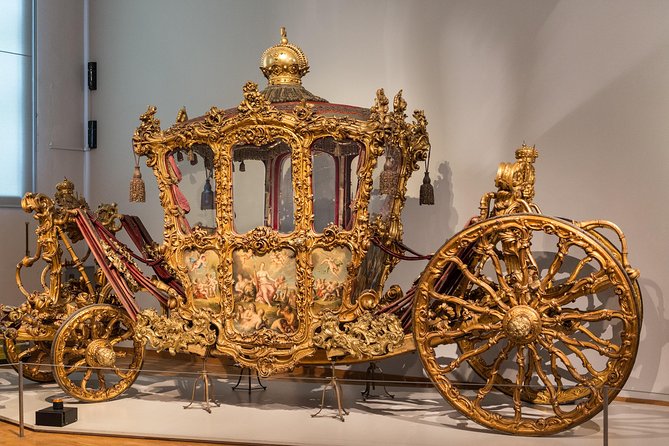
The baroque Imperial Coach is the obvious centerpiece. Its size, decoration, and ceremonial purpose show how much effort went into the public appearance of the ruling family.
Look at it as a political object, not just a beautiful vehicle. A coach like this was designed to be seen. It carried a ruler through important ceremonies and made the journey itself part of the event. The coach helped communicate rank before the monarch had spoken a word.
The collection also includes exquisite state coaches. These were used for official occasions, where every detail mattered. You can expect a visual contrast between the grand coaches used for ceremony and the more practical vehicles built for travel.
This is one reason I recommend reading the labels rather than simply walking past the carriages. Without context, you may see a series of impressive vehicles. With context, you begin to understand who used each one, when it appeared, and what it says about court life.
The museum also uses informational films and detailed explanations. If you have only 45 minutes, focus first on the largest ceremonial coaches and the Sisi Trail. If you have an hour or more, the smaller vehicles help complete the picture.
The Sisi Trail, from wedding coach to funeral carriage
The Sisi Trail follows Empress Elisabeth from her marriage to Emperor Franz Joseph through her death in Geneva. It is the museum’s most personal section, and it gives the carriages a clear human story.
You can see the coach used when Elisabeth arrived as an imperial bride. That beginning is deliberately formal and hopeful. The display then moves through the public roles, private interests, and final tragedy associated with her life.
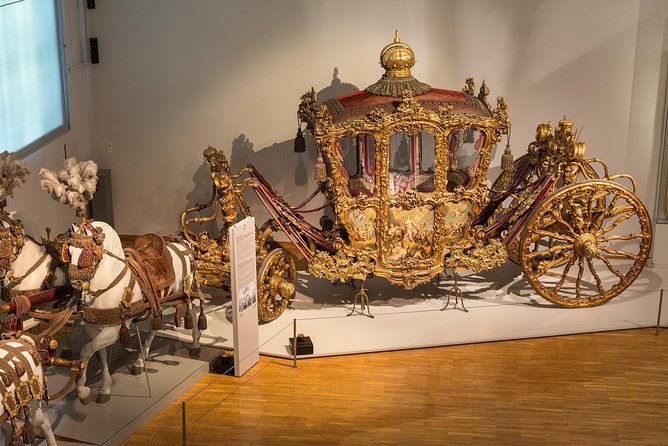
One of the most striking objects is the golden Imperial Coach used at her coronation as queen of Hungary. It represents ceremony at its highest level, with Elisabeth presented as a royal figure in a major public moment.
The ending is much darker. The museum displays the carriage from which Elisabeth alighted only minutes before her assassination in Geneva. Nearby is the impressive black hearse that carried her to her final resting place. Seeing those vehicles together gives the Sisi story a strong beginning, middle, and end without requiring a long written biography.
I appreciate this approach because it avoids treating Elisabeth as only a romantic legend. The objects connect her image to real events. Her story is told through things she used, wore, or encountered, not only through idealized portraits.
More Museum Tours in Vienna:
- Vienna: Skip-the-Line Sisi Museum, Hofburg and Gardens Tour
★ 4.8 · 5,918 reviews - Vienna Kunsthistorisches Museum Day Admission Ticket
★ 4.6 · 3,690 reviews - Tickets for the Albertina Exhibitions
★ 4.7 · 2,126 reviews - Sigmund Freud Museum Ticket
★ 4.6 · 1,668 reviews
Original objects that make Sisi feel real
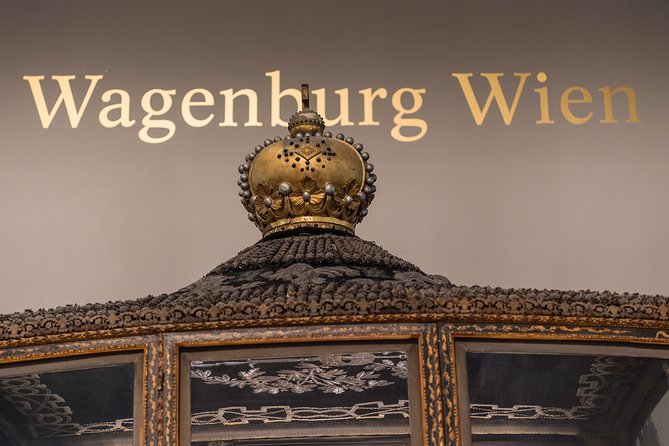
The carriages are spectacular, but the smaller personal objects may hold your attention longer. The museum displays portraits, paintings, and items that belonged to Elisabeth.
A major highlight is her sumptuous black robe with its very long train, designed around 1885 by Fanny Scheiner. The dress is associated with Sisi’s famous slender figure and tiny waist. Its size and shape give you a more direct sense of the physical image that surrounded her public reputation.
The museum also displays the only surviving saddle used by Elisabeth. She was regarded as one of the finest horsewomen of her time, so the saddle adds an important detail that palace rooms cannot provide. It shows an active side of her life, away from formal appearances and royal ceremony.
Another unusual feature is the reconstructed riding chapel. This includes portraits of her favorite horses and reflects how central riding was to her interests. It is a small but revealing display, especially if you already know Sisi mainly through films, portraits, or palace stories.
The combination of coach, clothing, saddle, and horse portraits works well. You see the official Elisabeth, the fashion icon, and the dedicated rider in one place. I would not rush past these cases simply because the coaches are larger.
Children’s carriages and everyday court life
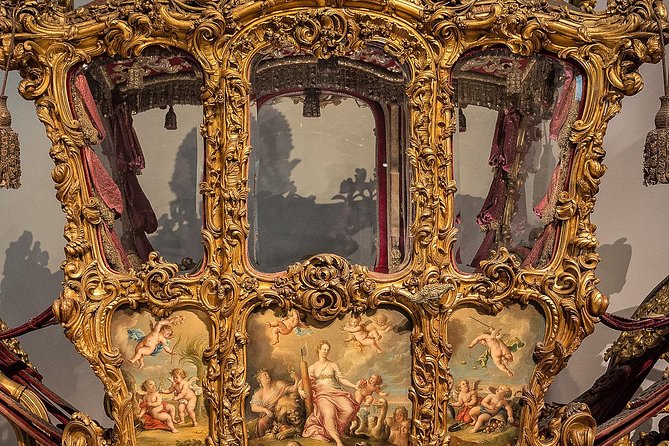
The collection is not limited to monarchs in full ceremony. Charming children’s carriages used by Habsburg princes and princesses add a softer note.
These objects help you picture the dynasty as a family. Royal children still needed to be carried, watched, and moved around, even if their vehicles were made with far more care and decoration than an ordinary family carriage.
The children’s carriages also create a useful pause between the huge ceremonial vehicles. If you are visiting with young people, these displays may offer a more approachable entry point than the formal history of coronations and imperial funerals.
The museum also includes comfortable travelling coaches. These show that court transport was not always about display. Long journeys required vehicles designed for use, and the difference between a state coach and a travelling coach helps explain how varied royal life could be.
I like this range because it prevents the collection from becoming repetitive. You move from a public ceremony to a private journey, then from imperial grandeur to childhood. Each type of carriage answers a different question about life at court.
How long to stay, and how to use the audio guide
The listed duration is about 45 minutes, but I would treat that as the shortest useful visit. You can see the main carriages in that time, especially if you concentrate on the Imperial Coach and Sisi Trail. For a calmer visit with labels, films, and smaller objects, plan on 60 to 90 minutes.
The museum is self-guided. An audio guide helps explain the rare objects as you move through the galleries, while written information beside the displays gives you another way to follow the collection.
If you have limited time, use this order:
- Start with the Imperial Coach.
- Follow the Sisi Trail from her wedding to her funeral.
- Pause for the black dress and surviving saddle.
- See the children’s carriages and travelling coaches.
- Return to any display you could not view because the passage was crowded.
This approach gives you the main story without leaving the museum feeling that you only looked at wheels and polished wood. If you enjoy detailed historical interpretation, spend longer with the labels. If you prefer visual displays, the large coaches make the visit worthwhile even at a faster pace.
A private guide is not included, but you may bring one. For most people, the audio guide and museum information should be enough. A private guide could help if you want to connect the carriages with a wider study of the Habsburg rulers, Schönbrunn Palace, or Elisabeth’s life.
Is $14.48 good value?
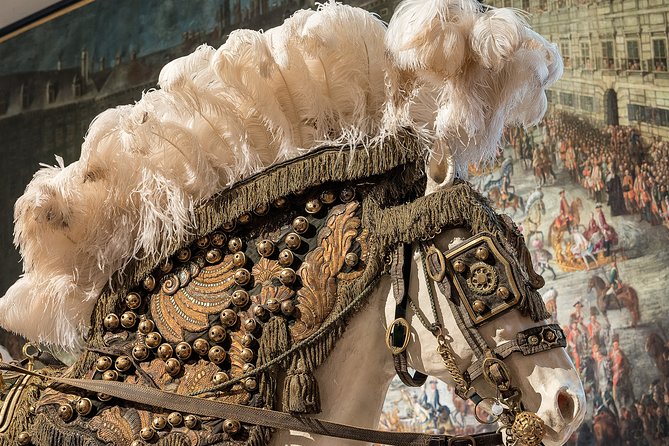
At $14.48 per person, the ticket is fairly priced for a specialist museum beside one of Vienna’s most popular sights. You are paying for access to a collection that includes rare imperial vehicles and personal objects, not just a few decorative carriages in a side room.
The value is strongest if you already plan to visit Schönbrunn. Adding an hour here gives you a different experience from the palace interiors and gardens. It also offers a quieter change of pace, since the museum generally does not attract the same large crowds as the main palace areas.
Do check what is included in any Schönbrunn pass you hold. One account notes that the museum required an extra payment even with the Classic Plus pass. That detail can change depending on the pass and its current terms, so confirm before assuming your palace admission covers the carriage collection.
The price is less compelling if you have no interest in royal history, transport, clothing, or museum objects. The collection is specialized. You will not find a broad survey of Vienna here, and the visit will feel short if you only want major palace rooms.
Practical drawbacks to keep in mind
The narrow galleries are the main physical drawback. When a group stops at one carriage, it can be difficult to see the object and hear the explanation at the same time. The stated maximum of 10 helps, but you should still expect a more compact viewing experience than in a large open hall.
Some displays may have low lighting. This protects the objects and suits the museum’s atmosphere, but it can make labels and smaller details harder to read. Give yourself time rather than trying to absorb everything while walking.
The mobile ticket is convenient, but ticket acceptance may not always be instant. Keep the confirmation ready and allow a few extra minutes at the entrance.
The museum is open daily from 10:00 AM to 4:00 PM throughout the dates provided, including January through December 2026. Transfers are not included, so you make your own way to Schönbrunn. The museum is near public transportation, and most people can take part.
Free cancellation is available if you cancel at least 24 hours before the scheduled start time. Changes or cancellations inside that 24-hour period are not accepted for a refund.
Who should book the Imperial Carriage Museum?
I would choose this museum if you enjoy the Habsburg family, Sisi, royal ceremonies, historic clothing, or unusual museum collections. It is also a smart choice for anyone already spending time at Schönbrunn and looking for one more worthwhile indoor stop.
Families may appreciate the children’s carriages, while history buffs will find the links between each coach and its former owner especially rewarding. Sisi fans should allow at least an hour, since the trail includes several major objects and follows a complete life story.
I would skip it if your Vienna schedule is already overloaded with large museums and you have little interest in imperial court life. The museum is focused, and its appeal depends on your willingness to read and connect the objects.
For most visitors to Schönbrunn, though, the extra time and ticket cost are justified. The collection is beautiful, the Sisi Trail has a clear emotional arc, and the carriages reveal a side of royal life that palace rooms cannot show. Book it when you want a compact museum with real objects, strong visual impact, and enough detail to reward a slower visit.
FAQ
Where is the Imperial Carriage Museum located?
It is located near Schönbrunn Palace in Vienna, Austria. The museum is close to public transportation.
How much does admission cost?
The listed price is $14.48 per person. The entrance ticket is included with this experience.
How long does the visit take?
The estimated duration is about 45 minutes. You may want 60 to 90 minutes if you plan to read the information and view the films and smaller objects.
Is a guide included?
An audio guide and exhibit information are available for the self-guided visit. A private tour guide is not included, though you may come with one.
What are the opening hours?
The museum is open Monday through Sunday from 10:00 AM to 4:00 PM for the dates provided, January 1 through December 31, 2026.
Can I cancel for a full refund?
Yes. You can cancel at least 24 hours before the experience start time for a full refund. Cancellations or changes made less than 24 hours in advance are not accepted for a refund.
Just added in Vienna
- Vienna: Austrian Wine Tasting Experience★ 4.2 · 2 reviews
- World War II History Vienna Old Town Private Walking Tour★ 4.8 · 9 reviews
- Vienna_ Meet Beethoven Life Private Guided Walking Tour★ 5.0 · 1 review
- Vienna: Wine Tasting Tour★ 4.8 · 61 reviews
- Vienna: Wine Tasting E-Bike Tour★ 4.9 · 46 reviews
- Vienna: Wine Tasting at Schönbrunn Palace★ 4.3 · 71 reviews
- Vienna: Winery and Wine Tasting Tour with a Wine Expert★ 5.0 · 5 reviews
- Vienna: Concert by the Vienna Baroque Orchestra★ 4.6 · 56 reviews
Schonbrunn Palace Tours, compared.
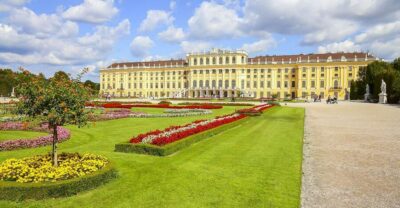
Schönbrunn Palace & Gardens Skip-the-Line Tour
Read our review →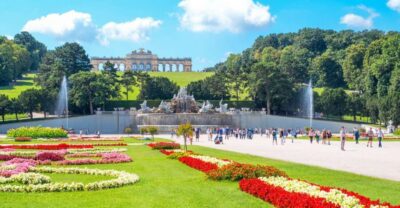
Skip-the-Line Schönbrunn Palace & Gardens Tour
Read our review →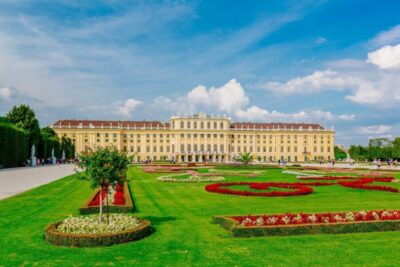
Bus & Schönbrunn Palace Skip-the-Line Guided Tour
Read our review →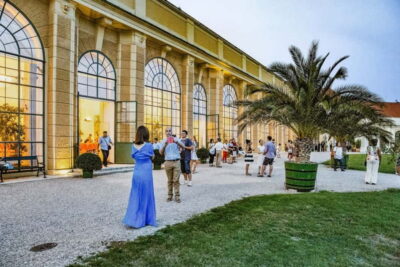
Skip the Line Schönbrunn Palace and Gardens Guided Tour
Read our review →
Schönbrunn Palace & Garden Skip-the-Line Guided Tour
Read our review →
Panorama Train Tickets to explore Schönbrunn Palace
Read our review →
Skip-the-Line Schönbrunn Palace and Gardens Tour
Read our review →Browse the lists this tour appears in