
Reviewed · WALKING TOURS
Graz Private Walking Tour
Graz rewards curious walkers. This private tour links the city’s Habsburg past, religious landmarks, political life, and modern design in a compact 90-minute route. I like the way it moves from the medieval Schlossberg to the futuristic Kunsthaus, giving you a clear sense of Graz’s old-and-new character. I also like the private format, with a guide for only your group and no strangers to slow the pace. The main drawback is time: 90 minutes passes quickly, and entrance fees are not included.
The route packs in a lot, from the main square and its ornate façades to the Renaissance courtyard of the Landhaushof. Guide Leo earned special praise for his memorable stories and useful suggestions for the rest of the day. The tour runs in English or German, and the walking is best enjoyed in comfortable shoes.
In This Review
- Key points to know before booking
- Graz in 90 minutes: a useful first look
- Meeting at Hauptplatz, Graz’s grand civic room
- Schlossberg views and Graz’s medieval beginnings
- Luegg House and the main square’s ornate façades
- Eagle Pharmacy and Palais Sturgkh: small buildings, big context
- The Landhaushof and the Styrian Diet
- Habsburg Graz, religion, and music
- A sharp turn into the 21st century at Kunsthaus Graz
- Why the UNESCO old town matters
- Private group value at $289
- What the guide can add
- Practical details for a smoother walk
- Who should book this Graz walk?
- Should you book the Graz Private Walking Tour?
- FAQ
- Where does the Graz Private Walking Tour meet?
- How long does the tour last?
- How much does the private tour cost?
- Is the tour shared with other groups?
- Which languages are available?
- Are entrance fees included?
- Does the tour visit Schlossberg?
- What should I bring?
- Can I cancel for a full refund?
- Do I have to pay when I reserve?
Key points to know before booking
- Graz’s Habsburg story comes alive: Learn why this Styrian city mattered as an imperial residence and political center.
- The route covers old and new Graz: Medieval Schlossberg views lead toward the bold, blob-like Kunsthaus.
- The main square is packed with detail: Luegg House, the White House, Eagle Pharmacy, Palais Sturgkh, and Archduke Johann’s fountain all appear along the way.
- The Landhaushof is a major highlight: Its Renaissance courtyard was the first of its kind in Graz.
- The private format adds flexibility: Your guide can respond to your group’s interests, within the fixed 90-minute schedule.
- The price works best for a full group: At $289 for up to 15 people, the per-person cost drops sharply as your party grows.
Graz in 90 minutes: a useful first look
Graz is easy to underestimate. Its name comes from an old Slavic word meaning small city, yet its past reaches into Habsburg politics, religious life, trade, music, architecture, and modern art. This tour gives you a brisk introduction without asking you to commit half a day.
I see it as an orientation walk rather than a complete visit to every major sight. You will see many important buildings from the outside, hear why they matter, and gain a route for exploring independently afterward. Since entrance fees are not included, you should think of the tour as a guided city walk, not a package of museum admissions.
That distinction matters. If you want long interior visits, this is not the right format. If you want the city to make sense before you explore on your own, the short private walk can be a smart start.
More Graz trips:
- Kunsthaus Graz Museum Entrance Ticket
★ 3.5 · 19 reviews - Graz: Old Town Highlights Private Walking Tour
★ 4.6 · 16 reviews - Universalmuseum Joanneum Pass in Graz
★ 4.0 · 14 reviews
Meeting at Hauptplatz, Graz’s grand civic room
The tour begins beside the fountain in the middle of Hauptplatz, at Hauptplatz 1, 8010 Graz. This is a practical meeting point because the square gathers several of the city’s central stories in one place.
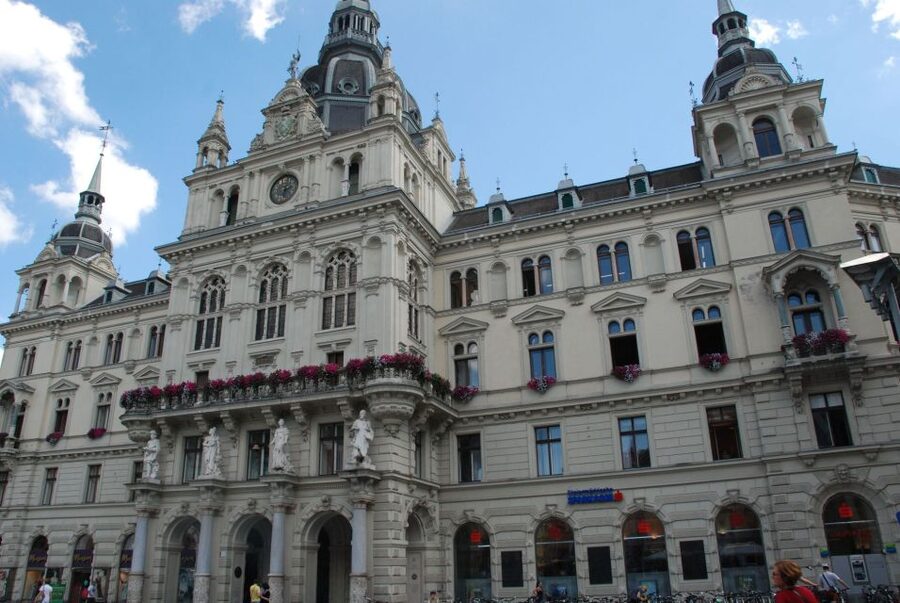
Today, Graz’s Town Hall dominates the square. Around it, the architecture shows how commerce, government, religion, and noble power once shared the same urban stage. Your guide can help you look past the cafés and traffic to the details above eye level, where façades often tell more than the ground-floor shops.
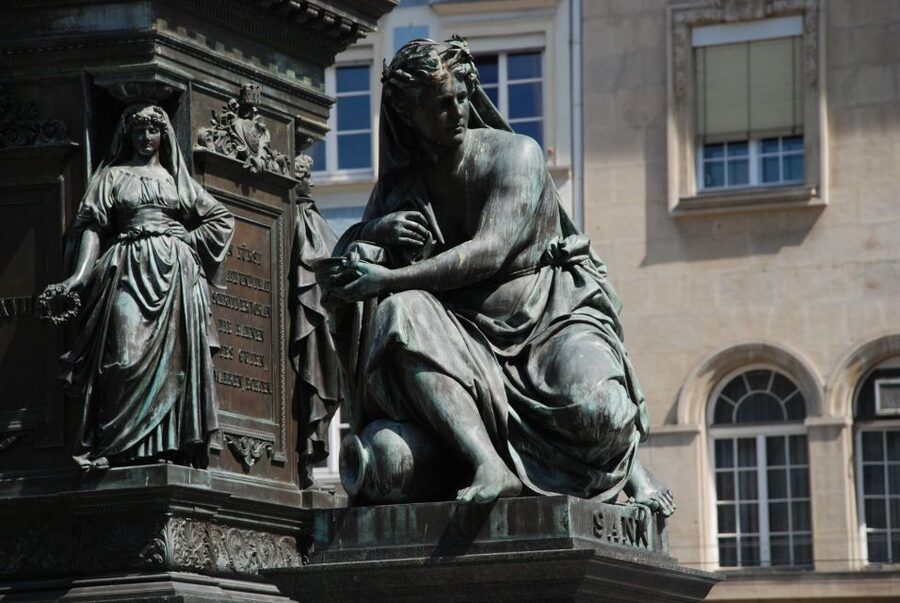
The fountain and statue of Archduke Johann date from 1878. He is an important figure in Styrian public life, and the monument gives the square a strong local and political focus. This is also a good place to ask your guide how Graz fits into the wider Habsburg story.
Because the group is private, you can ask for extra context here if politics or royal history interests you most. If architecture is your priority, you can instead spend more time on the façades and urban design.
Schlossberg views and Graz’s medieval beginnings
A view toward Schlossberg helps you read Graz from above, even when the walk remains at street level. The hill is tied to the city’s medieval identity and recalls a time when Slavic merchants and traders helped shape Graz’s early life.
The point of this stop is not only the view. Schlossberg gives you a physical reference for the old city, showing how the medieval settlement developed around a defensible rise. It also sets up the tour’s larger theme: Graz has changed many times, but its older layers remain visible beneath the modern city.
I like this early viewpoint because it prevents the walk from becoming a string of disconnected buildings. You begin with the city’s shape and origins, then move into its political and architectural details.
The information provided does not specify an ascent of Schlossberg or entry to any hill attractions, so you should not expect a hilltop visit as part of the 90-minute route. The tour includes a view of the hill, not a promise of a separate Schlossberg excursion.
Luegg House and the main square’s ornate façades
From the square, the details become smaller and more rewarding. The 17th-century Luegg House is known for its impressive stucco façade, an example of how decoration once announced wealth and status to everyone passing below.
Look up as you walk. Graz’s historic center rewards slow eyes more than fast feet. The façade work can be easy to miss if you focus only on street-level movement, so a local guide is useful here. You will hear what to notice and why a particular building belongs in the city’s story.
The five-story White House adds another striking detail: a sandstone relief of the Virgin Mary. That image points toward Graz’s religious background, while the building’s height and decoration show how urban architecture could carry both devotion and social display.
These stops are especially useful if you enjoy architecture but do not want a technical lecture. The guide’s job is to connect the visual details to the people, beliefs, and power structures behind them.
More Walking Tours in Graz:
- Graz Private Walking Tour With A Professional Guide
★ 5.0 · 5 reviews - Graz Old Town Highlights Private Walking Tour
★ 5.0 · 4 reviews - Private Photoshoot Walk Old Town of Graz
★ 3.0 · 3 reviews - Vienna: Guided Walking Tour of City Center Highlights
★ 4.7 · 4,989 reviews
Eagle Pharmacy and Palais Sturgkh: small buildings, big context
The 16th-century Eagle Pharmacy brings another layer to the walk. A pharmacy may seem less grand than a palace or town hall, but it offers a glimpse of everyday civic life in an older European city.
The building sits within the same historic setting as grander façades, reminding you that Graz was not only a place of rulers and officials. It was also a working city with shops, services, merchants, and residents.
Palais Sturgkh dates from the 14th century and adds an earlier chapter to the route. Its age helps show how the old town developed over several centuries rather than being built in one neat period.
I find this mix of major and modest landmarks valuable. You get the famous visual anchors, but you also learn how a city functions between them. The tour does not reduce Graz to a royal postcard.
The Landhaushof and the Styrian Diet
The Landhaushof is one of the clearest architectural highlights. Its Renaissance courtyard was the first of its kind in Graz, and it gives the walk a strong sense of place. Courtyards like this often reveal how public life worked behind formal street façades.
This is where the Styrian Diet becomes more than a name. The tour explains its political influence and connects the building to the region’s governing history. For anyone interested in how Austria’s provinces developed their own political identity, this should be one of the most useful stops.
The courtyard also provides a change of mood. After the open market square and decorated street fronts, you enter a more enclosed architectural space. The design asks you to look inward, at proportions, arcades, and the relationship between public authority and Renaissance style.
Do not assume that every interior on the route includes a paid admission. Entrance fees are excluded, and the supplied details do not promise entry beyond the included walking route. If you want to return for a longer look, note the places that catch your interest and visit them later.
Habsburg Graz, religion, and music
Graz’s importance as a Habsburg residence gives the whole walk its political backbone. The city was not simply a provincial stop. Its position brought royal influence, administrative weight, and a courtly culture that affected architecture and public life.
The tour also covers religious and political background, which helps explain why churches, monuments, civic buildings, and noble residences sit so close together. You get a better sense of how authority appeared in daily life, through stone, sculpture, public squares, and ceremonial spaces.
Music forms another part of Graz’s cultural heritage. The supplied details do not identify particular composers, concert halls, or performances on this route, so you should expect historical context rather than a live music event. Still, the musical thread adds depth to the city’s identity and helps explain why Graz is more than a collection of attractive old buildings.
This part of the walk will suit you if you like connections. The guide is not only pointing out what looks pretty. The aim is to show how religion, politics, royal power, and culture shaped one another.
A sharp turn into the 21st century at Kunsthaus Graz
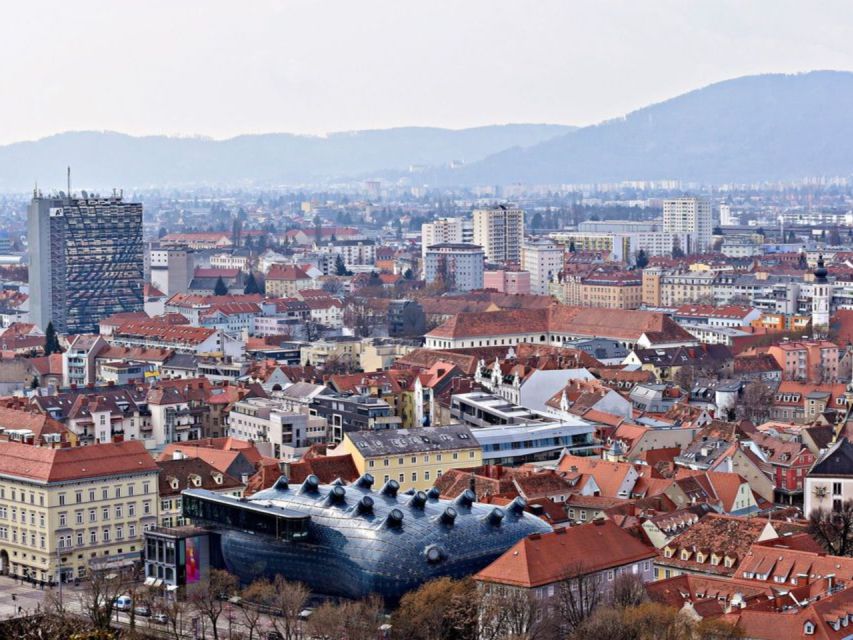
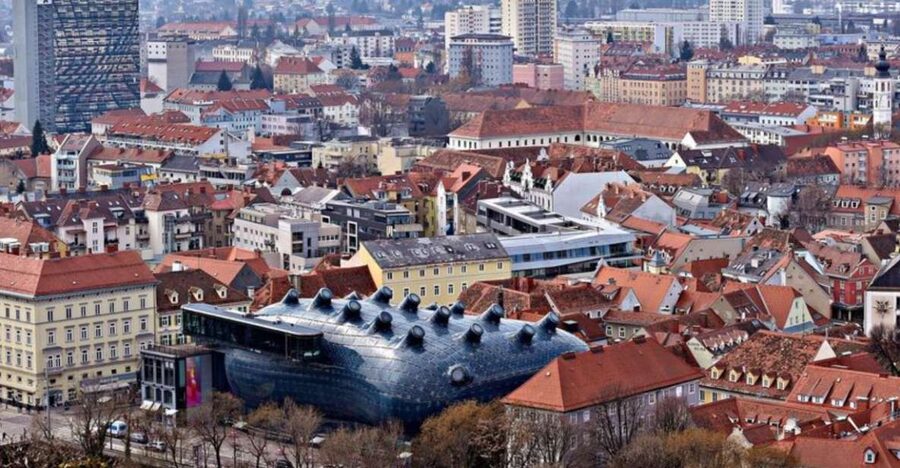
The Kunsthaus provides the tour’s strongest visual contrast. Its blob-like ultramodern form looks almost playful beside the old town, yet that contrast is exactly the point.
Graz has been recognized as a UNESCO City of Design, and the Kunsthaus gives that title a visible focus. Instead of treating modern design as something separate from the old city, the route places both in the same conversation. You move from historic stone and Renaissance ornament to an exhibition building with a striking contemporary shape.
The building is Graz’s newest exhibition place in the tour description, but entrance fees are not included. The walk lets you appreciate the outside and understand its place in the city’s cultural scene. If you want to see exhibitions inside, plan a separate visit and budget for admission.
I like ending with Kunsthaus because it keeps the city from feeling frozen in the past. Graz protects its historic center, yet it also makes room for unusual architecture and current culture.
Why the UNESCO old town matters
Graz’s old town has been a UNESCO World Heritage site since 1999. The designation reflects the quality and preservation of the district, but you do not need a formal heritage lecture to see why the area matters.
Romantic alleys, historic façades, courtyards, religious references, and imperial-era buildings sit within a walkable center. The route gives you a practical way to read those elements instead of simply passing through them.
The old town is described as one of the best-preserved districts in central Europe. That does not mean every building belongs to one period. The appeal comes from the layering: medieval beginnings, Renaissance civic life, Habsburg influence, 19th-century monuments, and modern design all appear within the same urban setting.
For you, the value is simple. A guide can point out the relationships that a casual stroll may miss, while the private format lets your group ask questions without competing for attention.
Private group value at $289
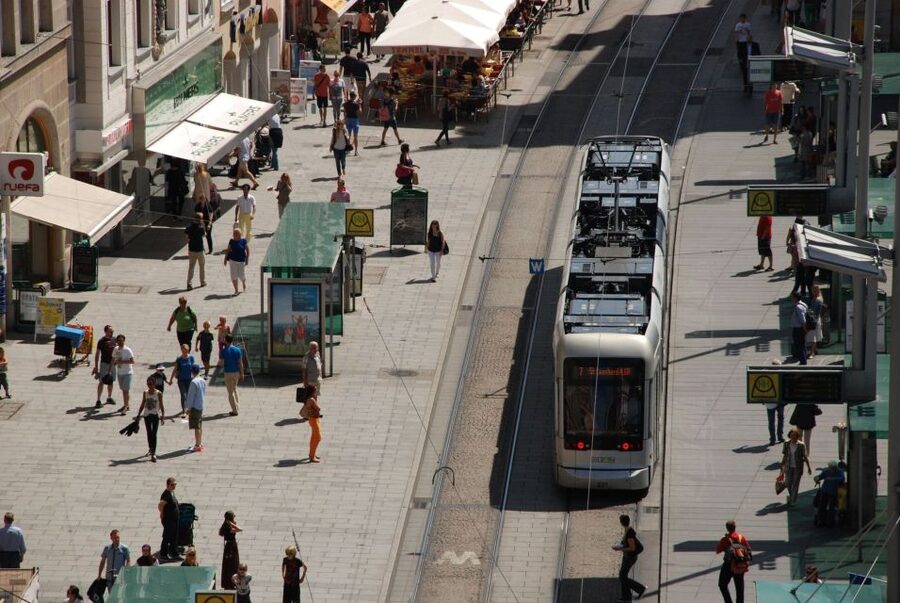
The price is $289 for a group of up to 15 people. That is a meaningful difference between booking alone and filling the group.
At the maximum size, the cost works out to about $19.27 per person. For a couple, the same price is much harder to justify unless you place a high value on a private guide and personalized attention. For a family, friend group, or organized party, the calculation becomes more attractive.
You are paying for a local guide who stays with your group only. That can make the tour more comfortable if you have mixed interests, want to ask frequent questions, or prefer not to walk with a large public group.
The 90-minute length also keeps the commitment manageable. You can fit it into a morning or afternoon and then continue with museums, cafés, shopping, or a return visit to a building that caught your eye. The tradeoff is that the route must stay brisk, and there is no room for long stops at every landmark.
What the guide can add
Guide Leo received especially warm praise for interesting stories and suggestions for the rest of the day. That is useful evidence of what this tour does best: it adds local interpretation, not just directions between buildings.
One German-language assessment also praised the guide for responding to the group’s wishes and providing insider knowledge. That matches the strongest reason to choose a private walk. You can shape the conversation around architecture, politics, religion, music, or practical ideas for continuing your visit.
The guide languages are German and English. If your group needs another language, this tour does not list one, so you should not assume it is available.
The overall rating is 4.9 from four reviews, with the available comments giving particular weight to memorable storytelling, flexible attention to group wishes, and useful recommendations for the rest of the day. The sample is small, so I would treat it as encouraging rather than final proof of a uniform experience.
Practical details for a smoother walk
Wear comfortable shoes. The route takes place on foot through the old town, and even a short walk can feel tiring if you choose style over support.
The meeting point is next to the fountain in the middle of Hauptplatz. Arrive with the square name and address ready, since a large central square can have several possible approach points.
The tour is available with live guiding in German or English. It is a private group experience, not a shared departure. Starting times vary, so check availability for the date you want.
You can cancel up to 24 hours in advance for a full refund. The reserve-now-and-pay-later option also lets you hold a place without paying today, which helps if your plans are still shifting.
Who should book this Graz walk?
I would recommend it most strongly to first-time visitors who want a well-organized introduction to the center. It also suits families and small groups who want a guide to adjust the amount of political, architectural, or cultural detail.
The tour is a good match for people who enjoy seeing many landmarks from the outside and then choosing where to spend more time later. It is less suitable if your main goal is museum entry, lengthy Schlossberg exploration, or a slow architectural study of every building.
Groups of several people get the best financial value. Solo visitors and couples should compare the private price with the importance they place on having a guide to themselves.
Should you book the Graz Private Walking Tour?
Book it if you want Graz to make sense quickly. The strongest parts are the private format, Leo’s story-led approach, the Landhaushof, the Habsburg and Styrian political context, and the striking shift from historic streets to Kunsthaus design.
Skip it if you want included admissions or a longer, slower route. For a full group of up to 15, $289 can be a fair way to share a local guide. For a very small party, the cost is harder to defend unless personalized attention is central to your plans.
FAQ
Where does the Graz Private Walking Tour meet?
It meets next to the fountain in the middle of the main square, Hauptplatz 1, 8010 Graz, Austria.
How long does the tour last?
The walking tour lasts 90 minutes.
How much does the private tour cost?
The price is $289 per group of up to 15 people.
Is the tour shared with other groups?
No. It is a private group tour with a guide for your group only.
Which languages are available?
The live guide is available in German and English.
Are entrance fees included?
No. Entrance fees are not included in the tour price.
Does the tour visit Schlossberg?
The route begins with a view of Schlossberg hill and explains its medieval importance. The provided details do not promise a separate hilltop visit or admission.
What should I bring?
Bring comfortable shoes for the walking route.
Can I cancel for a full refund?
Yes. You can cancel up to 24 hours in advance for a full refund.
Do I have to pay when I reserve?
No. The reserve-now-and-pay-later option allows you to book without paying anything today.
Just added in Graz
- Vienna: Private tour from Vienna to Graz★ 5.0 · 1 review
- Vienna: Private tour to Graz★ 5.0 · 1 review
- Graz Scavenger Hunt and Sights Self Guided Tour★ 4.0 · 9 reviews
- Historic Graz: Exclusive Private Tour with a Local Expert★ 5.0 · 1 review
- Sightseeing flight over Graz★ 5.0 · 1 review
- Graz city tours★ 3.5 · 9 reviews
- Graz – Private tour including Castle visit★ 5.0 · 1 review
- Graz: Schlossberg Private Guided Tour★ 5.0 · 2 reviews
Walking Tours, compared.
Guided Walking Tour of City Center Highlights
Read our review →
Guided Walking Tour of City Highlights & Hidden Gems
Read our review →
Vienna Historic Center Small Group Walking Tour
Read our review →
Browse the lists this tour appears in