Reviewed · TICKETS
Salzburg: The Magic Flute at Marionette Theater Ticket
Puppets give Mozart a fresh set of strings. I like the clever mix of opera and hand-controlled puppetry, and I like that the performance takes place inside Salzburg’s historic 350-seat Baroque-style Marionette Theatre. The main thing to consider is that the opera is sung in German, so you will need to follow projected explanations if you do not understand the language.
The show also gives you a rare look at the skill behind the curtain. The puppeteers do far more than move figures up and down: they coordinate music, speech, dance, lighting, and scenery with exact timing. For younger children, though, the story may be easier to follow from about age 12, especially during longer scenes.
In This Review
- Key points about Salzburg’s puppet opera
- Entering Salzburg’s 350-seat Marionette Theatre
- How The Magic Flute works as a puppet opera
- The opening stage setup is part of the charm
- Watching the puppeteers bring the figures to life
- German opera with four projected translation options
- Choosing between 65 minutes and two hours
- Is the $38 ticket good value?
- Who should book this experience?
- Practical planning for your Salzburg evening
- Should you book The Magic Flute?
- FAQ
- Where does The Magic Flute puppet performance take place?
- How long does the performance last?
- Is the opera performed in English?
- What does the ticket include?
- How much does admission cost?
- Can I cancel the booking?
Key points about Salzburg’s puppet opera
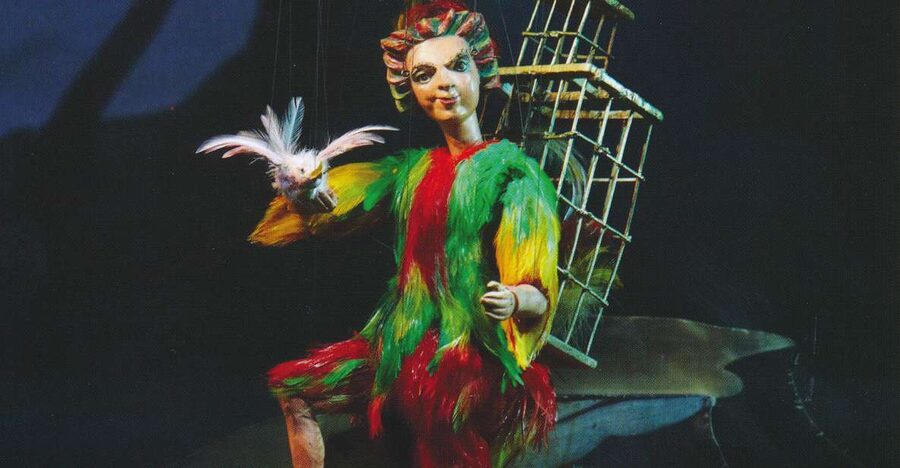
- Mozart’s best-known opera becomes a puppet show: The Magic Flute keeps its famous music and characters while adding a handmade visual style.
- The theater itself is part of the experience: You enter a miniature opera house with a Baroque-style auditorium and 350 seats.
- The puppeteers are the real technical marvel: Their manual work makes the figures appear to sing, dance, react, and come alive.
- You can choose the show length: Available versions range from about 65 minutes to two hours.
- German is used on stage: English, Spanish, French, and Chinese explanations are projected near the stage.
- It suits families, with one age caveat: The production is designed for all ages, but children around 12 and older may follow the puppets and plot more easily.
Entering Salzburg’s 350-seat Marionette Theatre
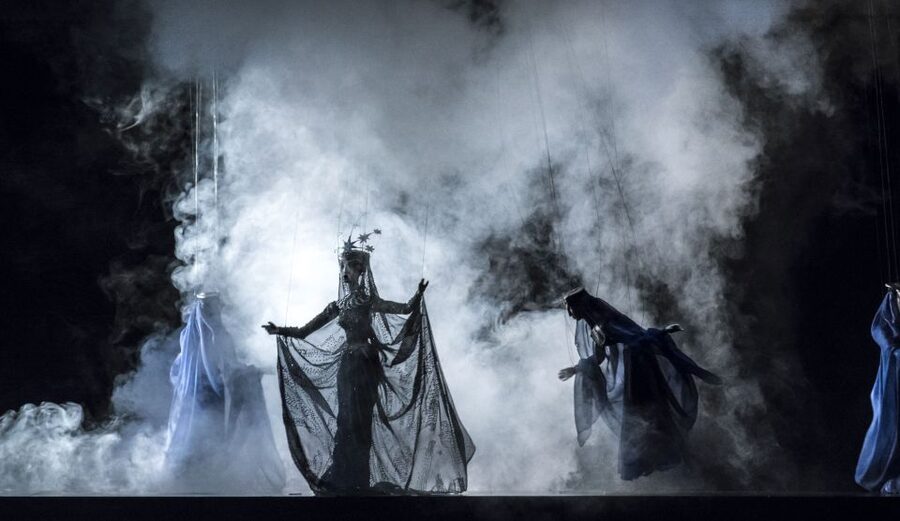
Before the music begins, give yourself a moment to look around. The Salzburg Marionette Theatre is not a plain modern venue where puppets happen to perform. It is an intimate miniature opera house, decorated in a Baroque style and fitted with around 350 seats.
That setting changes how you receive the show. In a large opera house, a singer can dominate your attention from a distance. Here, the stage and figures are much smaller, so the theater’s scale pulls you into the mechanics of the performance. You are watching opera from close enough to appreciate the detail, yet from far enough away for the puppets to form a complete stage picture.
The theater is also recognized as part of UNESCO’s Intangible Cultural Heritage. That matters because this is not simply a children’s attraction with a famous title attached. The performance belongs to a long-standing craft tradition in which music, theater, figure making, stage design, and precise handwork all meet.
The auditorium has 350 seats, so this is a substantial professional production rather than a casual street performance. At the same time, the room remains small enough to feel personal. That combination is especially useful if you want a cultural evening in Salzburg without committing to a full-scale opera production.
More Salzburg trips:
- The Original Sound of Music Tour in Salzburg
★ 4.5 · 6,129 reviews - Salzburg: Original Sound of Music Tour
★ 4.8 · 5,059 reviews - From Salzburg: Half-Day Tour to Hallstatt
★ 4.6 · 3,596 reviews
How The Magic Flute works as a puppet opera
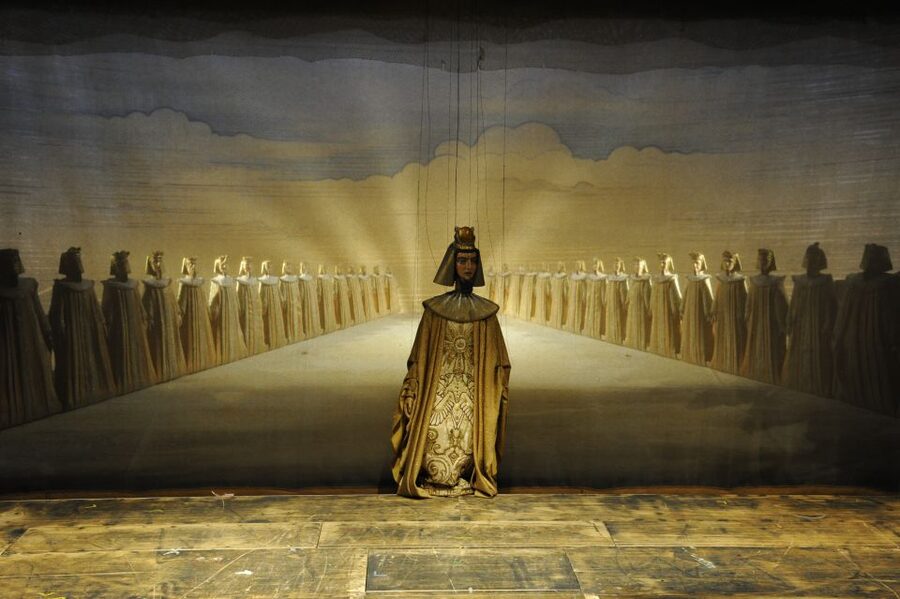
The Magic Flute is one of Mozart’s most familiar operas, but a puppet version changes your attention. Instead of watching singers express every feeling with their faces and bodies, you watch puppets create character through posture, movement, costume, and position on stage.
That sounds simple until you consider the precision required. A puppet must turn at the right moment, react to another figure, move with the music, and remain visible to the audience. The puppeteer must do this while also keeping the action readable. Even a small mistake would be easy to notice.
The show includes singing, dancing, surprises, and stage action. The production is described as a fun and unusual adaptation, so you should expect a playful approach rather than a solemn museum piece. It gives children a way into Mozart through visual action, while adults can watch the craft behind the illusion.
The most memorable effect is the way the puppets seem to gain personality. Their movements can make them appear to listen, argue, dance, or respond emotionally, even though their faces cannot perform like human actors. That is the central pleasure of the show: your imagination completes the work.
The musical side deserves a realistic note. The opera includes Mozart’s music and singing, but one audience comment wished that the music could be performed live. If live orchestral accompaniment is important to you, check the precise format of your chosen performance before booking. The supplied information does not promise a live orchestra.
The opening stage setup is part of the charm
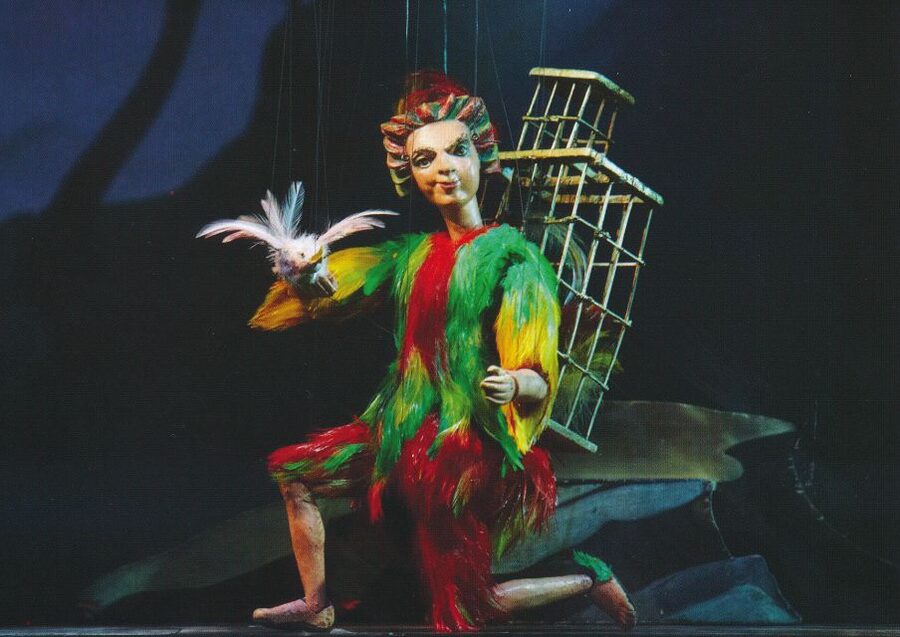
One especially good feature comes before the story fully takes over. At the beginning, you may be able to watch the scenery being placed into position. Instead of hiding every bit of stage preparation, the production lets you see some of the theater’s working parts.
This is valuable because it turns the show into a lesson in theater craft. You get a glimpse of how the small opera house is arranged, how a scene is prepared, and how much coordination happens before the puppets begin their main work. For children, this can make the performance feel less like a distant art form and more like a clever machine they can understand.
It also gives adults a reason to arrive with attention rather than rushing into their seats. The set changes and stage preparation help explain why the puppet theater has such a strong reputation. You are not only seeing the finished illusion. You are seeing hints of the labor that creates it.
The lighting team is part of this process, too. A favorable impression of the production specifically praised the players and lighting staff. That praise makes sense: with puppets, light is not decoration alone. It helps shape the figures, separate them from the scenery, and guide your eyes through a small stage.
Watching the puppeteers bring the figures to life
The puppeteers are the heart of this experience. You may not always see them clearly, but their work is present in every turn, gesture, entrance, and exit. Their job calls for musical timing as well as manual skill, since the puppets must fit the rhythm and mood of the opera.
This is where the show differs from a recorded cartoon or a standard stage version. The figures are physical objects, and every movement depends on a human hand. The result has a slight sense of risk. You know that live people are controlling the action, which makes each successful moment more impressive.
The best puppet theater does not ask you to stare at the operators. It makes you forget them for a while. The figures seem to move on their own, and then you remember the difficult work happening above, below, or behind the stage.
A favorable response to the performance described the puppets as being brought to life through the players’ skill. That is the right way to think about the show. The figures are not merely displayed. Their movement is the performance.
You should also pay attention to the contrast between the tiny scale and the large musical ambition. Mozart wrote music with drama, humor, mystery, and spectacle. The puppets cannot reproduce a full human cast in size, but they can suggest those qualities through movement and staging.
A few more options to weigh up in Salzburg
- Salzburg: Hohensalzburg Fortress Admission Ticket
★ 4.6 · 2,236 reviews - Salzburg: Salt Mine Entrance Ticket
★ 4.8 · 258 reviews - Salzburg: Cathedral Entry Ticket with Audio Guide Option
★ 4.4 · 134 reviews - Salzburg Cathedral: Guided Tour with Entry Ticket
★ 4.6 · 126 reviews
German opera with four projected translation options
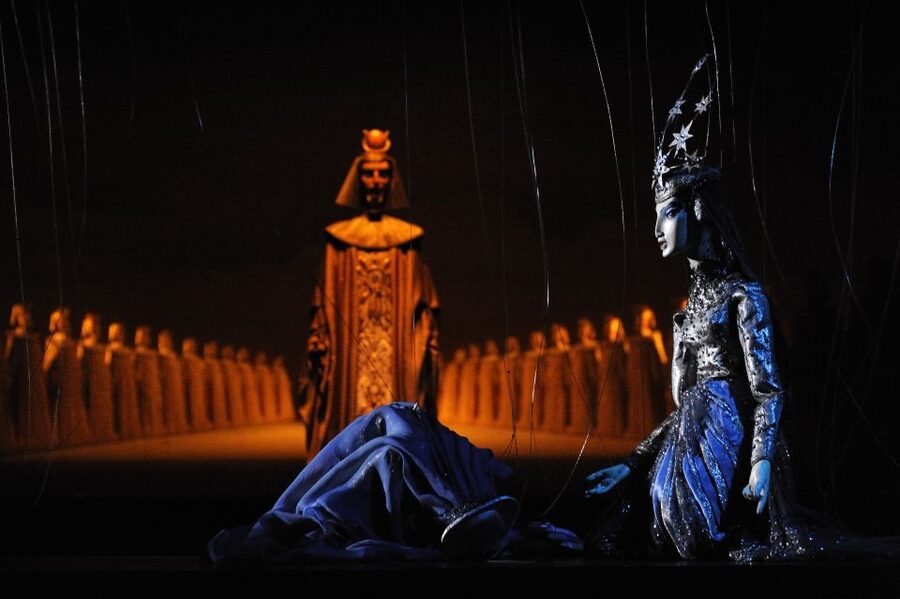
The Magic Flute is performed in German. If you do not speak German, explanations in English, Spanish, French, and Chinese are projected on a wall near the stage.
That arrangement gives you a practical way to follow the story, but it does require some attention. You will be looking between the puppets and the projected text, just as you might glance at surtitles during a traditional opera. The puppets are visually clear, but the plot and jokes may not always be obvious from movement alone.
The projected explanations are especially useful during dialogue and story transitions. They help you understand who is speaking and why the action is changing. You may still miss a detail if you focus only on the figures, so it is worth getting comfortable with shifting your gaze.
For children, the language issue is the main point to weigh. The puppets move in a magical way, but that does not guarantee that every child will understand the story. One practical age suggestion is around 12 and older, particularly for children who are not familiar with opera or German.
Younger children may still enjoy the colors, movement, music, and surprises. I would simply avoid presenting this as a fast-moving puppet comedy with constant visual jokes. It is an opera adaptation, and some patience helps.
Choosing between 65 minutes and two hours
The available performances range from about 65 minutes to two hours. Check the starting times and the exact version carefully, since duration can affect your entire Salzburg schedule.
The shorter option is easier to fit between sightseeing plans. It may suit you if you want a taste of the theater’s style without giving up most of an afternoon or evening. It can also be a better choice for children who enjoy puppets but lose focus during longer performances.
The two-hour version gives the story more room. It may feel more satisfying if you already enjoy opera or want a fuller presentation of Mozart’s work. The tradeoff is simple: you need to protect more time in your schedule, and younger children may find the longer format demanding.
Do not assume that the shortest performance is automatically the best value. The ticket costs about $38 per person, and the value depends on what you want. If you mainly want to see the historic theater and the puppeteers’ technique, 65 minutes may be enough. If you want a fuller musical and dramatic experience, the longer version may justify the extra time.
Since the exact duration can vary, read the selected option before confirming your plans. This is one of the few details that can change the feel of the outing.
Is the $38 ticket good value?
At about $38 per person, this is not a budget filler between major Salzburg sights. You are paying for a specialized live production in a historic theater, not simply admission to a room with puppets.
I think the price is reasonable if you value craft, Mozart, and unusual cultural experiences. The combination is hard to duplicate. You get a professional puppet performance, a Baroque-style auditorium, live theatrical action, and a connection to a recognized cultural tradition.
The value is less clear if you want a full traditional opera with human singers and a live orchestra. This production is built around puppets, and its appeal lies in the unusual form. It should not be judged as a cheaper substitute for a grand opera house.
There is no food or drink included. That is not a serious problem because the activity is relatively short, but you should plan your meal separately, especially if you choose the two-hour version. Think of the ticket as covering the performance only.
For a family, the total cost can add up quickly. Still, the show offers something more distinctive than a standard sightseeing stop. If your children are interested in music, theater, puppets, or behind-the-scenes work, the ticket can provide a memorable shared experience.
Who should book this experience?
I would recommend it to adults who want a different way to encounter Mozart. You do not need to be an opera expert. The puppets offer a visual entry point, and the projected explanations help you follow the story.
Families should consider it, especially with children who can sit through a stage performance. The production is intended for all ages, but a child around 12 or older is more likely to follow the German dialogue, read the projected explanations, and appreciate the careful movement.
It also suits anyone interested in traditional crafts. The hand control, timing, scenery, and lighting are not side details. They are the reason to attend.
I would be more cautious if you need constant spoken translation, have no interest in opera, or expect a large-scale show with human performers. The intimate stage is part of the appeal, but it also means the experience is more controlled and stylized than a conventional theatrical production.
Practical planning for your Salzburg evening
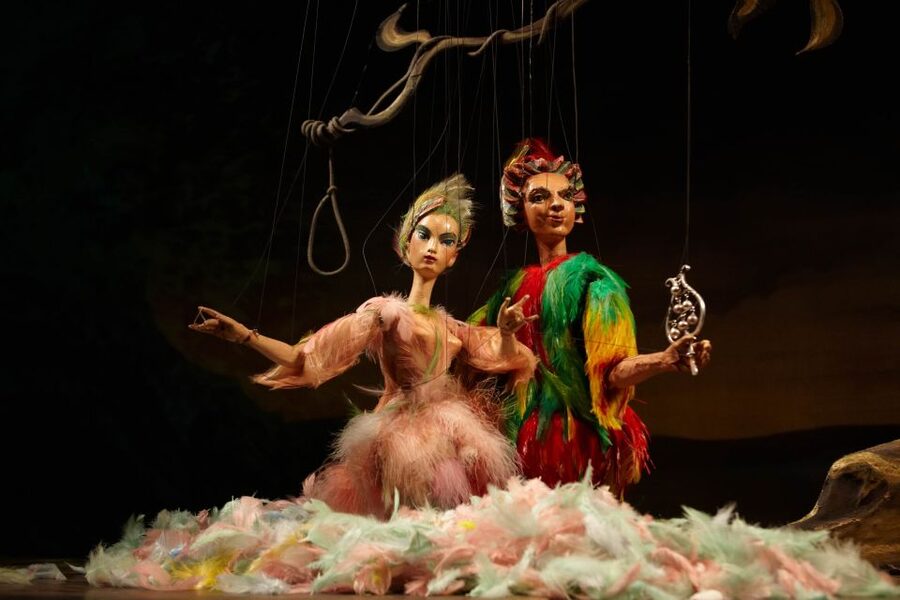
The ticket includes admission to The Magic Flute. Food and drinks are not included, so arrange those before or after the show according to your selected duration.
Cancellation is flexible up to 24 hours before the performance for a full refund. You can also reserve now and pay later, which helps if your Salzburg schedule is still changing.
Pay attention to the language support before you sit down. English, Spanish, French, and Chinese explanations are projected near the stage, so you will want a clear view of that area as well as the puppets.
If you are bringing children, explain the format in advance. Tell them they will see a Mozart opera performed by puppets, not a typical animated show. That small bit of preparation can help them understand why the figures move in a formal, carefully controlled way.
Finally, allow yourself to watch the stage mechanics. The scenery setup at the beginning and the lighting work are not distractions. They are clues to how the performance is made.
Should you book The Magic Flute?
Book it if you want Mozart with a handmade theatrical twist, a historic Salzburg venue, and a performance that rewards close attention. The puppets, lighting, scenery, and skilled operators are the main attractions, and the show offers a cultural experience that feels genuinely different from a standard concert.
Think twice if you require a live orchestra, dislike reading projected explanations, or are bringing very young children who may not sit through an opera adaptation. For most families with older children, music lovers, and curious first-time opera audiences, the $38 ticket is a fair price for a specialized performance in an extraordinary setting.
FAQ
Where does The Magic Flute puppet performance take place?
It takes place at the Salzburg Marionette Theatre in Salzburg, Austria. The theater has a Baroque-style auditorium with 350 seats and is recognized as part of UNESCO’s Intangible Cultural Heritage.
How long does the performance last?
Available versions range from about 65 minutes to two hours. Check the selected performance option for its exact duration and starting time.
Is the opera performed in English?
No. The Magic Flute is performed in German. Explanations are projected near the stage in English, Spanish, French, and Chinese.
What does the ticket include?
The ticket includes admission to The Magic Flute performance. Food and drinks are not included.
How much does admission cost?
The listed price is about $38 per person. Prices and availability can vary, so check the chosen performance when booking.
Can I cancel the booking?
Yes. You can cancel up to 24 hours in advance for a full refund. A reserve-now-and-pay-later option is also available.
Just added in Salzburg
- Werfen: Hohenwerfen Castle Entrance Ticket★ 4.5 · 84 reviews
- Vienna: Private tour from Vienna to Hallstatt and Salzburg★ 5.0 · 1 review
- Private Melk Hallstatt, Salzburg tour from Vienna★ 4.9 · 22 reviews
- Vienna: Hallstatt & Salzkammergut Trip with Ossuarry Option★ 5.0 · 1 review
- Private Full Day Trip to Hallstatt ,Salzburg and Melk from Vienna★ 4.5 · 58 reviews
- Day Tour from Vienna to Hallstatt and Salzburg with Photographer★ 3.0 · 10 reviews
- From Vienna ,Lakes to Mountains,Melk,Hallstatt and Salzburg Tour★ 3.5 · 7 reviews
- Transfer from Vienna to Salzburg with 2 hours for sightseeing★ 5.0 · 24 reviews
Tickets, compared.
Classic Ensemble Vienna in St. Peter’s Church Ticket
Read our review →
Vienna Kunsthistorisches Museum Day Admission Ticket
Read our review →
Tickets for Mozarthaus Vienna with Audio Guide
Read our review →
Skip-the-Line Entrance Ticket to the Danube Tower
Read our review →