Reviewed · TICKETS
Salzburg: Salt Mine Entrance Ticket
Salt mining gets surprisingly exciting. At the Hallein Salt Mine, you ride a mine train, slide through the mountain, cross an underground salt lake, and follow the story of salt from modern production back to the Iron Age. I especially like the mix of hands-on fun and serious history, plus the chance to visit the Celtic Village and watch pyramid-shaped salt crystals being made.
The guided tour lasts about 1.5 hours and costs $36 per person. That is fair value for the number of activities included, though you should allow extra time for transport. Public buses can run only once an hour, so arriving late could mean missing your booked entry.
In This Review
- Key points to know before you go
- Why salt made Hallein important
- From the ticket window to the miners’ train
- The two slides are the tour’s comic relief
- A salt lake beneath Baroque Salzburg
- Crossing into Germany underground
- The Celtic Village puts the oldest history in context
- Watch salt crystals form at the manufactory
- How long the tour takes and what the $36 price covers
- Getting to Hallein requires careful planning
- Who should book this salt mine tour?
- FAQ
- Where does the salt mine tour begin?
- How long does the salt mine experience last?
- What is included in the ticket?
- Is transportation included?
- What languages are available?
- Can children join the tour?
- Is the tour wheelchair accessible?
- Should you book the Hallein Salt Mine?
Key points to know before you go
- Two miners’ slides: Ride both slides into the mountain, including one that measures your speed.
- An underground border crossing: The route passes beneath the Austria-Germany border.
- A raft across a salt lake: A short boat ride comes with an atmospheric light display.
- Celtic Village included: See how the Dürrnberg connects with Iron Age salt mining.
- Salt crystals made by hand: Visit the salt manufactory and watch pyramid-shaped crystals form.
- Best for active families: Children over four, teens, and adults can all take part, but wheelchair users cannot join the tour.
Why salt made Hallein important
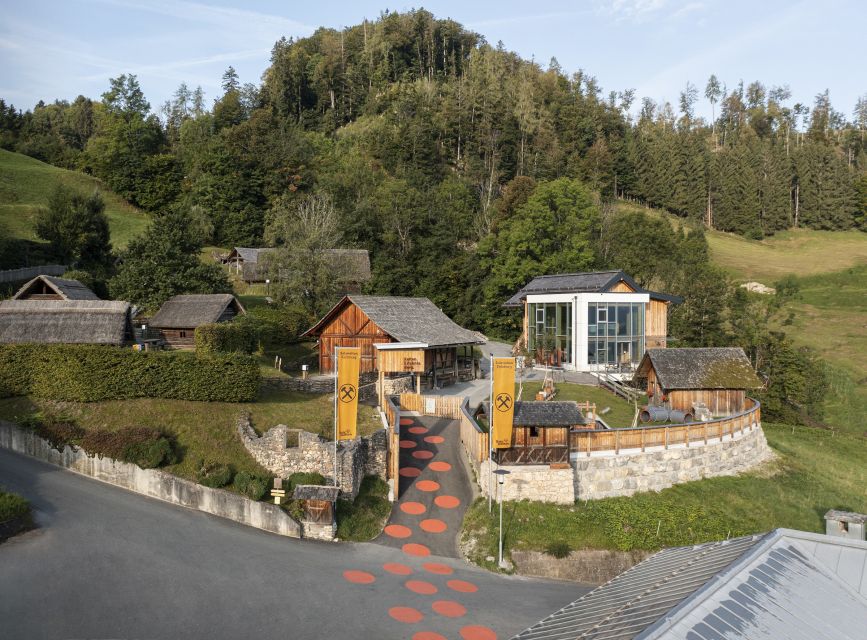
The mine sits on the Dürrnberg near Hallein, in Upper Austria, a short distance from Salzburg. The mountain’s importance comes from brine, the salty water found underground. For thousands of years, people worked to extract and process that salt.
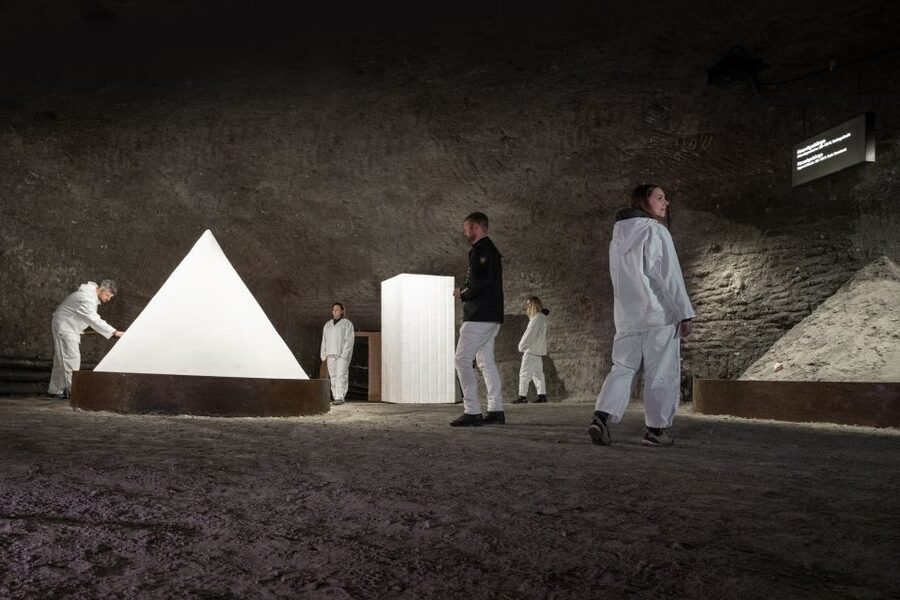
The tour frames the mountain as a journey through four periods. You begin with modern salt production, then move through the Middle Ages before reaching the Celtic miners of the Iron Age. This order helps you understand the mine as a working place shaped by changing tools, methods, and communities.
I like that the experience does not treat salt as a dull museum subject. The story is delivered while you move through the actual underground setting. You are not only looking at a display case. You are riding, sliding, walking, and crossing spaces that make the subject easier to remember.
The Celtic connection gives the visit a local focus. Salzburg is famous for music, architecture, and Baroque beauty, but the salt trade also helped shape the region. The mine gives you a different way to understand why this part of Austria developed as it did.
More Salzburg trips:
- The Original Sound of Music Tour in Salzburg
★ 4.5 · 6,129 reviews - Salzburg: Original Sound of Music Tour
★ 4.8 · 5,059 reviews - From Salzburg: Half-Day Tour to Hallstatt
★ 4.6 · 3,596 reviews
From the ticket window to the miners’ train
You meet at the Hallein Salt Mine ticket window 15 minutes before your booked time. All tours begin and end here, and the activity includes priority access through the ticket line.
Before entering the mine, you are given white miners’ overalls. Wear comfortable clothes underneath and bring something warm. Underground temperatures can feel cool even when the weather outside is pleasant, so a light jacket is sensible.
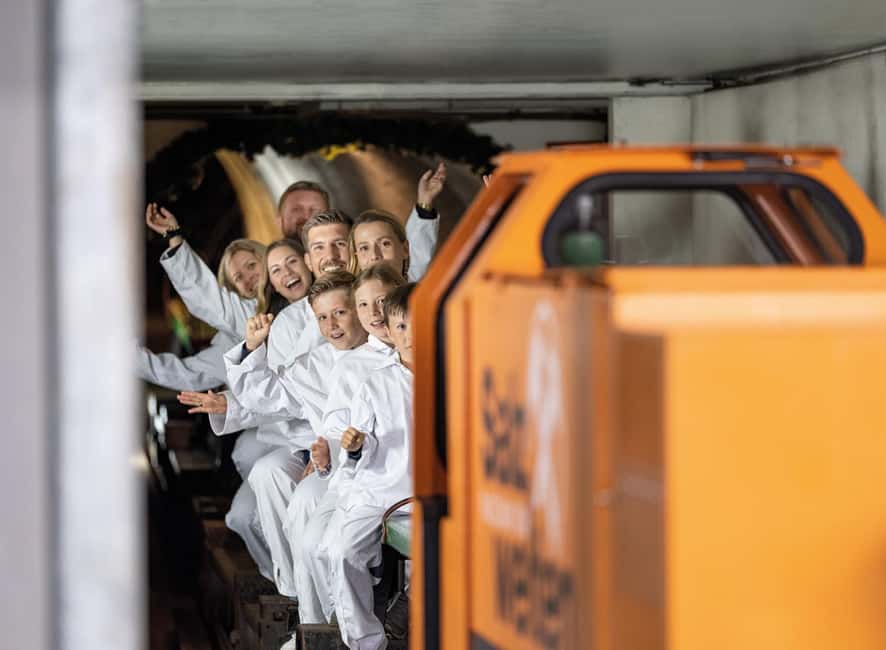
The first memorable ride is a short journey on a mine train. One description puts the ride at about two minutes, which tells you what to expect: this is a quick transport section rather than a long scenic railway trip. Still, it immediately changes the mood. You move from the visitor area into the mountain, with the train serving as a useful link between the modern entrance and the older mining world.
Your guide explains the route in English or German. If your group includes both languages, the commentary may be given in both. One English-speaking couple had the guide repeat the information in English because they were the only two English speakers in the group. That is useful to know, though bilingual guiding can affect the pace.
Guides named Kristina and Nicolaus received particular praise for being friendly, clear, and enthusiastic. A good guide matters here because the mine combines history, safety instructions, short films, and physical activities. The strongest part of the experience is not just the setting, but the way the guide connects each stop to the wider story.
The two slides are the tour’s comic relief
The miners’ slides are the part most likely to make you laugh. You ride down two wooden slides, moving farther into the mountain. One is about 80 meters long, and one can measure your speed as you go.
These are not decorative museum pieces. You actually use them as part of the route. That makes the history feel physical and gives children and teenagers something to anticipate between the historical explanations.
You do not need to be a thrill seeker to enjoy them. The slides are brief, but they add just enough excitement to keep the tour moving. Families with children aged 11 and 14 enjoyed the combination of history and activities, while adults traveling with grown children also found the experience fun.
The slides are also one reason to wear practical clothes. You are provided with protective overalls, but comfortable clothing still makes sense. The mine is not a place for formal outfits or delicate shoes.
Some people may find the slides less dramatic than expected. They are short moments within a guided historical tour, not a theme-park attraction. That is probably a good balance: you get a real mining experience without losing the educational purpose.
A salt lake beneath Baroque Salzburg
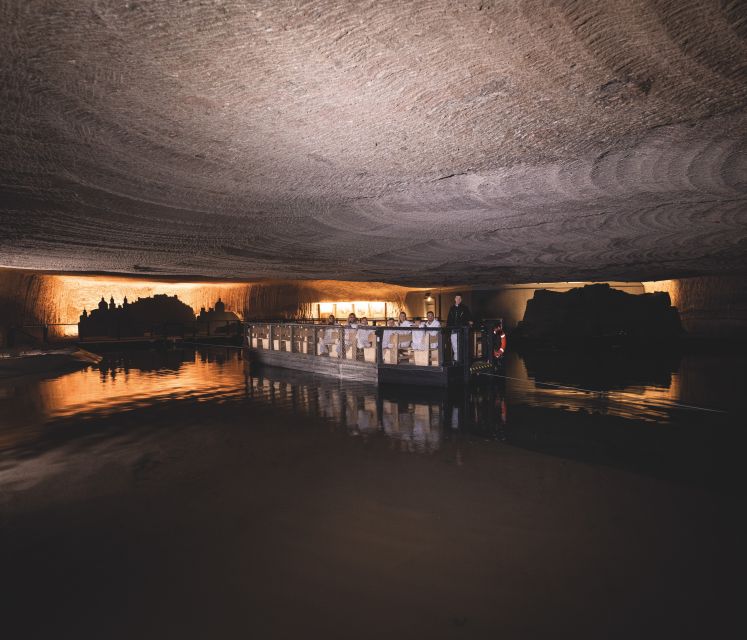
The most atmospheric stop is the subterranean salt lake. You cross it on a raft while a light show brings out the reflective quality of the water and the surrounding rock.
The ride is short, around 80 meters, but it gives the tour a change of pace. After the train and slides, you slow down and take in the underground setting. The lighting creates an unusual scene, with the water reflecting colors in the dark space.
The salt lake is also where the tour links the mine to Salzburg above ground. The display evokes the Baroque character of Salzburg, so you get a visual reminder that the mountain and the city are part of the same regional story.
Do not expect a long boat journey or a silent cave expedition. The raft ride is a compact attraction within the larger route. One small criticism from an otherwise very positive visit was that the lights never went completely out to create total darkness. If you were hoping for a more stark, natural cave experience, the light show may feel a little polished.
For me, the appeal is the contrast. The mine is industrial, historic, and playful in turns. The raft section gives you a few minutes to simply watch the reflections and enjoy how different the underground world feels from the streets of Salzburg.
A few more options to weigh up in Salzburg
- Salzburg: Hohensalzburg Fortress Admission Ticket
★ 4.6 · 2,236 reviews - Salzburg: The Magic Flute at Marionette Theater Ticket
★ 4.7 · 255 reviews - Salzburg: Cathedral Entry Ticket with Audio Guide Option
★ 4.4 · 134 reviews - Salzburg Cathedral: Guided Tour with Entry Ticket
★ 4.6 · 126 reviews
Crossing into Germany underground
One unusual detail is the subterranean border crossing between Austria and Germany. You do not need a passport for this short underground passage, but it adds a memorable geographical twist to the tour.
This is the sort of detail I appreciate because it gives the visit a strong sense of place. You are not touring a generic mine. You are in a border region where the underground route crosses from one country to another.
The border itself is not a major stop with a long presentation. Think of it as a small surprise woven into the route. The mine train, slides, lake, and historical sections carry more of the tour’s weight, but the crossing is an easy detail to remember afterward.
The Celtic Village puts the oldest history in context
The tour reaches back to Celtic miners of the Iron Age, and entry to the Celtic Village is included. This adds meaning to the phrase 2,600 years of salt mining on the Dürrnberg.
The village helps you picture the people connected to the earliest period presented on the tour. You are not simply told that salt was extracted long ago. You also get a setting linked to Celtic life and local history.
The Celtic Village can be visited as part of the included experience, and one person noted being the only visitor there at the time. That could make the visit feel quiet and personal, though it also means the atmosphere may vary depending on timing.
I would allow enough time for this section rather than treating it as a quick extra. The underground tour is the main event, but the Celtic Village gives you a better sense of why the mine matters beyond its slides and special effects.
Watch salt crystals form at the manufactory
The salt manufactory offers a close look at how the Dürrnberg’s natural brine becomes a finished product. Under the direction of a master salt-maker, the brine forms pyramid-shaped crystals called Bad Ischler Salzzart.
This is a valuable stop because it shows salt as a crafted product, not just a mineral pulled from the ground. You can watch the maker work and see how shape and texture develop during production.
The manufactory is described as Austria’s only showcase saltworks. It is a small-scale presentation rather than a large factory tour, which makes it easier to focus on the process. You can also try brine and browse the salt and souvenir shop at the end.
The shop gives you a practical way to take the experience home. Salt products are more useful than many standard souvenirs, and the unusual crystal shapes make them distinctive. Still, the shop is optional. You do not need to buy anything for the manufactory visit to be worthwhile.
How long the tour takes and what the $36 price covers
The advertised duration is 1.5 hours. That covers the guided salt mine visit, the mine train, the slides, the underground lake crossing, and the historical presentation. Entry to the Celtic Village and Salt Manufactory is also included.
At $36 per person, I consider the price reasonable if you plan to take part in the full route. You are paying for a guided attraction with several built-in activities, rather than simply entering a mine and reading signs at your own pace.
The value is strongest for families and mixed-age groups. Children and teens have the slides and train, while adults get a clear introduction to local history and salt production. It also works well for adults traveling without children because the activities are brief and the historical content gives them purpose.
The tour is less appealing if you want a long, quiet geological visit. Much of the experience is structured, with short films, guided explanations, staged lighting, and set activities. I see that as a strength for most visitors, but it may feel too packaged if you prefer unmarked tunnels and independent exploration.
Getting to Hallein requires careful planning

Transportation is not included, so you must arrange your own way to the meeting point. The tour begins at the Hallein Salt Mine ticket window, and you should arrive 15 minutes before your scheduled time.
Public transport can be workable, but you need to check the timetable closely. A bus connection from Anif took more than 90 minutes in one case, and a missed connection would have meant missing the booked tour. A taxi from Hallein cost €20, which may be worth considering if you are traveling with several people.
The bus stop is directly outside the mine car park, but buses may come only once an hour. The same issue applies after the tour. I would not plan a tight connection with a train, museum booking, or airport transfer.
The safest approach is simple: check the return timetable before you leave Salzburg, and build in extra time on both ends. The mine visit itself is only 1.5 hours, but the full outing can take much longer once transport is included.
Who should book this salt mine tour?
I would recommend it to families with children over four, teenagers, couples who want something different from city sightseeing, and anyone interested in the working history of the Salzburg region.
It is especially good for a mixed group. One person can enjoy the historical explanations, another can look forward to the slides, and everyone gets the shared experience of the train and underground lake.
The tour is not suitable for children under four or wheelchair users. It also may not suit anyone uncomfortable with underground spaces, though the provided information does not describe the exact tunnel conditions. Warm clothing and comfortable clothes are advised.
English speakers should have no trouble joining because live guiding is available in English and German. If the group is bilingual, the guide may repeat information in both languages, so the pace can vary.
You can cancel for a full refund up to 24 hours before the booked time, and you can reserve now while paying later. Those options help if your Salzburg plans are still changing.
FAQ
Where does the salt mine tour begin?
The tour begins at the Hallein Salt Mine ticket window. You should meet there 15 minutes before your booked time slot.
How long does the salt mine experience last?
The guided experience lasts about 1.5 hours. The Celtic Village and Salt Manufactory are included, but you should allow additional time for visiting them and for transportation.
What is included in the ticket?
The ticket includes entry to the Salt Mine, Celtic Village, and Salt Manufactory, as well as the guided Salt Mine tour.
Is transportation included?
No. You are responsible for getting to and from the Hallein Salt Mine meeting point.
What languages are available?
Live guiding is available in English and German.
Can children join the tour?
Children under four cannot join. Older children can take part, and the train, slides, and raft ride make the experience suitable for many families.
Is the tour wheelchair accessible?
No. The experience is not suitable for wheelchair users.
Should you book the Hallein Salt Mine?
Book it if you want a memorable break from Salzburg’s churches, concert halls, and grand buildings. The combination of a mine train, two slides, a raft ride, Celtic history, and hand-produced salt gives you plenty to do for the price.
I would be most careful about transportation. The tour is easy to enjoy once you arrive, but an infrequent bus service can turn a simple visit into a rushed one. Plan the route early, arrive before your time slot, and bring warm clothing.
For an active, unusual outing with real local context, this is a strong choice. It is educational without being dry, playful without becoming a theme park, and short enough to fit into a busy Salzburg itinerary.
Just added in Salzburg
- Werfen: Hohenwerfen Castle Entrance Ticket★ 4.5 · 84 reviews
- Vienna: Private tour from Vienna to Hallstatt and Salzburg★ 5.0 · 1 review
- Private Melk Hallstatt, Salzburg tour from Vienna★ 4.9 · 22 reviews
- Vienna: Hallstatt & Salzkammergut Trip with Ossuarry Option★ 5.0 · 1 review
- Private Full Day Trip to Hallstatt ,Salzburg and Melk from Vienna★ 4.5 · 58 reviews
- Day Tour from Vienna to Hallstatt and Salzburg with Photographer★ 3.0 · 10 reviews
- From Vienna ,Lakes to Mountains,Melk,Hallstatt and Salzburg Tour★ 3.5 · 7 reviews
- Transfer from Vienna to Salzburg with 2 hours for sightseeing★ 5.0 · 24 reviews
Tickets, compared.
Classic Ensemble Vienna in St. Peter’s Church Ticket
Read our review →
Vienna Kunsthistorisches Museum Day Admission Ticket
Read our review →
Tickets for Mozarthaus Vienna with Audio Guide
Read our review →
Skip-the-Line Entrance Ticket to the Danube Tower
Read our review →