
Reviewed · WALKING TOURS
Salzburg Introduction Walking Tour
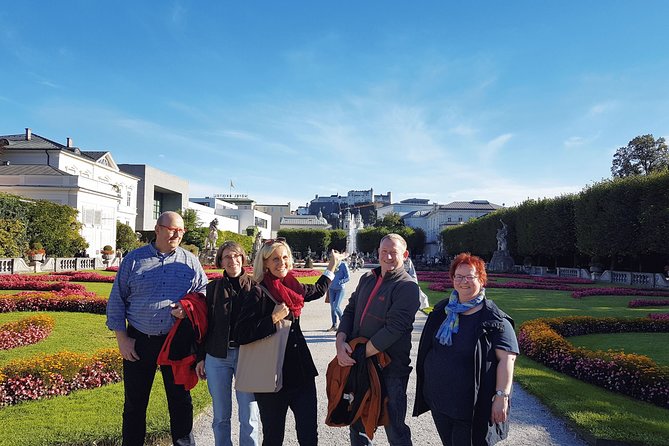
Salzburg rewards a slow first look. This small-group walk brings the old city into focus through medieval lanes, baroque squares, Mozart sites, and local stories rather than a quick parade of photo stops. I like the access to expert guides such as Liza, Lisa, Claudia, and Astrid, and I like that the tour can adjust to your interests when the group is tiny. The main concern is price: at $180.21 per person, this is a costly introduction for a walk with no admissions, food, or transport included.
You begin near Linzer Gasse at 9:30 am and spend about two and a half to three hours on foot. A group may be as small as two people, which gives you room to ask questions and slow down in the shade. Still, the experience may feel less useful if you want a clear, sweeping timeline first, since one mixed review found the information detailed but short on overall context.
In This Review
- The Salzburg details that matter most
- Why this walk works as a Salzburg introduction
- From Linzer Gasse into the Burgher Town
- Getreidegasse and the shift to baroque power
- Mozart’s birthplace, childhood, and musical Salzburg
- Festival Halls and St. Peter’s Abbey
- The Sound of Music, with the real von Trapp story
- What the small group changes
- Is $180.21 a fair price?
- Timing, walking effort, and booking advice
- Who should book this Salzburg walk?
- Should you book the Salzburg Introduction Walking Tour?
- FAQ
- How long does the Salzburg Introduction Walking Tour last?
- Where does the tour begin?
- What time does the tour start?
- What language is the tour offered in?
- How many people can join the tour?
- Is hotel pickup included?
- Is admission to the Mozart Residence included?
- Can I cancel for a full refund?
The Salzburg details that matter most
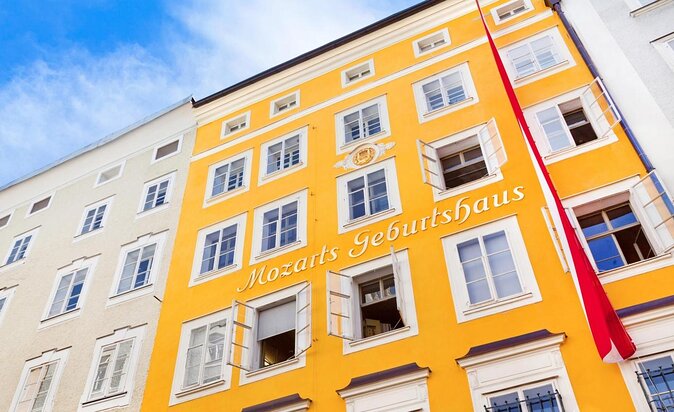
- A genuinely small format: The stated limit is six people in the highlights, while the additional information gives a maximum of eight. Either way, this is far more intimate than a large city walk.
- Getreidegasse reveals two Sal burgs at once: Its narrow passages and old commercial character lead toward broad squares shaped by the archbishops.
- Mozart is part of the city story, not just a birthplace photo: You hear about Wolfgang and Nannerl Mozart, as well as composer Michael Haydn.
- The Sound of Music gets a local reading: The guide explains the real von Trapp family and the difference between a film story and an authentic refugee story.
- Guides bring academic and local experience: The team includes professors, doctoral students, historians, journalists, art critics, and published authors.
- The walk is best early in your stay: Several guides point out places to revisit, food stops, ice cream, and good viewing spots.
Why this walk works as a Salzburg introduction
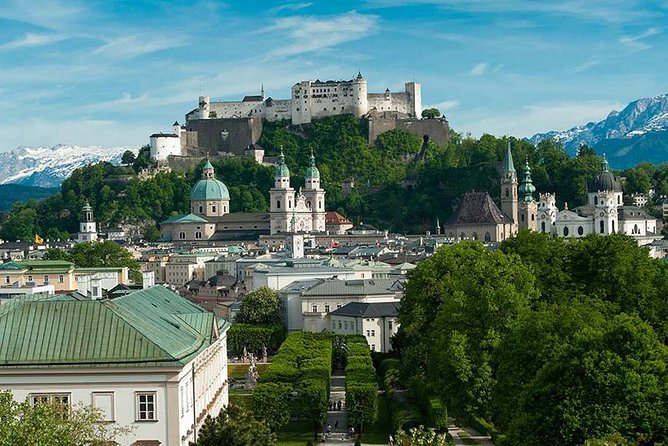
Salzburg can look almost too pretty at first. Church domes, pale facades, ornate signs, and mountain views make it easy to admire the city without understanding how it developed.
This tour gives you that missing frame. You move from the Burgher Town, with its crooked lanes and passageways, into the wide baroque squares where the archbishops governed from their Residence. That contrast is the key idea of the walk. Salzburg was both a working commercial town and a church-led center of power.
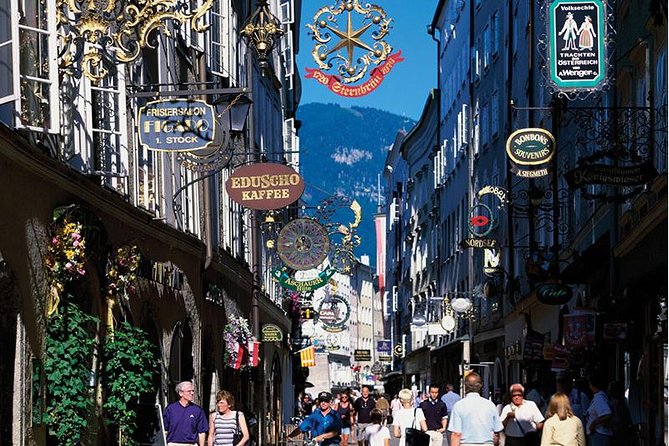
I like this approach because it helps you read the streets later. The Getreidegasse is not simply a shopping lane with handsome wrought-iron signs. It is presented as part of Salzburg’s medieval commercial center, still shaped by narrow routes and connecting passages. The open squares then feel less like isolated monuments and more like a deliberate change in scale and authority.
The guide’s background can make a real difference. The company says its guides include professors, doctoral students, historians, journalists, art critics, and published authors. That does not guarantee the same style from every guide, but it does explain why the tour leans toward cultural and political context rather than a list of dates.
One useful caution: the amount of detail can vary by guide and by group. A strong guide such as Claudia or Liza may tailor the walk to your questions. If you prefer a single, orderly story from Roman-era beginnings through the modern city, say so at the start. One participant found the narration broken and wanted a clearer overview. That is an easy request to make before the walk gets underway.
More Walking Tours in Salzburg
- Salzburg 2.5-Hour Walking Tour: Mozart, Old Town & More
★ 4.2 · 987 reviews - Salzburg: Old Town, Mozart, & Mirabell Gardens Walking Tour
★ 4.8 · 461 reviews - Salzburg Oldtown: Sightseeing Walking Tour with Licensed Local Guide
★ 5.0 · 392 reviews
From Linzer Gasse into the Burgher Town
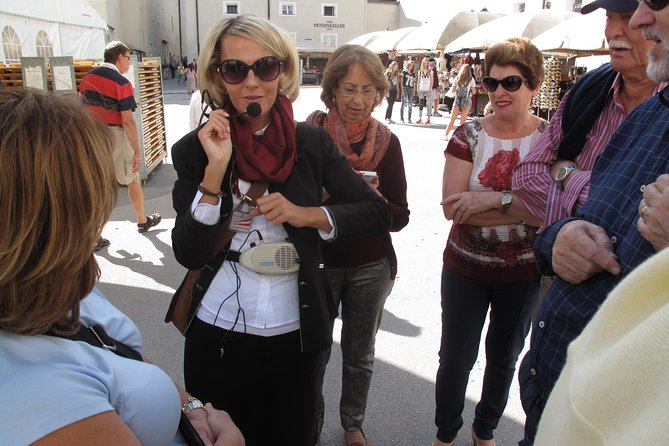
The meeting point is at Linzer Gasse 39, near public transportation. The tour starts at 9:30 am, with morning and afternoon departures listed as available, so check your selected time carefully when booking.
From there, the walk explores the old city’s Burgher Town. Expect narrow, slightly crooked streets and passageways tied to the Getreidegasse, Salzburg’s old commercial center. This part should appeal to you if you enjoy cities that reveal themselves through small turns rather than grand avenues.
The practical benefit is orientation. Salzburg’s center is compact, but its lanes and passages can be confusing during a first visit. With a guide pointing out the connections, you can later return on your own without simply wandering past important corners.
The pace appears comfortable rather than rushed. One account describes covering the old town almost completely and recording more than 10,000 steps, while still finding the pace manageable. That is a useful warning for anyone counting this as an easy stroll. You will be on your feet for hours, and comfortable shoes matter.
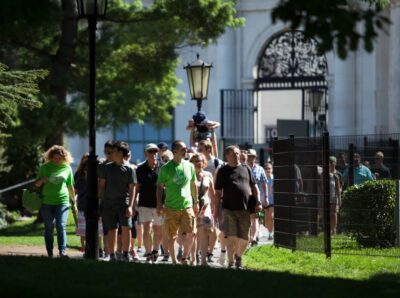
Hot weather also deserves attention. Lisa and Liza were praised for moving the group into shade or finding places to sit during explanations. This is not a promise for every departure, but it shows why a small group helps. A guide can react to the heat instead of delivering every speech from the same exposed spot.
Getreidegasse and the shift to baroque power
Getreidegasse is likely one of the most memorable parts of the route. Its narrow form, passageways, and old commercial character show you the practical city built by merchants and residents.
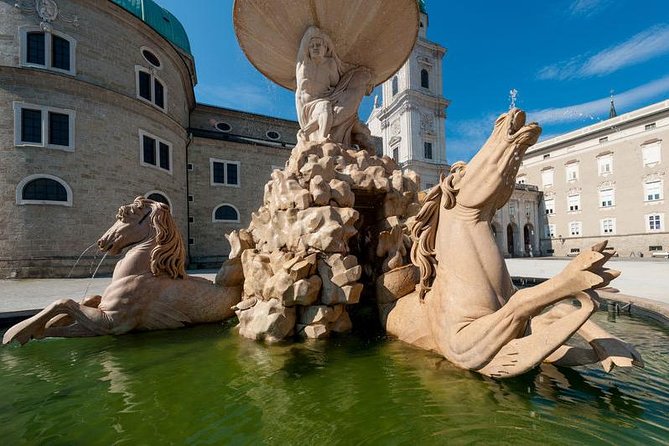
Then the walk opens into Salzburg’s great baroque squares. The change is dramatic, and the guide uses it to explain the role of the archbishops and their Residence. You are not only looking at attractive buildings. You are seeing how political and religious power reshaped the city’s public spaces.
This is also where a scholarly guide can add value. The tour includes stories about Salzburg’s salt commerce and medical innovations, along with its cultural and political development. Those subjects give you more than the usual Mozart-and-movie version of the city.
Do not expect a museum tour with long interior visits. The experience is primarily outdoors, and admission to the Mozart Residence is not included. That keeps the walk moving, but you should plan a separate visit if you want to explore the residence itself.
Mozart’s birthplace, childhood, and musical Salzburg
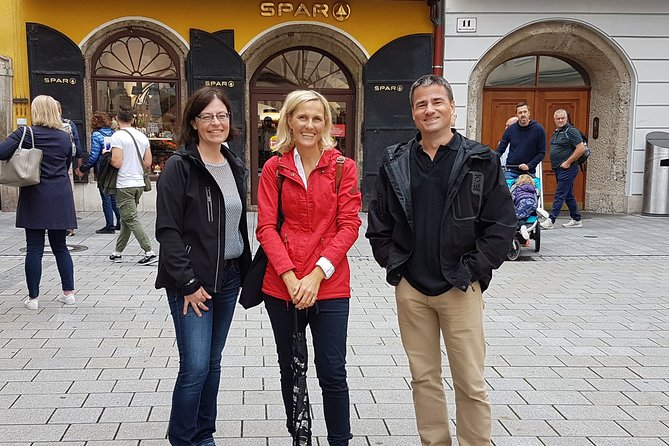
The route passes Mozart’s Birthplace and discusses Wolfgang and Nannerl Mozart’s childhood in Salzburg. This is more useful than simply stopping for a photograph because the focus is on the family and the city around them.
The tour also brings in Michael Haydn, described as the city’s other great musical son. That broader view is welcome. Salzburg’s musical identity can easily shrink into a single famous name, especially for first-time visitors. Hearing about another major composer gives the city a fuller cultural picture.
The tour does not include admission to the Mozart Residence, so you need to budget separately if you want to go inside. I would use the walk to decide how much Mozart you want afterward. If the subject grabs you, you will already have a better sense of why the sites matter. If not, you can enjoy the city without feeling obliged to turn the rest of your day into a Mozart pilgrimage.
The guides also appear comfortable mixing formal history with local personalities and lore. Natalie was praised for combining Salzburg’s past with its people and for shaping the walk around the group’s interests. That flexibility is one of the strongest reasons to choose a small format.
More Salzburg trips:
- The Original Sound of Music Tour in Salzburg
★ 4.5 · 6,129 reviews - Salzburg: Original Sound of Music Tour
★ 4.8 · 5,059 reviews - From Salzburg: Half-Day Tour to Hallstatt
★ 4.6 · 3,596 reviews - Salzburg: Mozart Concert at Mirabell Palace
★ 4.8 · 3,498 reviews
Festival Halls and St. Peter’s Abbey
The walk passes the Festival Halls before reaching St. Peter’s, the Benedictine monastery dating to 696. These stops connect Salzburg’s current musical fame with much older religious institutions.
The Festival Halls are an important reminder that Salzburg is not only a preserved medieval and baroque town. They are tied to the city’s continuing performance tradition, while St. Peter’s reaches back to the early medieval period. Taken together, they help you see the long span of Salzburg’s cultural life.
The tour also covers beautiful churches and less obvious corners of the old town. Several guides were praised for leading people to places they would not have found alone. One especially memorable moment involved entering a chapel at Nonnberg Abbey while a choir rehearsed. That particular event cannot be promised, but it shows the kind of local timing and access a good guide may notice.
Keep your expectations sensible. The supplied details say the route passes the Festival Halls and St. Peter’s, not that it includes every interior or a special performance. The value lies in explanation and orientation, not in bundled entry tickets.
The Sound of Music, with the real von Trapp story
The von Trapp family adds a different layer to the walk. You learn about the family behind The Sound of Music, including the real story of their refugee experience during the Second World War.
This section should suit you if you know the film well but want an Austrian perspective. One guide brought photographs and explained the difference between movie locations, local memory, and the actual von Trapp family. Another pointed out filming locations and suggested the best places to stand in a garden.
That kind of advice is practical. You can return later for photographs or combine the walk with a separate Sound of Music outing. It also keeps the movie material from taking over the entire tour. Salzburg has plenty of cinematic appeal, but the guide connects it to the city’s politics, people, and past.
If your main goal is to visit every film location, this introduction walk may not be enough. Its purpose is broader. You receive selected locations and background while also covering Mozart, churches, commerce, and the archbishops.
What the small group changes
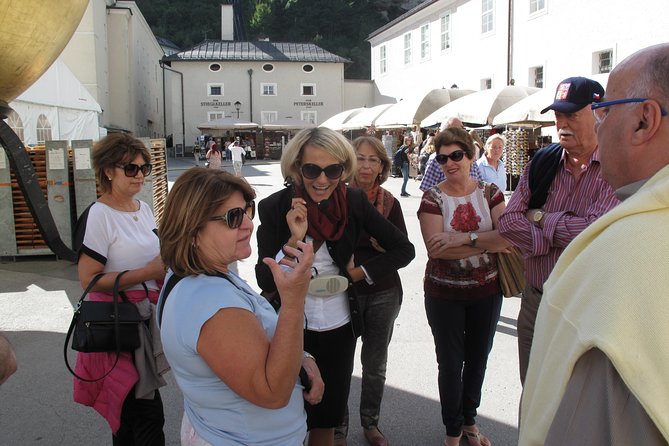
The stated group limit needs a small clarification. The highlights describe a maximum of six people, while the additional information says the activity may have up to eight. Even eight is a small party, but you should not assume the group will always be capped at six.
In practice, the format can become almost private. One booking ended up with only two cousins. Another had just a couple, allowing Lisa to shape the route around their interests. That is a major advantage if you want to ask about local customs, history, architecture, or music without holding up a large crowd.
It also helps with simple physical needs. Guides have been able to find shade and seating during hot weather, and they can respond to questions as they arise. The tradeoff is that the experience depends strongly on the individual guide and the group’s interests. A highly academic guide may give you more detail than you want, while a less structured walk may leave you wishing for a clearer outline.
Is $180.21 a fair price?
At $180.21 per person, this is not a budget city walk. The fee covers a professional scholarly guide, but not food, drinks, hotel pickup, drop-off, or Mozart Residence admission.
The price makes more sense if you are splitting the cost across a very small party and care about the quality of explanation. A private-feeling walk for two, with time to ask questions and receive tailored suggestions, can be worthwhile at the start of a short Salzburg stay. It is less appealing if you mainly want basic orientation or a quick checklist of sights.
The strongest value comes from what the walk may save you later: missed lanes, confusing connections, and a shallow understanding of the places you visit independently. Guides have suggested snacks, ice cream, and return stops, and some people used the rest of their stay to revisit nearly everything they had seen.
The 97 percent recommendation rate and 4.8 rating from 31 reviews point to a strong overall record, but the less favorable experience is worth taking seriously. If you need a clear chronological lecture, ask the guide to begin with a short city overview. That one request may make the detailed stops easier to follow.
Timing, walking effort, and booking advice
The published duration is about two hours and 30 minutes, while the included description calls it a three-hour walk. Plan for roughly three hours so you are not rushing to a train, lunch reservation, or museum appointment.
The start is at 9:30 am, and the tour is offered in English. A mobile ticket is available, and confirmation arrives when you book. Since the experience is often booked 44 days ahead, reserve early if your dates are fixed, especially if the smallest possible group matters to you.
You can cancel for a full refund up to 24 hours before the local start time. Cancellations or changes made inside that window are not accepted for a refund.
Most people can take part, and the route is near public transportation. The supplied details do not promise hotel pickup, drop-off, food, or drinks, so arrange those yourself. Bring water and wear shoes suited to several thousand steps.
Who should book this Salzburg walk?
I would choose it for a first or second day in Salzburg, especially if you want the city’s history to guide the rest of your visit. It suits people who enjoy architecture, music, local personalities, political history, and the real story behind The Sound of Music.
It is also a good match for couples, families, and small groups who want conversation rather than a fixed speech. Guides such as Claudia, Liza, Lisa, Natalie, and Astrid have been praised for warmth, humor, patience, and local perspective.
I would hesitate if your budget is tight, if you dislike walking for three hours, or if you want a tour focused only on Mozart or film locations. You may also prefer another option if you need guaranteed interior access to St. Peter’s, the Festival Halls, or the Mozart Residence.
Should you book the Salzburg Introduction Walking Tour?
Book it if you value expert explanation and a very small group more than low cost. The route covers the essential old town while adding the salt trade, medical innovation, archbishops, Mozart’s family, Michael Haydn, and the real von Trapps.
Before starting, tell your guide what you want most: a clear timeline, music, architecture, The Sound of Music, local food tips, or hidden passageways. That makes the high price easier to justify and helps avoid the one real weakness, a walk that can feel like disconnected facts without enough overview.
For a compact Salzburg visit, this is a strong way to get your bearings fast and then spend the next few days returning to the places that caught your eye.
FAQ
How long does the Salzburg Introduction Walking Tour last?
The tour is described as approximately two hours and 30 minutes, while the included details call it a three-hour walk. Plan on about three hours.
Where does the tour begin?
The meeting point is Linzer Gasse 39, 5020 Salzburg, Austria.
What time does the tour start?
The listed start time is 9:30 am. Morning and afternoon departures are available, depending on the selected booking.
What language is the tour offered in?
The tour is offered in English.
How many people can join the tour?
The highlights describe a maximum of six people, while the additional information lists a maximum of eight travelers. Confirm the exact group limit when booking.
Is hotel pickup included?
No. Hotel pickup and drop-off are not included.
Is admission to the Mozart Residence included?
No. Mozart Residence admission is not included in the tour price.
Can I cancel for a full refund?
Yes. You can cancel at least 24 hours before the local start time for a full refund. Cancellations or changes made less than 24 hours before the start are not refunded or accepted.
Just added in Salzburg
- Werfen: Hohenwerfen Castle Entrance Ticket★ 4.5 · 84 reviews
- Vienna: Private tour from Vienna to Hallstatt and Salzburg★ 5.0 · 1 review
- Private Melk Hallstatt, Salzburg tour from Vienna★ 4.9 · 22 reviews
- Vienna: Hallstatt & Salzkammergut Trip with Ossuarry Option★ 5.0 · 1 review
- Private Full Day Trip to Hallstatt ,Salzburg and Melk from Vienna★ 4.5 · 58 reviews
- Day Tour from Vienna to Hallstatt and Salzburg with Photographer★ 3.0 · 10 reviews
- From Vienna ,Lakes to Mountains,Melk,Hallstatt and Salzburg Tour★ 3.5 · 7 reviews
- Transfer from Vienna to Salzburg with 2 hours for sightseeing★ 5.0 · 24 reviews
Walking Tours, compared.
Guided Walking Tour of City Center Highlights
Read our review →
Guided Walking Tour of City Highlights & Hidden Gems
Read our review →
Vienna Historic Center Small Group Walking Tour
Read our review →
Browse the lists this tour appears in