
Reviewed · BELVEDERE TOURS
Private Klimt & Vienna Art Walk — From Baroque to Secession
Vienna’s golden kiss comes with a history lesson. This private half-day walk links Klimt’s The Kiss at the Belvedere with the Secession Building, Otto Wagner’s Art Nouveau work, Baroque Vienna, and the city’s grand musical tradition. I like the small-group format and the way the route connects art with politics, architecture, and daily life instead of treating each sight as an isolated stop. I also like the hotel pickup and the choice of a 9:30 a.m. or 2 p.m. start.
The main caution is that this is a serious walking and talking tour, not a quick photo stop. You cover a fair stretch of central Vienna, and the guide may offer strong personal opinions along with the art and history. Walter has received especially warm praise for his pacing, stories, and ability to adjust to a slower walker, but his humor and political comments may not suit everyone.
In This Review
- What makes this Vienna art walk worth considering
- From Prince Eugene’s palace to Klimt’s golden kiss
- Reading the Belvedere gardens like a Baroque designer
- Schwarzenbergplatz and Vienna’s changing political face
- Karlskirche and the move from Baroque to 1900
- Musikverein and the sound of imperial Vienna
- The Secession Building and Klimt’s Beethoven Frieze
- Naschmarkt brings the art walk back to daily life
- Pace, walking, and the private-group advantage
- Guide style: stories, scholarship, and strong opinions
- Who should book this Klimt and Vienna walk?
- FAQ
- How long is the Private Klimt and Vienna Art Walk?
- What time does the tour start?
- Where can pickup be arranged?
- Is this a private tour?
- Are museum admissions included?
- Does skip-the-line access mean tickets are free?
- Is public transportation included?
- What level of fitness is needed?
- Can I cancel for a full refund?
- Should you book it?
What makes this Vienna art walk worth considering
- Klimt’s The Kiss at the Belvedere: See Vienna’s most famous painting inside Prince Eugene’s Baroque palace, with context about both the artwork and the building.
- Two Klimt worksites in one tour: The Secession Building adds the Beethoven Frieze, a less familiar but essential work for understanding Klimt’s ideas.
- Baroque to Art Nouveau in four hours: The route moves from 18th-century palace design to the artistic rebellion of around 1900.
- Private access for up to eight people: Your group gets a licensed Austria Guide rather than joining a large bus tour.
- A route that uses Vienna’s city fabric: Schwarzenbergplatz, Karlskirche, the Karlsplatz metro station, Musikverein, and Naschmarkt help connect the museums to the city around them.
- Tickets are extra: The advertised skip-the-line service does not include admission to the Upper Belvedere or Secession Building, so budget for both entrances.
From Prince Eugene’s palace to Klimt’s golden kiss
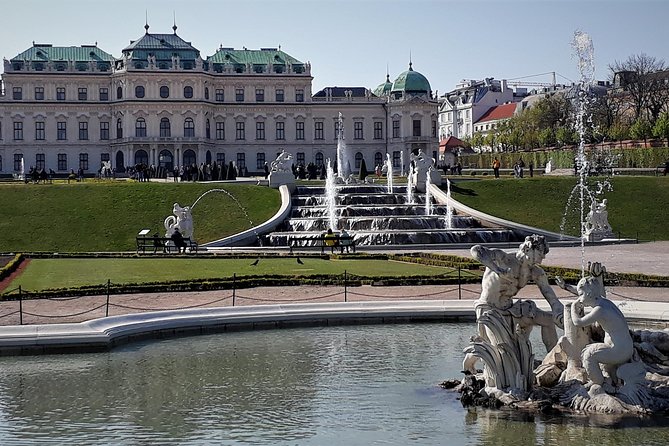
The tour begins at the Upper Belvedere, where ornate iron gates open toward one of Vienna’s great Baroque garden complexes. The palace was built for Prince Eugene of Savoy, and the setting was designed to impress from the approach, not merely to provide a pretty backdrop for photographs.
Your guide uses the garden to explain how the three levels work. The slope, terraces, fountains, and sight lines create visual tricks that make the palace seem even grander. This is a useful start because you learn to read the architecture before entering the museum. The building and grounds were planned as a complete display of power.
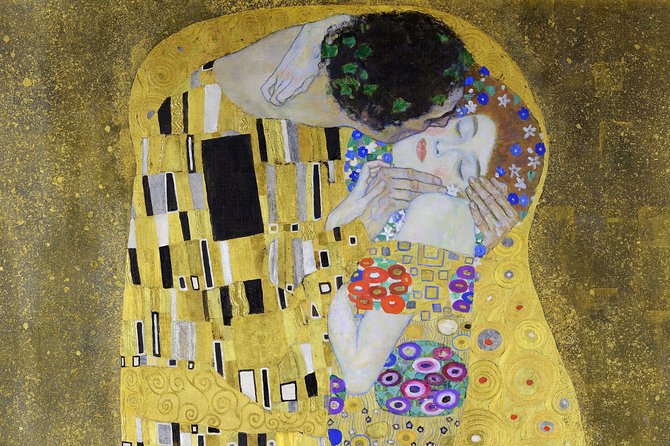
Inside the Austrian Gallery, the main prize is Gustav Klimt’s The Kiss. You get the painting everyone has seen on postcards, posters, and souvenirs, but the value of a guide is the added context. Klimt’s gold surface can make the work look simple from a distance. A good explanation brings out the contrast between the patterned robes, the couple’s poses, and the tension between decorative beauty and human feeling.
The visit to the Belvedere is scheduled for about 40 minutes. That is enough for a focused look at Klimt and the palace, but not enough for every room or every important Austrian painter. If you want a full museum visit, plan to return on your own. This tour gives you a guided introduction rather than an exhaustive gallery tour.
Admission is not included. The tour description promises skip-the-line access, but you still need to pay for the Upper Belvedere ticket. Check the current entrance arrangements when booking, since museum access rules and timed entry systems can change.
More Walking Tours in Vienna
- Vienna: Guided Walking Tour of City Center Highlights
★ 4.7 · 4,989 reviews - Vienna: Vienna Central Cemetery Guided Walking Tour
★ 4.8 · 3,307 reviews - Vienna: Guided Walking Tour of City Highlights & Hidden Gems
★ 4.9 · 2,180 reviews
Reading the Belvedere gardens like a Baroque designer
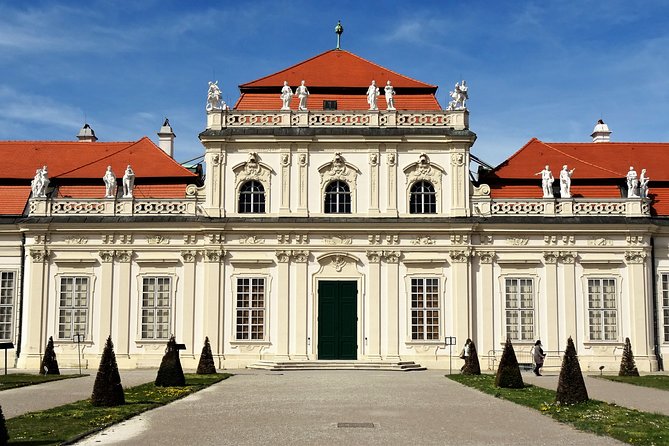
After seeing The Kiss, the route continues through the palace grounds and toward the Lower Belvedere. The guide explains how Prince Eugene borrowed ideas associated with Versailles, adapting them on a smaller Viennese scale.
This part matters because the Belvedere is easy to reduce to one painting. The gardens explain the social world that produced the palace. Long views, formal planting, terraces, and controlled movement all turn a walk into a display of rank. You are not just crossing a garden. You are moving through a carefully arranged statement about wealth and authority.
The route includes the garden room and honor court connected with the Lower Belvedere. These details help you understand how court life worked and how a military commander such as Prince Eugene presented himself in peacetime Vienna.
The itinerary does not promise a full interior visit to the Lower Belvedere. Treat this section as an outdoor explanation and a transition to the city. If your main goal is museum art beyond Klimt, ask the guide how much time is available before the tour begins.
Schwarzenbergplatz and Vienna’s changing political face
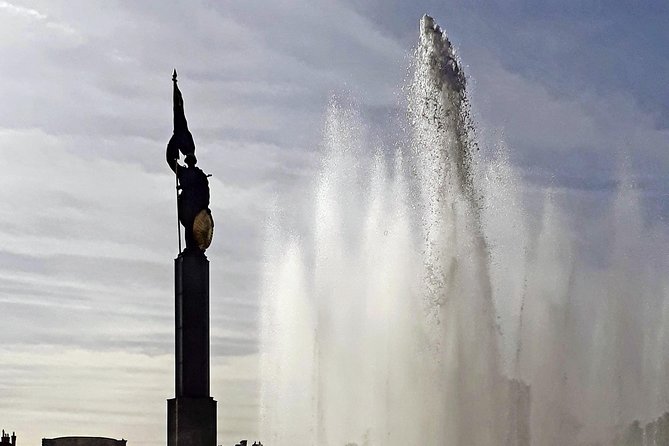
From the Belvedere area, you continue toward Schwarzenbergplatz. The square is dominated by the Soviet Memorial, while the surrounding buildings reflect Vienna’s expansion and confidence during the late 19th century.
This is one of the route’s useful contrasts. The Belvedere speaks in the language of aristocratic Baroque power. Schwarzenbergplatz brings you into the city of empire, urban growth, and modern political memory. The Soviet Memorial adds a 20th-century layer that does not fit neatly into Vienna’s polished imperial image.
The guide’s approach is not limited to dates and architectural labels. Walter, one of the guides associated with this experience, has been praised for explaining how the past affects Austria’s present. He may also discuss Austrian attitudes toward Russia, NATO, and national neutrality. That can make the walk more revealing, but it also means you may hear opinions rather than a strictly neutral script.
One complaint specifically concerned anti-American comments and sympathy for aspects of Soviet-era rule. The provider’s response made clear that guides are encouraged to share personal views. I would treat this as a point to consider before booking. If you enjoy conversation and competing interpretations, it may add interest. If you prefer a guide to keep politics out of sightseeing, ask about the guiding style in advance.
Karlskirche and the move from Baroque to 1900
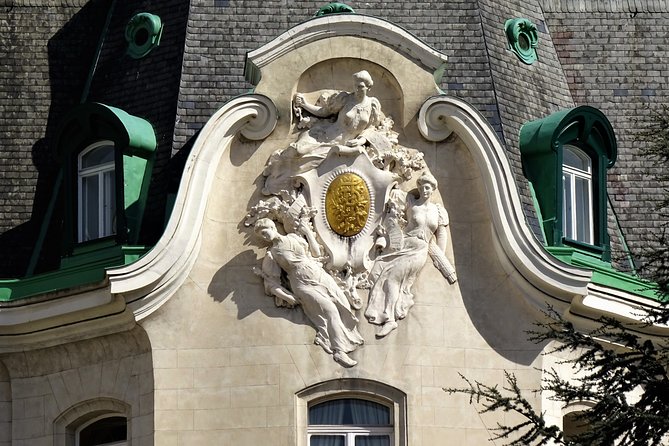
The route then reaches Karlskirche, one of Vienna’s most powerful Baroque churches. Its great dome, columns, and broad approach were built to impress from a distance. The church gives your guide a strong setting for explaining Austria’s 18th-century glory and the role of monumental architecture in public life.
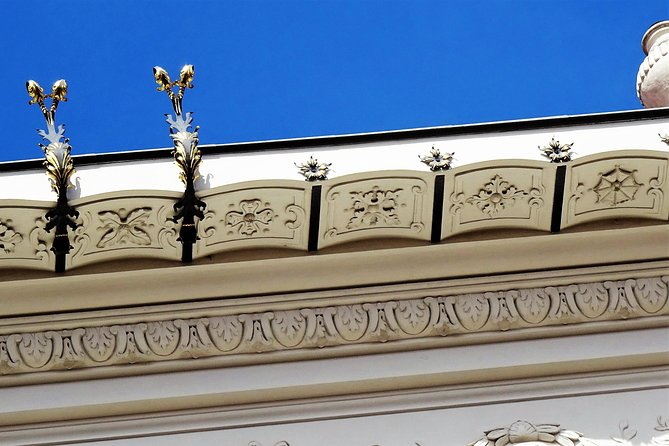
The walk does not stop with the Baroque. At Karlsplatz, you see one of Otto Wagner’s famous metro stations, a compact example of Vienna’s Art Nouveau period. The station is practical, but its decorative details show how even public transport could receive an artistic treatment around 1900.
This shift is central to the tour’s theme. Vienna did not leap from old palace culture into modern art overnight. The city carried its Baroque and imperial traditions into a new age, then began questioning them. Otto Wagner’s work helps you see that change in everyday infrastructure, not just in museums.
You may use the Vienna metro during the route. Public transportation is not included, so carry a valid ticket or be ready to buy one. The guide handles the explanations, but you handle the fare.
More Belvedere visits:
- Entry Ticket Upper Belvedere, Klimt’s Kiss & Permanent Collection
★ 4.5 · 831 reviews - Vienna: Lower Belvedere Entry Ticket & Temporary Exhibitions
★ 4.1 · 275 reviews - Vienna: Belvedere Palace Skip-the-Line Tour
★ 4.9 · 197 reviews - Skip-the-line Upper Belvedere Tickets and Guided Tour Vienna
★ 4.8 · 185 reviews
Musikverein and the sound of imperial Vienna
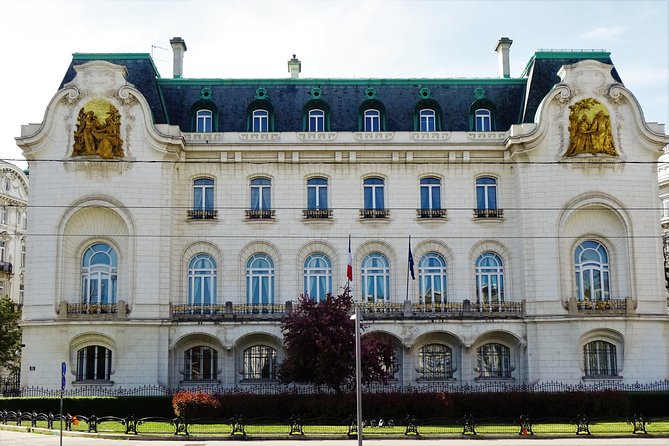
The Wiener Musikverein, home of the Vienna Philharmonic, adds music to the art-and-architecture story. Its Great Hall, often called the Golden Hall, is prized for its acoustics and is considered one of the world’s finest concert spaces.
The tour views the building from the route rather than promising a concert or interior performance. Even so, it helps explain why Vienna’s artistic reputation reaches beyond painting. The city’s culture around 1900 was a conversation among music, architecture, psychology, design, and visual art.
This stop also gives you a welcome change of scale. After discussing palace grounds and museum rooms, you encounter a building tied to live performance and the city’s continuing musical identity. Ask your guide about concert access if that interests you, but do not assume a concert visit is part of the tour.
The Secession Building and Klimt’s Beethoven Frieze
The second major museum stop is the Secession Building, about 30 minutes from the scheduled itinerary. Its white exterior, unusual dome, and clean geometric form announce a break with Vienna’s older art institutions.
The building was created by artists who left the established fine art organization. That act of rebellion is as important as the architecture. The Secession was not simply a new gallery. It was a public statement that artists wanted control over modern art and its presentation.
Inside, Klimt’s Beethoven Frieze gives you a different side of his work. It was created for an exhibition celebrating Beethoven and was painted directly onto the walls using light materials. The work follows a symbolic journey and ends with a kiss to the world.
If The Kiss is Klimt’s polished public icon, the Beethoven Frieze is stranger and more demanding. It brings together longing, danger, suffering, and redemption. The guide’s explanation is particularly useful here because the imagery can be difficult to follow without some direction.
Admission is not included at the Secession either. The tour provides guiding and skip-the-line assistance, but you should plan to pay the entrance fee separately. The visit is short, so do not expect a complete survey of the building or all its exhibitions.
Naschmarkt brings the art walk back to daily life
The final listed stop is Naschmarkt, a food market and international eating area whose current form dates to 1915. It is a fitting finish because it moves the tour away from palaces and museums and back into ordinary city life.
You can use the market for an outdoor lunch or a late afternoon snack. The description calls it transitional, so do not expect a frozen-in-time old market. Its changing character is part of the point. Vienna’s culture is not only imperial rooms and gold-covered paintings. It also includes food stalls, casual stops, and spaces that keep adapting to new uses.
Food is not included, and the stop is not presented as a formal tasting tour. Bring your own budget and decide whether you want a quick bite or simply a look around. If you choose the afternoon departure, Naschmarkt may be especially useful near the end of the day.
Pace, walking, and the private-group advantage
The experience is listed at about four hours, though the route can feel closer to three hours depending on the day and how long you spend at each stop. One participant ended early after two hours because of sore feet, while another praised the guide for adjusting to a slower member of the group.
That tells you what to expect: this is not a strenuous hike, but it involves substantial walking, standing, museum movement, and city transit. A moderate level of fitness is recommended. Wear comfortable shoes, and avoid scheduling another long walking tour immediately before it.
The private format is a real advantage. The group can include up to eight people, and pickup is offered from hotels, vacation rentals, Vienna Central Station, Vienna West Station, and the Reichsbrücke pier. Other meeting points can be arranged. Starting at your accommodation saves time and helps if you are still learning Vienna’s transport system.
The tradeoff is cost. At $372.47 per group, the price is high for one or two people, but it becomes more reasonable when shared by a larger party. At eight people, the per-person cost is about $47. That price still does not include museum admission or public transportation, so compare the total cost with a group tour before deciding.
Guide style: stories, scholarship, and strong opinions
The most praised part of this experience is the guide’s art and history presentation. Walter is frequently described as engaging, well-informed, and good at explaining Klimt’s life, friendships, artistic setting, and connection to Vienna around 1900. Wolfgang has also received warm praise for his art history and Austrian history explanations.
The guiding style is more like an extended conversation or lecture than a tightly scripted sightseeing routine. That suits you if you want background, interpretation, and links between places. It may not suit you if you want constant jokes, rapid movement, or only the headline facts.
Walter is in his seventies and has guided for decades. His pace may feel slow to some people, but that can help if anyone in your party needs more time. His humor has been described as dated, with some jokes that may not land well. The safest choice is to book this tour for the art and historical discussion, not for polished entertainment.
Who should book this Klimt and Vienna walk?
I would recommend it to you if you want to understand why Klimt matters, not merely stand in front of The Kiss. It works especially well for first-time visitors who want a quick framework for Vienna’s Baroque past, Art Nouveau moment, and cultural life around 1900.
It also suits families or friends who value a private guide and want hotel pickup. A larger group gets better value from the fixed group price. The 9:30 a.m. start is useful for placing the Belvedere early in your day, while the 2 p.m. option leaves the morning open.
I would hesitate if you want a long, quiet museum visit, dislike political discussion, or have limited walking ability. You should also account for the extra museum fees and public transport costs before judging the price.
Free cancellation is available if you cancel at least 24 hours before the start time. Confirmation is sent within 48 hours, subject to availability. Service animals are allowed, but pets are not permitted in some areas visited.
FAQ
How long is the Private Klimt and Vienna Art Walk?
The tour is advertised as lasting approximately four hours. The amount of time spent at each stop can vary, and some accounts describe a shorter three-hour version.
What time does the tour start?
You can choose a 9:30 a.m. or 2 p.m. departure.
Where can pickup be arranged?
Pickup is offered from hotels and vacation rentals in Vienna, the Reichsbrücke pier, Vienna Central Station, and Vienna West Station. Other meeting points can be arranged.
Is this a private tour?
Yes. Only your group participates, with a maximum group size of eight people.
Are museum admissions included?
No. Admission to the Upper Belvedere and Secession Building is not included in the tour price.
Does skip-the-line access mean tickets are free?
No. Skip-the-line service is included, but you still pay the separate admission charges.
Is public transportation included?
No. Public transportation costs are not included. The route may use Vienna’s metro system, including the area around Otto Wagner’s Karlsplatz station.
What level of fitness is needed?
A moderate level of physical fitness is recommended. Expect walking and standing during the half-day route.
Can I cancel for a full refund?
Yes, if you cancel at least 24 hours before the local start time. Cancellations or changes made less than 24 hours before the start are not refunded or accepted.
Should you book it?
Book this walk if you want Klimt with context: palace design, Vienna’s artistic rebellion, Art Nouveau architecture, political memory, music, and a market stop in one private route. The Belvedere and Secession Building are the strongest reasons to go, and the smaller group makes it easier to ask questions and adjust the pace.
Skip it if you want a purely neutral guide, a full day inside the museums, or the lowest possible cost. For an art-minded group of four to eight people, the fixed price can be fair. For a solo visitor or couple, the added museum and transport fees make the value less obvious.
Just added in Vienna
- Vienna: Austrian Wine Tasting Experience★ 4.2 · 2 reviews
- World War II History Vienna Old Town Private Walking Tour★ 4.8 · 9 reviews
- Vienna_ Meet Beethoven Life Private Guided Walking Tour★ 5.0 · 1 review
- Vienna: Wine Tasting Tour★ 4.8 · 61 reviews
- Vienna: Wine Tasting E-Bike Tour★ 4.9 · 46 reviews
- Vienna: Wine Tasting at Schönbrunn Palace★ 4.3 · 71 reviews
- Vienna: Winery and Wine Tasting Tour with a Wine Expert★ 5.0 · 5 reviews
- Vienna: Concert by the Vienna Baroque Orchestra★ 4.6 · 56 reviews
Belvedere Tours, compared.
Entry Ticket Upper Belvedere, Klimt’s Kiss & Permanent Collection
Read our review →
Lower Belvedere Entry Ticket & Temporary Exhibitions
Read our review →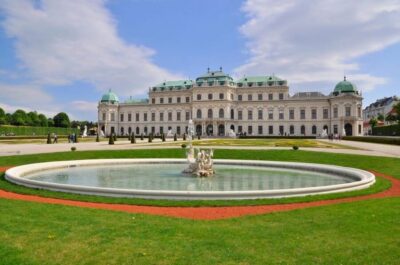
Skip-the-line Upper Belvedere Tickets and Guided Tour Vienna
Read our review →
Schönbrunn, Belvedere, Big Bus, Giant Wheel & Cruise
Read our review →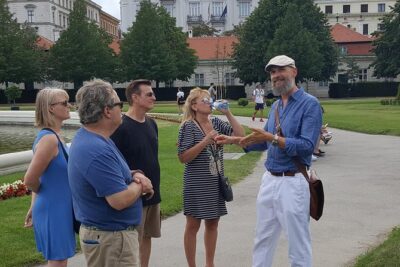
Skip-the-line Upper Belvedere Tickets and Guided Tour Vienna
Read our review →
Klimt Villa (Gustav Klimt Atelier & Museum) Ticket
Read our review →Browse the lists this tour appears in