
Reviewed · WALKING TOURS
Nuns and Nazis Walking Tour in Salzburg
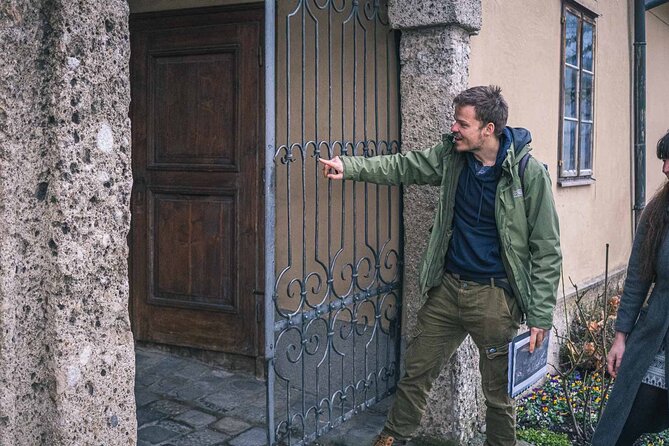
Salzburg’s prettiest paths carry some hard truths. The Nuns and Nazis Walking Tour connects Sound of Music locations with the city’s World War II story, giving you more than a cheerful movie pilgrimage. I like the clear focus on Salzburg during the Nazi era, and I like the way guide Leo brings in his own family connection to that period. The main drawback is the pace: two hours or more on foot, often with stops in exposed weather, can feel long if you want only movie locations.
This is a small-group walk capped at 25 people and priced at $20.64 per person. I especially appreciate that the route ends at Nonnberg Abbey, where you can continue toward Hohensalzburg Fortress, but you should arrive ready for a moderate amount of walking and a serious subject mixed with lighter film facts.
In This Review
- Key points to know before you go
- Why this Salzburg walk is different
- Starting at Mirabell Gardens at 3 p.m.
- Makartplatz and the names of public space
- Linzergasse and the Stolpersteine
- Steingasse and an uncertain wartime trace
- Staatsbrücke and the cost of construction
- Alter Markt and Salzburg’s Jewish families
- The Festspielhaus and the film’s famous ending
- Residenzplatz, the Anschluss, and the book burning
- Nonnberg Abbey, the nuns, and the Alpine view
- How much walking and time to allow
- Price, group size, and overall value
- Who should book this walk?
- FAQ
- Where does the Nuns and Nazis Walking Tour start?
- What time does the tour begin?
- Where does the tour end?
- How long does the tour last?
- What does the tour cover?
- Is admission included at the stops?
- Can I cancel for a refund?
- Should you book the Nuns and Nazis Tour?
Key points to know before you go
- Two stories share one route: Sound of Music locations sit alongside the Anschluss, forced labor, Jewish families, book burning, and local wartime memory.
- Leo gives the tour a personal angle: His family history was affected by World War II, which helps explain his interest in the subject.
- The route ends at Nonnberg Abbey: You finish at the film’s famous convent and can continue on foot toward Hohensalzburg Fortress.
- Mirabell Gardens comes first: The opening stop gives movie fans an early reward before the tour turns toward harder history.
- Expect more than two hours: One session lasted about three hours, so do not schedule a tight appointment afterward.
- A film refresher helps: Rewatching Sound of Music before the walk makes the brief locations easier to recognize.
Why this Salzburg walk is different
Many Salzburg walks offer either a general introduction to the old town or a cheerful tour of Sound of Music filming sites. This one takes a narrower route. It asks how Salzburg looked and felt during World War II, then uses the Trapp family and the film as a second thread.
That combination works because the movie is tied to a very real historical setting. Sound of Music presents the Trapp family’s departure from Austria in a polished musical form, while the tour explains the political takeover and social pressure behind that story. You get both the familiar movie image and the less comfortable city beneath it.
The title may sound playful, but the subject is not treated as a joke. Leo’s approach joins personal insight, local history, and film knowledge. The tone can still be friendly and entertaining, yet the stops involving Nazi victims, Jewish residents, forced labor, and book burning require attention and respect.
I would choose this walk after seeing Salzburg’s main sights, or alongside a general city walk. It is not designed to explain every period of Salzburg history. Its value comes from concentrating on one troubled chapter and showing you where it happened.
More Walking Tours in Salzburg
- Salzburg 2.5-Hour Walking Tour: Mozart, Old Town & More
★ 4.2 · 987 reviews - Salzburg: Old Town, Mozart, & Mirabell Gardens Walking Tour
★ 4.8 · 461 reviews - Salzburg Oldtown: Sightseeing Walking Tour with Licensed Local Guide
★ 5.0 · 392 reviews
Starting at Mirabell Gardens at 3 p.m.
The meeting point is Kurgarten, at Rainerstraße 2, with the walk beginning at 3 p.m. The first stop is Schloss Mirabell and Mirabellgarten, where you spend about 15 minutes crossing the gardens.
For Sound of Music fans, this is an immediate treat. Mirabell Gardens is one of the movie’s most recognizable filming areas, so you begin with a place you may already know from the screen. It also gives Leo a natural way to introduce the Trapp family and explain how the film transformed Salzburg into a destination for musical sightseeing.
The free admission matters here. You are paying for the guide and the interpretation, not for a series of extra entrance fees. Since the garden is an outdoor stop, comfortable shoes and weather-ready clothing are sensible.
The movie connection is only the first layer. The tour soon shifts away from simple filming trivia and toward how public spaces changed meaning under the Nazi regime. That change in tone is central to the experience.
Makartplatz and the names of public space
From Mirabell, the route reaches Makartplatz for about 10 minutes. The square was renamed several times before, during, and after World War II, and its buildings reflect parts of that political story.
This is a useful reminder that history is not always displayed in a museum case. It can sit in a street name, a building, or the official language used by a city. A square renamed by one government and renamed again after its fall shows how public memory can be managed and revised.
You will not spend long here, but the stop adds structure to the walk. Instead of treating the Nazi era as one event, Leo shows how it affected daily civic life. If you prefer tours that explain why an ordinary-looking place matters, this is one of the more useful early stops.
Linzergasse and the Stolpersteine
The walk continues to Linzergasse, a neighborhood associated with ordinary residents rather than grand ceremonial buildings. Here Leo introduces the Stolpersteine, small memorial stones placed for victims of the Nazi regime.
This part can be especially affecting because the memorials return individual names and lives to a city otherwise presented through palaces, churches, and music. The focus shifts from famous families and major events to people who lived in the neighborhood and were targeted by persecution.
Allow yourself time to look down as you walk. The physical act of noticing the stones is part of their purpose. This is not a stop built around a grand view or a movie scene. It asks you to pay attention to small markers and the people they remember.
More Salzburg trips:
- The Original Sound of Music Tour in Salzburg
★ 4.5 · 6,129 reviews - Salzburg: Original Sound of Music Tour
★ 4.8 · 5,059 reviews - From Salzburg: Half-Day Tour to Hallstatt
★ 4.6 · 3,596 reviews - Salzburg: Mozart Concert at Mirabell Palace
★ 4.8 · 3,498 reviews
Steingasse and an uncertain wartime trace
At Steingasse, Leo tells an urban legend connected to World War II in Salzburg. You are left to decide how much of the story you believe.
That uncertainty gives the stop a different flavor from the documented material about the Trapp family or the city’s political changes. It also creates a natural pause in a serious walk. Local stories often reveal how people remember difficult periods, even when every detail cannot be confirmed.
I value the fact that the story is presented as something for you to judge rather than as firm fact. Still, if you want only fully documented military history, this portion may feel less substantial than the stops about forced labor or the Anschluss.
Staatsbrücke and the cost of construction
At Staatsbrücke, Salzburg’s main old-town bridge, the tour turns to prisoners of war and forced laborers. Hundreds worked against their will on the bridge during World War II.
A bridge is easy to cross without a second thought. Learning who built it, and under what conditions, changes that simple act. This stop connects a familiar piece of city infrastructure with the human cost of wartime labor.
It is also one of the clearest examples of the tour’s purpose. You are not just being shown places connected with a film. You are being asked to read Salzburg’s streets as evidence of political power, coercion, and memory.
Alter Markt and Salzburg’s Jewish families
The Old Market, or Alter Markt, brings the focus back to ordinary people. Leo discusses a Jewish family and the choices they faced as the Nazis took control of Salzburg, including those who escaped and those who did not.
This is an important counterweight to the Trapp family story. The Trapps are internationally famous and their escape is central to the film, but most people affected by the regime did not leave through a dramatic musical finale. The Alter Markt stop places Jewish residents and less celebrated families back into the center of the city’s story.
You may find this section particularly valuable if you want the tour to go beyond the movie. The subject is personal and difficult, but the route keeps it grounded in a real square rather than turning it into an abstract history lesson.
The Festspielhaus and the film’s famous ending
The Grosses Festspielhaus receives about 15 minutes. Sound of Music shows the Trapp family performing at the Salzburg Festival before fleeing Austria, and the tour explains that the family actually performed there.
For film fans, this is one of the strongest links between the screen story and the historical family. The location is not merely a backdrop invented for the film. It connects the real Trapps to Salzburg’s musical life and helps you separate the movie’s dramatization from the family’s actual experiences.
This stop is also a good example of why watching the film again helps. Some Salzburg locations appear only briefly, so you might not recognize them immediately from memory. A refresher lets you match the scenes to the city as Leo explains them.
The route does not promise entry into the Festspielhaus. The stop is viewed as part of the walking route, and admission is listed as free.
Residenzplatz, the Anschluss, and the book burning
At Residenzplatz, the main square of Salzburg’s old town, the tour spends about 20 minutes. This is the largest single stop and one of the most historically packed.
Leo explains the Anschluss, the Nazi takeover of Austria, and more of the Trapp family’s story. He also discusses the history of the film and Salzburg’s only book burning during World War II.
The square’s grand setting can make these subjects feel distant at first. That is exactly why the stop matters. The tour places political spectacle and cultural control in a central public space, where you can picture how the takeover affected public life.
The book burning adds another layer. It shows that Nazi repression was not limited to arrests or military action. Books, ideas, and public expression were also targets. If you are interested in how authoritarian governments reshape culture, this may be one of the most worthwhile parts of the walk.
Because several themes meet here, you may want to ask questions. The tour is capped at 25 people, which should make it easier to stay connected to the guide than on a very large city walk, though the experience will still depend on the final group size.
Nonnberg Abbey, the nuns, and the Alpine view
The final section leads from Residenzplatz to Stift Nonnberg. You spend about 20 minutes at Nonnberg Abbey, the convent associated with Sound of Music and one of the oldest women’s monasteries in the world.
This is a satisfying ending because it brings both parts of the tour together. The abbey is the setting for the film’s nuns, but it is also a real religious institution with a long history of its own. The final Sound of Music facts feel more meaningful after you have spent the afternoon examining the period in which the Trapp story unfolded.
The location also gives you a change of mood. The abbey offers a view toward the Alps, and the setting is quieter than the main squares. You can continue along the footpath toward Hohensalzburg Fortress, making this a practical place to extend your sightseeing.
The end point is Nonnberggasse 8, not the original meeting point. That matters when planning your afternoon. If you have a train, reservation, or another timed activity, allow extra time to leave the abbey area and reach your next stop.
How much walking and time to allow
The advertised duration is roughly two hours to two hours and 15 minutes, but you should plan for longer. One session lasted approximately three hours, and the scheduled stops alone add up to a substantial portion of the afternoon.
You remain on foot throughout the route. The physical requirement is described as moderate, so this is not the right choice if you need a seated tour or want very little walking. There is no separate admission cost at the listed stops, but you still spend a long period standing outdoors.
Weather can shape the experience. A cold, rainy day did not prevent Leo from keeping one session engaging, but wet weather will still make a walking tour less comfortable. Bring suitable clothing and shoes, especially because the route ends at the abbey rather than returning to the starting point.
Service animals are allowed, and the route is near public transportation. These details help, but the tour is still best approached as a walking activity rather than a quick hop between sights.
Price, group size, and overall value
At $20.64 per person, this is a reasonable price for a two-hour guided walk, especially because the experience combines two subjects that are often sold separately. You are paying for local explanation, storytelling, and context rather than admission to a museum or concert hall.
The strongest value comes if you care about both Sound of Music and Salzburg’s wartime past. If you want only a list of film locations, a shorter movie-focused outing may suit you better. If you want only military history, the film material may feel like a distraction.
The maximum group size of 25 keeps the price accessible while limiting the crowd. Leo’s friendly, cheerful style and personal connection to Salzburg are major assets. His passion for the city and the subject comes through in the way the tour links streets, buildings, and family stories.
A mobile ticket makes the booking side simple. Confirmation is sent within 48 hours, subject to availability. You can cancel for a full refund up to 24 hours before the 3 p.m. start time. Changes or cancellations inside that window are not accepted, so avoid booking it beside an uncertain appointment.
Who should book this walk?
I would recommend it most strongly if you have watched Sound of Music and want to understand what the film leaves out. A quick rewatch before the tour is a smart move, since several locations appear briefly.
It also suits anyone interested in how World War II affected everyday Salzburg. The Stolpersteine, the Jewish family story, forced labor at Staatsbrücke, the Anschluss, and the book burning give the route real substance.
Families with older children may find the mixture of movie material and history engaging, but the Nazi-era topics are serious. You should be comfortable discussing persecution, forced labor, and people who did not escape.
I would hesitate if you have limited time, dislike outdoor walking, or expect a purely upbeat Sound of Music experience. The tour is friendly, but it does not soften the difficult parts of Salzburg’s past.
FAQ
Where does the Nuns and Nazis Walking Tour start?
It starts at Kurgarten, Rainerstraße 2, 5020 Salzburg, Austria.
What time does the tour begin?
The scheduled start time is 3 p.m.
Where does the tour end?
The tour ends at Nonnberg Abbey, at Nonnberggasse 8, 5020 Salzburg.
How long does the tour last?
The expected duration is about two hours to two hours and 15 minutes, although one session lasted approximately three hours.
What does the tour cover?
It covers Salzburg during World War II, the Nazi takeover of Austria, Jewish families, forced labor, the city’s book burning, the Trapp family, and Sound of Music filming locations.
Is admission included at the stops?
The listed stops have no admission fee. The experience is a guided walking tour using outdoor city locations.
Can I cancel for a refund?
Yes. You can cancel at least 24 hours before the start time for a full refund. Cancellations or changes made less than 24 hours before the start are not accepted for a refund.
Should you book the Nuns and Nazis Tour?
Book it if you want Salzburg to make more sense beyond its pretty streets and musical reputation. Leo’s tour brings together Mirabell Gardens, the Trapp family, Nonnberg Abbey, and the darker record of the Nazi era without treating them as unrelated topics.
The best preparation is simple: rewatch Sound of Music, wear comfortable shoes, allow at least three hours, and keep your afternoon flexible after the 3 p.m. start. If those conditions suit you, this walk offers a thoughtful, good-value way to see Salzburg through both its famous film image and its painful real past.
Just added in Salzburg
- Werfen: Hohenwerfen Castle Entrance Ticket★ 4.5 · 84 reviews
- Vienna: Private tour from Vienna to Hallstatt and Salzburg★ 5.0 · 1 review
- Private Melk Hallstatt, Salzburg tour from Vienna★ 4.9 · 22 reviews
- Vienna: Hallstatt & Salzkammergut Trip with Ossuarry Option★ 5.0 · 1 review
- Private Full Day Trip to Hallstatt ,Salzburg and Melk from Vienna★ 4.5 · 58 reviews
- Day Tour from Vienna to Hallstatt and Salzburg with Photographer★ 3.0 · 10 reviews
- From Vienna ,Lakes to Mountains,Melk,Hallstatt and Salzburg Tour★ 3.5 · 7 reviews
- Transfer from Vienna to Salzburg with 2 hours for sightseeing★ 5.0 · 24 reviews
Walking Tours, compared.
Guided Walking Tour of City Center Highlights
Read our review →
Guided Walking Tour of City Highlights & Hidden Gems
Read our review →
Vienna Historic Center Small Group Walking Tour
Read our review →
Browse the lists this tour appears in