
Reviewed · WACHAU VALLEY TOURS
Admission Pass to The Roman Quarter and the Museum Carnuntinum
Roman life feels close here. The Roman Quarter at Carnuntum lets you walk through fully reconstructed houses, a working bathhouse, and a city palace rather than only viewing foundations. I especially like the furnished interiors and the way the outdoor site gives you room to wander, while the Carnuntinum Museum adds original objects and a clear account of life along the Danube frontier. The main drawback is distance between parts of the site, so three hours can feel tight if you want to read everything.
This is a self-guided admission pass, not a guided tour. You get the freedom to set your own pace, and guided visits may be available separately in English, but they are not included. The setting is family-friendly, with a playground, restaurant, trees, and open meadows, though anyone expecting a compact museum visit should plan for more walking than the ticket price suggests.
In This Review
- Key points to know before you go
- Why Carnuntum feels different from a standard ruin
- The Roman Quarter: four houses, one large ancient neighborhood
- The Roman Therme turns plumbing into a story
- Villa Urbana and the Roman taste for display
- The oil merchant and the House of Lucius
- Museum Carnuntinum: original objects and the Danube frontier
- Is three hours enough for both parts?
- What the $16.21 admission is really buying
- Who will enjoy Carnuntum most?
- Booking, cancellation, and practical planning
- Should you book the Roman Quarter and Museum Carnuntinum?
- FAQ
- Where is the Roman Quarter and Museum Carnuntinum?
- How long does the visit take?
- What does the admission pass include?
- Is a guided tour included?
- What are the opening hours?
- Is the site suitable for children?
- Are service animals allowed?
- Can I cancel for a refund?
Key points to know before you go
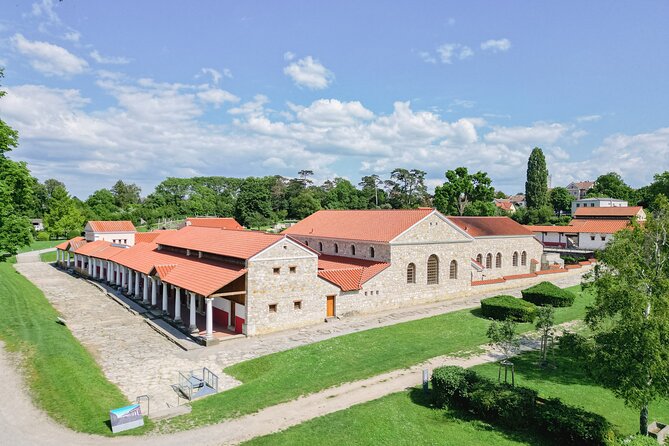
- Four working Roman houses let you see baths, murals, furniture, gardens, and household spaces in three dimensions.
- The Roman Therme bathhouse uses water to make ancient daily life easier to picture.
- Museum Carnuntinum presents objects from roughly 2,000 years of local Roman history.
- The site is spread out, so allow time to walk between the Roman Quarter, museum, and other areas.
- A three-hour visit works well for a focused visit, but detail-minded history fans may want longer.
- The $16.21 price is reasonable for access to both a large outdoor reconstruction and a major museum.
Why Carnuntum feels different from a standard ruin
Carnuntum does not ask you to stare at low stone walls and fill in the blanks. Its Roman Quarter has been rebuilt as usable architecture, with four houses designed to show how people lived, worked, bathed, and displayed their status.
That choice changes the visit. You can enter rooms instead of looking down at them from behind a rope. You might find yourself paying attention to ordinary details, such as where a merchant worked, how a garden was arranged, or how a bathhouse was built around heat and water. The effect is theatrical in places, but that is also the point. This is a place for making Roman life understandable to non-specialists.
The Roman city once had a major role on the Danube frontier. Marcus Aurelius wrote world history in this part of the Roman Empire 1,700 years ago, and Carnuntum was important enough to support military, political, commercial, and domestic life. You do not need a degree in Roman history to enjoy the site. The reconstructed buildings give you a visual starting point.
More Wachau Valley trips:
- Vienna: Wachau Valley, Melk Abbey Tour with Danube Boat Trip
★ 4.5 · 1,413 reviews - Wachau Valley Wine Tasting Bike Tour from Vienna
★ 5.0 · 829 reviews - Wachau Valley Small-Group Tour and Wine Tasting from Vienna
★ 5.0 · 540 reviews
The Roman Quarter: four houses, one large ancient neighborhood
Plan about 1 hour and 20 minutes for the Roman Quarter if you want a straightforward visit. I would allow more time if you stop to examine the murals, furnishings, gardens, and working systems in detail.
The area includes a large visitor center, an outdoor setting with trees and meadows, the Forum Culinarium restaurant, and a sizable children’s playground. That mix matters. You can make this a serious history stop, but you are not locked into a silent museum atmosphere for the entire afternoon. Families can give children space to move, and adults can break up the historical displays with lunch or a walk outdoors.
The houses are the main attraction:
- The Roman Therme shows a fully functional bathhouse.
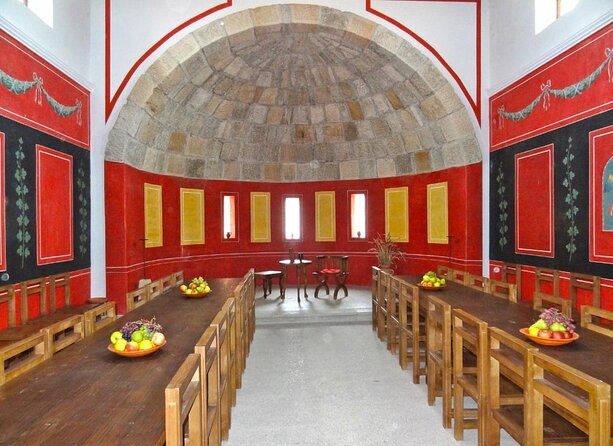
- The villa urbana presents a grand city residence with impressive murals.
- The House of the Oil Merchant offers a look at commercial life.
- The House of Lucius represents a more ordinary urban home, complete with a garden.
Each building gives you a different angle on Roman society. The bathhouse explains public comfort and engineering. The villa shows wealth and decoration. The oil merchant’s house points toward trade and business. The House of Lucius brings the visit back to domestic routines.
That variety keeps the Roman Quarter from becoming four versions of the same building. I like the way it moves between public and private life. You are not only seeing how the elite lived. You are also getting clues about work, commerce, and the practical needs of an urban household.
The Roman Therme turns plumbing into a story
Ancient baths can be hard to understand when all you see are broken walls. At Carnuntum, the water and heat systems are presented in a working form, so the bathhouse becomes more than an architectural outline.
You can watch water splashing in the thermal bath and see how a Roman bathing complex was meant to function. That makes the visit useful for children and for anyone who finds military dates and emperors less interesting than daily routines.
The baths also show that Roman urban life was not only about conquest. Public bathing involved comfort, social contact, and engineering. A building like this required planning, fuel, water, labor, and money. The reconstruction gives those ideas a physical shape.
Do not rush through this stop. It is one of the places where the site’s hands-on approach earns its keep. You may not remember every technical term, but you are likely to leave with a better sense of how Roman infrastructure supported city life.
Villa Urbana and the Roman taste for display
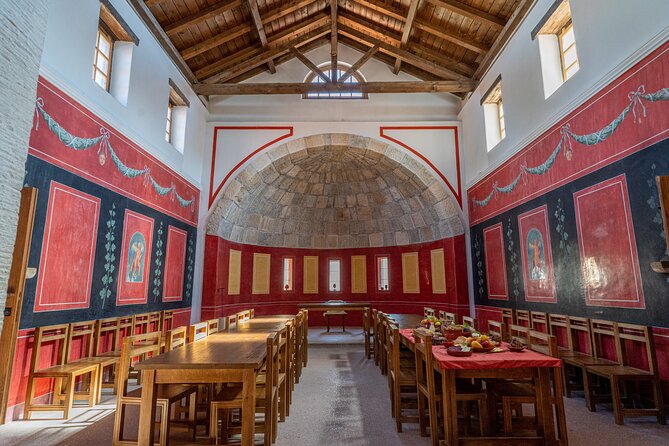
The villa urbana is the most polished of the houses. Its murals are a major reason to slow down here. Painted interiors can make a Roman home feel more personal than a display case filled with coins or pottery.
The villa also helps explain status. A grand urban residence was designed to impress, and its decoration tells you that Roman life included strong social differences. The contrast with the House of Lucius is useful. Instead of viewing one building as a complete picture of Roman society, you can compare the spaces and ask what wealth changed.
I like this part of Carnuntum because it avoids treating ancient people as distant figures. The murals, rooms, and furnishings suggest taste, pride, and the desire to make a home look good. Those motives are easy to recognize, even after 1,700 years.
More Museum Tours in Wachau Valley:
- Vienna: Skip-the-Line Sisi Museum, Hofburg and Gardens Tour
★ 4.8 · 5,918 reviews - Vienna Kunsthistorisches Museum Day Admission Ticket
★ 4.6 · 3,690 reviews - Tickets for the Albertina Exhibitions
★ 4.7 · 2,126 reviews - Vienna: Chocolate Workshop in Chocolate Museum w/ Tasting
★ 4.5 · 1,802 reviews
The oil merchant and the House of Lucius
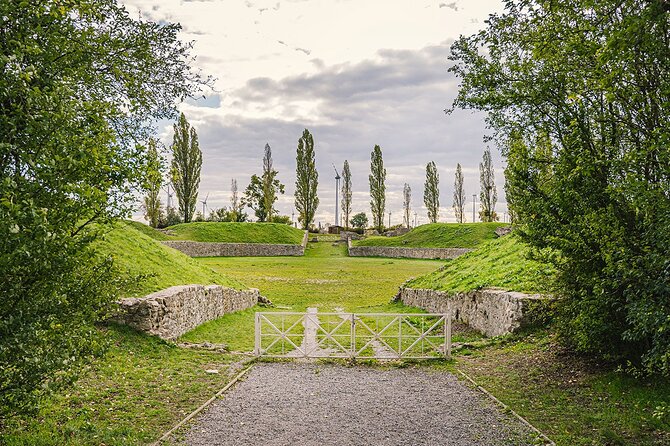
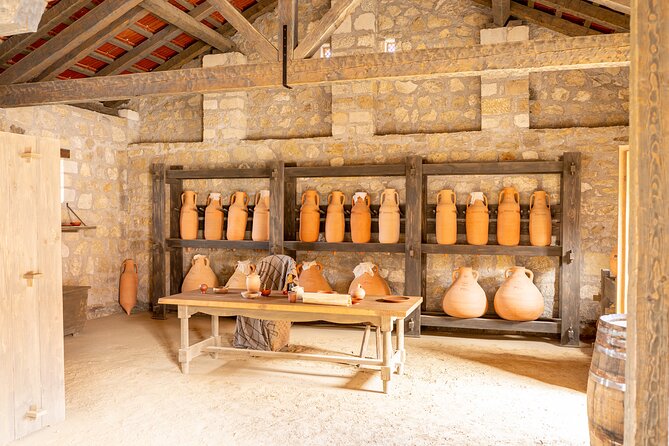
The oil merchant’s house adds a commercial note to the visit. It suggests the movement of goods and the work behind a Roman city’s daily supply. Oil was not an abstract museum topic. It was part of cooking, lighting, grooming, and trade, so a merchant’s home helps connect business with ordinary life.
The House of Lucius offers a more domestic counterpoint. Its garden is one of the details worth seeking out, especially if you enjoy seeing how Roman homes were arranged beyond their walls. The house feels less like a monument and more like a place where someone might have stored tools, prepared food, received a caller, or tended plants.
These reconstructions are heavily decorated and furnished. That is a strength for most people, but it can also feel theatrical if you prefer untouched archaeology. I would treat the buildings as informed interpretations rather than original Roman interiors. They are designed to help you picture the past, not to pass themselves off as ancient structures.
Museum Carnuntinum: original objects and the Danube frontier
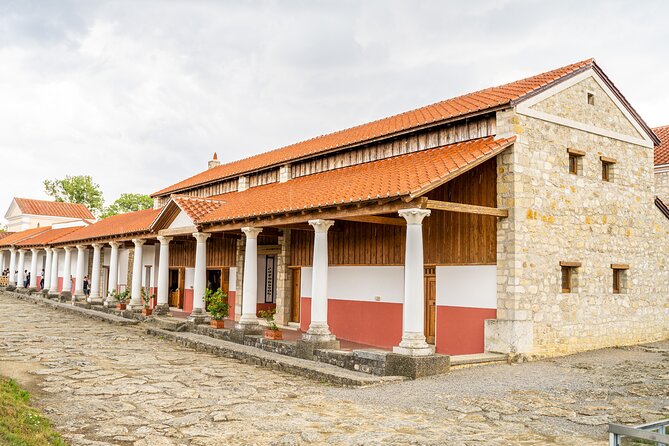
Set aside about one hour for Museum Carnuntinum. The museum is an important companion to the Roman Quarter because it supplies the objects and historical context that reconstructed rooms cannot provide.
The current exhibition, Weltstadt am Donaulimes, translates as Metropolis at the Danube Limes. It covers Carnuntum’s development, the people who lived there, and the UNESCO World Heritage site near Vienna. Finds from around 2,000 years of Roman history are displayed here.
I would visit the museum after the Roman Quarter if possible. First, you see rooms, baths, gardens, and working spaces. Then, you encounter the surviving objects that help support and explain that picture. The sequence makes the museum easier to follow because you already have a mental image of the city.
The museum has been described as theatrical, and that is a fair expectation. Some displays may favor presentation and atmosphere over a dry academic layout. For most visitors, that makes the material more approachable. If you want a dense specialist collection with long scholarly labels, you may find the approach lighter than expected.
Still, the museum is not optional if you want the full Carnuntum story. The Roman Quarter shows reconstructed life. Carnuntinum shows the evidence and wider setting.
Is three hours enough for both parts?
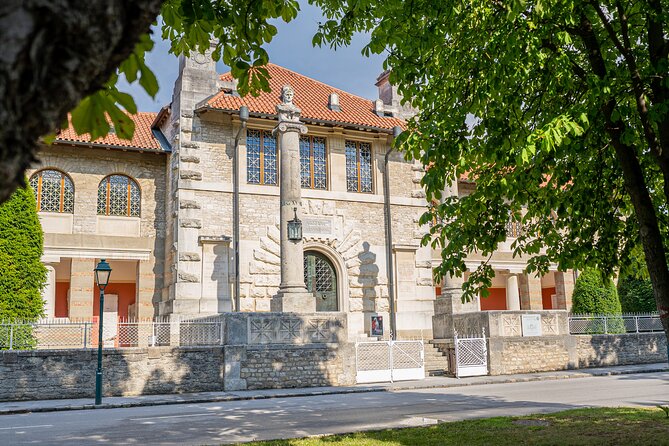
Three hours is a sensible target for a first visit. About 80 minutes in the Roman Quarter and 60 minutes in the museum leave roughly 40 minutes for walking, breaks, the visitor center, food, or the playground.
That schedule works best if you keep moving and focus on the main features. You can see the houses, enjoy the bathhouse, compare the villa with the more modest homes, and get a useful museum visit without racing.
If you read every panel, stop for photographs, eat at the Forum Culinarium, or bring children who need a slower pace, you may need more time. The outdoor areas are spacious, and the locations are not all packed together. One especially useful seasonal detail is the weekend shuttle bus, which has been provided to help with the distances between locations during the season described here. Check current operation when you book, since the stated opening period and services can change.
Opening hours for the listed season are 9 a.m. to 5 p.m., daily, from April 23 through November 15, 2025. Arriving earlier gives you more freedom to set your rhythm before the day’s schedule feels compressed.
What the $16.21 admission is really buying
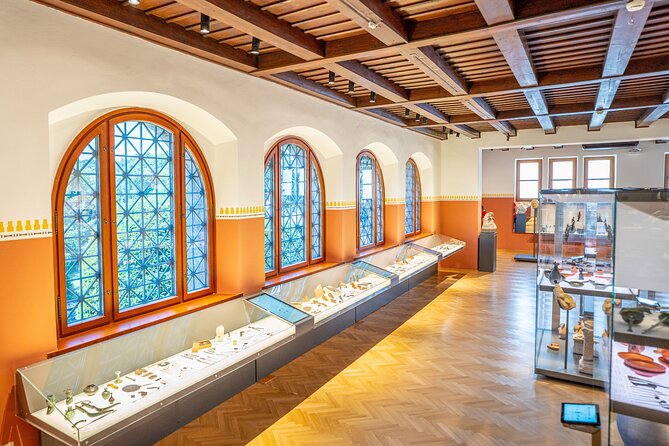
At $16.21 per person, the pass offers solid value because it covers both the reconstructed Roman Quarter and Museum Carnuntinum. You are paying for a substantial outdoor site, several fully furnished buildings, a working bathhouse, museum access, and the surrounding visitor facilities.
The value is strongest if you enjoy learning through spaces rather than only through labels. A family can use the playground and open grounds. A history enthusiast can compare architecture, household life, trade, and museum objects. A casual visitor can still get a clear sense of what Roman urban life looked and felt like.
The price does not include a guided tour. That keeps the admission cost moderate, but it also means you need to read signs and organize the visit yourself. Guided visits may be available in English, according to the supplied information, but they are an extra consideration rather than part of this pass.
For a three-hour outing, the cost is fair. I would not buy it solely for a quick look at ruins. I would buy it because the combination of reconstructed interiors and original museum finds gives you more than either format could offer alone.
Who will enjoy Carnuntum most?
I would recommend this pass to:
- Families who want history mixed with space, a playground, and a restaurant.
- First-time visitors to Roman archaeological sites who prefer clear visual explanations.
- Architecture fans interested in houses, baths, murals, and gardens.
- Anyone staying near Vienna who wants a substantial historical outing in Lower Austria.
- Visitors who like independent sightseeing and do not require a guide included in the ticket.
You may want to think twice if you have limited mobility or little patience for walking between separate locations. The site is near public transportation, and service animals are allowed, but the information does not give detailed route or surface conditions. Most people can participate, yet the distance between areas remains the practical issue to keep in mind.
Large summer recreation festivals can also change the atmosphere. One piece of feedback was strongly critical of a festival involving performers and a person playing the emperor, while the main site itself received praise for its presentation and cleanliness. If you prefer a quiet archaeological visit, check the event calendar before choosing your date.
Booking, cancellation, and practical planning
Confirmation is provided at booking. The pass is valid during the stated opening period, from April 23 through November 15, 2025, with opening hours of 9 a.m. to 5 p.m. every day.
You can cancel for a full refund up to 24 hours before the experience start time. Cancellations or changes made less than 24 hours ahead are not accepted for a refund, and the cut-off follows local time.
Since the Roman Quarter and museum are spread across the site, wear comfortable shoes and avoid planning another tightly timed activity immediately afterward. The restaurant and playground make the area easier for families, but the visit is still built around walking, looking, and reading.
Should you book the Roman Quarter and Museum Carnuntinum?
Yes, if you want Roman history you can see at room level. The reconstructed bathhouse, villa, merchant’s house, and House of Lucius give Carnuntum a directness that ordinary ruins rarely provide. The museum then adds original finds and the wider Danube Limes story.
Book it if you have around three hours, enjoy self-guided sightseeing, and can handle some walking between locations. Skip it only if you want a short, tightly contained museum stop or a guided tour included in the admission. At $16.21, this is a practical, well-priced way to turn an ancient city into something you can actually picture.
FAQ
Where is the Roman Quarter and Museum Carnuntinum?
The experience is in Lower Austria, Austria, at Roman City Carnuntum.
How long does the visit take?
The estimated duration is about three hours. The Roman Quarter is planned for about 1 hour and 20 minutes, and Museum Carnuntinum for about one hour.
What does the admission pass include?
It includes admission to the Roman Quarter and Museum Carnuntinum, along with all fees and taxes.
Is a guided tour included?
No. Guided tours are not included in this admission pass.
What are the opening hours?
For the listed season, April 23 through November 15, 2025, the site is open Monday through Sunday from 9 a.m. to 5 p.m.
Is the site suitable for children?
Yes. The Roman Quarter includes a large children’s playground, open outdoor areas, and a restaurant. Most people can participate.
Are service animals allowed?
Yes. Service animals are allowed.
Can I cancel for a refund?
Yes. You can cancel at least 24 hours before the experience start time for a full refund. Cancellations or changes made less than 24 hours before the start time are not accepted for a refund.
Just added in Wachau Valley
- From Krems: Wachau Valley River Cruise on the Danube★ 4.6 · 95 reviews
- Wachau Valley: 3 Castles & Wine Private Guided Day Tour★ 5.0 · 1 review
- Vienna: Wachau Valley Private Kayak and Wine Tour★ 5.0 · 3 reviews
- Vienna: Private Wachau tour to Dürnstein and Melk★ 5.0 · 4 reviews
- Private Melk Hallstatt, Salzburg tour from Vienna★ 4.9 · 22 reviews
- Vienna: Melk Abbey, Danube Valley Wachau Private Car Trip★ 5.0 · 1 review
- Vienna: Mariazell Basilica and Melk Abbey Private Tour★ 5.0 · 2 reviews
- Vienna: Day Tour to Wachau Valley★ 4.1 · 8 reviews
Wachau Valley Tours, compared.

Wachau Valley, Melk Abbey Tour with Danube Boat Trip
Read our review →
Wachau Valley Wine Tasting Bike Tour from Vienna
Read our review →
Wachau Valley Small-Group Tour and Wine Tasting from Vienna
Read our review →
Grape Grazing: Wachau Valley Winery Biking Tour
Read our review →

Private Day Tour Trip Salzburg Hallstatt and Melk from Vienna
Read our review →

Browse the lists this tour appears in