Reviewed · SALZBURG TOURS
The Hills Are Alive
Sing your way through Salzburg. The Hills Are Alive is an eight-hour private tour that links famous film locations with mountain roads, lakes, churches, and small towns around Salzburg. You ride in a private vehicle, begin at your hotel or address in the city, and can shape the day around the scenes that matter most to you.
I like the personal service, especially the chance to travel with guides such as Michael, Carlos, Luciano, or Naomi and Thomas. I also like the range: you get Mirabell Gardens and Salzburg’s old center, then wide Alpine views at Rossfeld, Berchtesgaden, and the Wolfgangsee area. The main drawback is price. At $1,074.07 per group of up to seven, it is hard to justify for only two people unless this film is a major part of your trip.
- Mirabell Gardens delivers the famous Do, Re, Mi finale, including the Pegasus Fountain, hedge tunnel, Dwarf Garden, and staircase.
- A private vehicle reaches places large coaches cannot, including mountain viewpoints and the final scene area, weather and road conditions permitting.
- Michael and Carlos receive the strongest praise, especially for film knowledge, thoughtful pacing, photography help, and personal service.
- The route crosses Salzburg, the Austrian Alps, and nearby Germany, giving you much more than a city sightseeing loop.
- Most stops are short, so the tour covers a lot of ground but does not offer long visits at every location.
- A current passport is required, and children under 12 or shorter than 150 centimeters need a child seat.
In This Review
- Why this private tour feels different from a coach trip
- Mirabell Gardens and the Do, Re, Mi finale
- Salzburg’s old center, fountains, and escape scenes
- Nonnberg Abbey and the difference between movie magic and real places
- Leopoldskron, Frohnburg, and the villa scenes
- Rossfeld Panoramic Road and the Alpine border
- Hellbrunn’s gazebo and the picnic meadow
- Lakes, chapels, and the final countryside views
- What the $1,074.07 group price really buys
- Timing, passports, and practical planning
- Should you book The Hills Are Alive?
- FAQ
- How long does The Hills Are Alive tour last?
- How much does the private tour cost?
- Is hotel pickup and drop-off included?
- Is the tour offered in English?
- Are food and drinks included?
- Do I need a passport?
- Do children need a car seat?
Why this private tour feels different from a coach trip
The great strength here is control. Only your own group participates, and the guide can adjust the route, timing, photo stops, and meal break to suit you. A large coach has to follow a fixed schedule. This tour can use smaller roads, pause for pictures, and spend more time at a favorite place.
That flexibility mattered to several families and couples. Michael adjusted the day around rain, helped one visitor who needed to walk more slowly, and took extra care with photographs. Another guide, Carlos, used movie clips at the places where scenes were filmed, making it easier to match the screen image with what you see today.
The service also goes beyond driving. The strongest reports describe guides who shared stories about the Von Trapp family, the actors, Austria, and the making of the film. One guide arrived in traditional Austrian clothing, while Naomi was praised for her warm manner, careful photography help, and ability to keep the movie story moving throughout the day.
Still, a private tour is only as good as the guide assigned to you. The names most often praised are Michael and Carlos, with positive comments also naming Luciano, Naomi, and Thomas. If a particular guide matters to you, ask about availability before paying.
Mirabell Gardens and the Do, Re, Mi finale
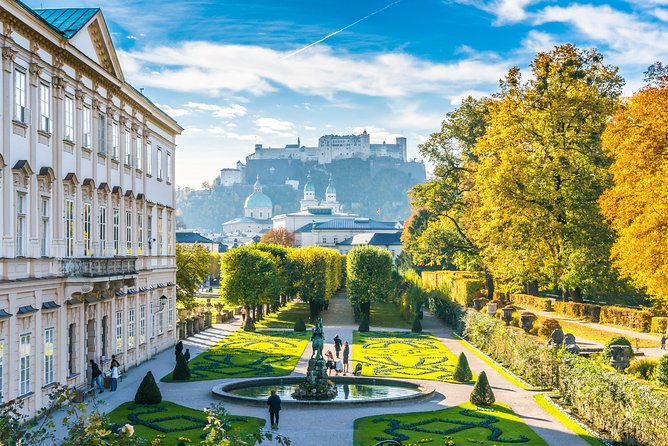
Your day begins with pickup at your hotel, Airbnb, or private address in Salzburg and the nearer surrounding area. Mirabell Gardens is usually the first major stop, and it is an excellent opening because the setting is both central and instantly recognizable.
Allow about 20 minutes here. You see the Pegasus Fountain, the Dwarf Garden, the hedge tunnel, and the staircase where Maria and the children finish Do, Re, Mi. The gardens are more than a backdrop. They help you understand how the song moves through Salzburg, using steps, fountains, statues, and formal paths as part of the choreography.
Admission to the garden stop is free. The short timing means you should focus on the film connections and the main photographs rather than expecting a slow garden visit. If you want extra time in Mirabell, tell your guide early, since this is a private outing.
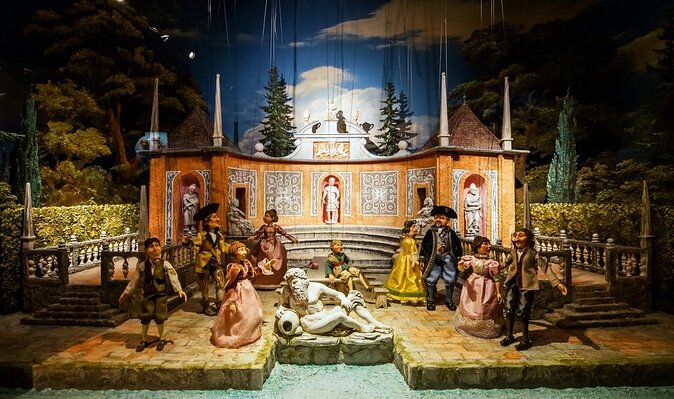
The nearby Salzburg Puppet Theatre adds an unusual film connection. Operating since 1913, it is the oldest continuously operating puppet theater of its type in the world. It helped inspire the puppet sequence and The Lonely Goatherd. The theater is not presented as a long performance visit, so think of this as a story and location connection rather than a full show.
More Salzburg trips:
- The Original Sound of Music Tour in Salzburg
★ 4.5 · 6,129 reviews - Salzburg: Original Sound of Music Tour
★ 4.8 · 5,059 reviews - From Salzburg: Half-Day Tour to Hallstatt
★ 4.6 · 3,596 reviews
Salzburg’s old center, fountains, and escape scenes
The Mönchsberg lift takes you up for a panoramic view over Salzburg. This is tied to the Do, Re, Mi sequence, when Maria and the children bring the musical notes into the city from the picnic meadow at Werfen.
The ride is included, and the stop lasts about 20 minutes. I consider this one of the better uses of a short stop because the view gives you a quick sense of Salzburg’s layout: the river, historic center, church towers, and surrounding hills.
The route then threads through several recognizable old-town locations. The Horse Pond, built in the 17th century and once used for washing horses, appeared in the film. The nearby Festival Theatre was first built as a riding school for Salzburg’s prince archbishops and later became a theater. It is linked to the Von Trapp family’s performance of Edelweiss during the escape sequence.
St. Peter’s Cemetery and the adjoining basilica and monastery connect to the family’s escape. The cemetery is one of Salzburg’s oldest historic areas, with roots reaching back to 696. It is a compact but atmospheric stop, though you should remember that the movie’s dramatic action was edited and staged for the screen. The tour shows you the setting rather than reproducing every camera position.
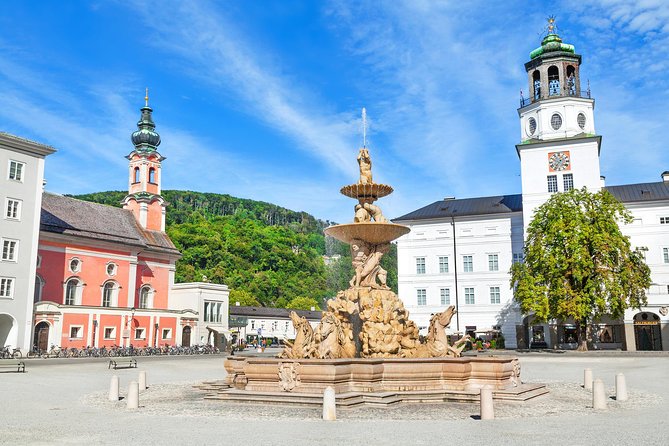
The Mozart Bridge, built in 1903, is tied to the instrumental ending of My Favorite Things. Maria and the children cross while pointing, then continue along the grassy riverbank. Residenzplatz brings another short film moment: Maria splashes water at the Baroque fountain before boarding the bus in I Have Confidence.
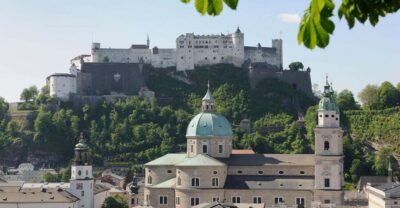
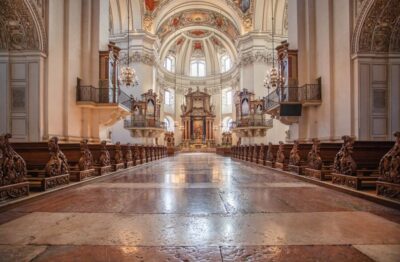
The Residenzplatz stop lasts only about two minutes. That is enough for a quick photograph and explanation, but not enough for a full look at the square. Salzburg Cathedral, St. Peter’s, and the surrounding old center deserve more time if you have not already explored them independently.
Nonnberg Abbey and the difference between movie magic and real places
Nonnberg Abbey is one of the key stops because it links the film to the real Maria. Founded in 714, it is described as the oldest abbey north of the Alps. The movie used the exterior several times, while interior shots were made in a studio.
That distinction is useful. Film fans often expect every room and corridor to look exactly as it did on screen. Your guide can help separate the actual Salzburg locations from sets and edited scenes, which makes the visit more interesting rather than less magical.
The tour focuses on the exterior, so do not assume you will enter every building connected with the film. This is a good example of why the private format helps: you can ask questions and spend a little more time with the guide even when access is limited.
Leopoldskron, Frohnburg, and the villa scenes
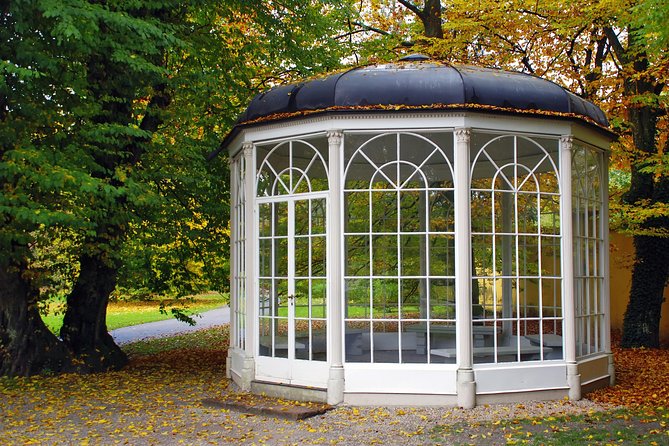
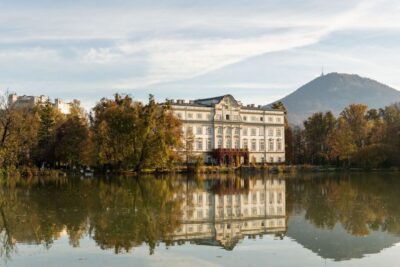
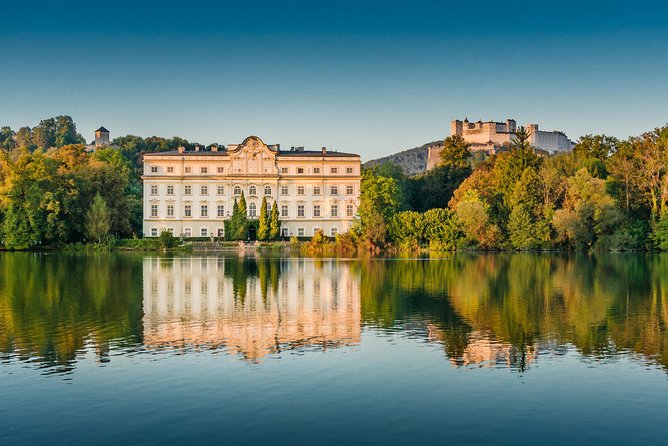
At Leopoldskroner Weiher, you stop for a view across the water toward Leopoldskron Palace. The rococo palace provided the back of the Von Trapp family home in the movie. The boat scene was filmed here, and the original gazebo was once located at the palace before being moved to Hellbrunn.
The stop is about ten minutes and admission is free. The view matters more than an interior tour. You see the relationship between the water, palace, and surrounding countryside, then hear which parts of the house were filmed elsewhere.
Frohnburg Palace provides another quick but memorable connection. After a short walk, you reach the gates where Maria arrives, swinging her guitar and singing I Have Confidence. The palace dates to the 17th century, and the gates remain a useful visual match for the film.
These stops are not long. If your main goal is detailed architectural sightseeing, you may wish for more time. If your goal is to connect a recognizable scene with the real setting, the brief visits work well.
A completely different kind of day:
- Salzburg: Mozart Concert at Mirabell Palace
★ 4.8 · 3,498 reviews - Salzburg: Hohensalzburg Fortress Admission Ticket
★ 4.6 · 2,236 reviews - Salzburg Cathedral: Organ Concert at Midday
★ 4.6 · 2,007 reviews - Salzburg: Best of Mozart Fortress Concert and Dinner
★ 4.5 · 1,424 reviews
Rossfeld Panoramic Road and the Alpine border
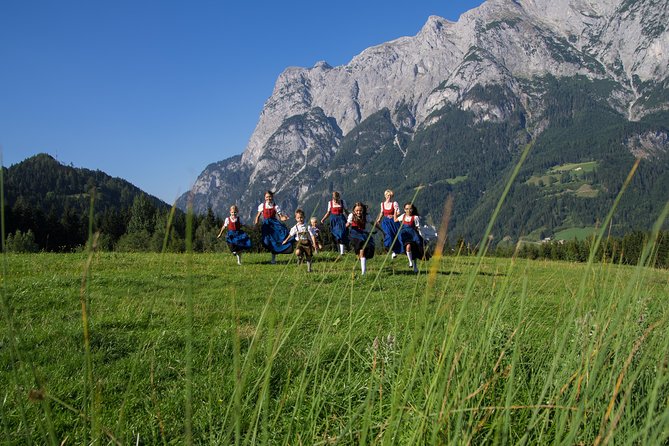
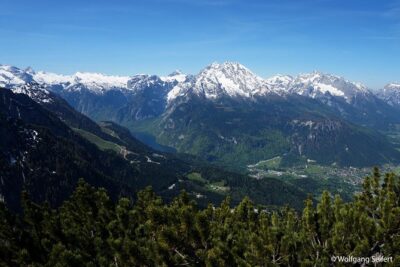
The route becomes much more scenic as you leave Salzburg. Rossfeld Panoramic Road climbs to about 1,570 meters and offers broad Alpine views. Weather permitting, your guide walks with you to the area associated with the family’s hike over the Alps toward Switzerland.
This is one of the places where the private format earns its keep. A large coach may not be able to use every narrow or elevated road, while a smaller private vehicle can reach viewpoints beyond the standard city route. The guide can also judge how far to walk and how long conditions allow.
Weather is a real factor here. Clouds can hide the mountains, rain can make paths unpleasant, and road access can change. One private guide worked around rain to help a group see as much as possible, but no tour can guarantee clear Alpine views.
Berchtesgaden, in nearby Germany, follows as another mountain stop. It is connected with the opening sequence, where Maria spins in a field while singing The Hills Are Alive With the Sound of Music. The location is powerful because the film’s sweeping opening depends on open space and mountain views, not just a single building.
The walk may be modest, but you should still wear comfortable shoes. If anyone in your group has limited mobility, tell the company before the day begins so the route can be discussed clearly.
Hellbrunn’s gazebo and the picnic meadow
Hellbrunn Palace is famous for its trick fountains and has housed the original Sound of Music gazebo since 1991. The gazebo is linked to Sixteen Going on Seventeen and Something Good, two of the film’s most romantic scenes.
The visit is listed at about ten minutes and admission to the stop is free. That gives you time for photographs and the film connection, but not necessarily a palace tour or a full examination of the water features. If Hellbrunn is especially important to you, ask exactly what the day’s schedule allows.
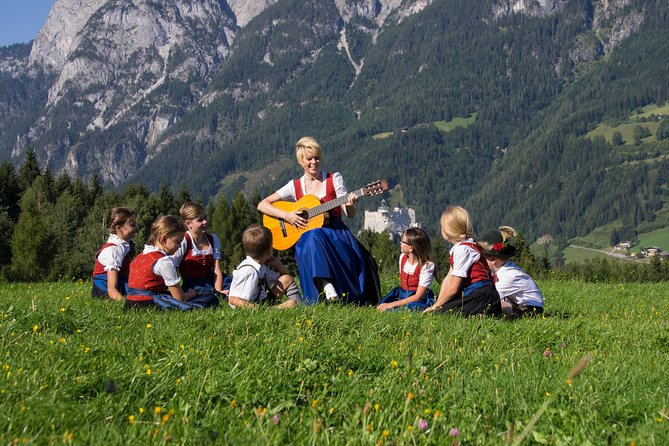
The Sound of Music Trail leads to the picnic meadow where Maria and the children begin Do, Re, Mi. You also get views toward Hohenwerfen Fortress and the Alps. This is the kind of place where a movie soundtrack can transform an ordinary field into a personal landmark, though the weather will shape the experience.
The meadow stop is brief, around ten minutes. The private vehicle makes reaching it easier than relying on city transport, but you should not expect a long picnic or extended hike as part of the standard day.
Lakes, chapels, and the final countryside views
The route continues past Schloss Fuschl, a former hunting lodge built in 1450 by a prince archbishop. It now operates as a luxury lakeside resort. The visit is more of a passing point than a long tour, so treat it as part of the scenic drive.
At the Red Bull global headquarters, you pause for about two minutes to see the modern architecture. This is not a Sound of Music location, but it adds a sharp contrast to the Baroque squares, old palaces, and rural settings earlier in the day.
Basilika St. Michael is the wedding church from the film. You have about ten minutes to look around. The church stop gives the day a strong closing connection to Maria and the captain, especially for anyone who has always remembered the wedding scene.
At Mozartblick, you look over Lake Wolfgang and St. Gilgen. The viewpoint is connected with the opening sequence, and you can see toward Schafberg, where Maria and the children take the train to the picnic meadow. It is only a five-minute stop, but the lake and mountain setting help tie together the movie’s scattered locations.
What the $1,074.07 group price really buys
The advertised price is $1,074.07 for a group of up to seven, not per person. That changes the value calculation. For six or seven people, the cost per person becomes much more reasonable than it first appears. For a couple, it is a major splurge.
The price includes private transportation, hotel pickup and drop-off, and a professional guide. It does not include food or drinks. Several guides arranged a lunch stop or helped with dietary needs, including a vegan meal, but you should not treat lunch as included. Set aside extra money and ask how much time is available for eating.
You are paying for comfort, route flexibility, and access to locations that standard coach tours may skip. You are also paying for a full day of personal attention. If you want only the most famous Salzburg locations, a cheaper group tour may be enough. If you want mountain roads, extra viewpoints, more photographs, and the ability to shape the day, the private price makes more sense.
The strongest value appears when your group fills most of the vehicle. It also suits a birthday, anniversary, or long-awaited film pilgrimage, when convenience and personal service matter more than finding the lowest fare.
Timing, passports, and practical planning
The tour lasts about eight hours, though the exact pace can change with traffic, weather, road access, and your chosen stops. Because many visits last only two to 20 minutes, wear shoes you can walk in and keep your camera ready.
Hotel, Airbnb, and private-address pickup is available in Salzburg and nearer surrounding areas. Pickup and drop-off remove the need to find a meeting point, and a guide may be able to return you to another Salzburg location at the end. One couple even received help with luggage and a transfer to the train station, but confirm any special arrangement in advance.
A current valid passport is required on the day. That is particularly important because the route includes Berchtesgaden in Germany. Children under 12 or shorter than 150 centimeters need a child seat, and you must tell the provider ahead of time.
The experience is offered in English and includes a mobile ticket. Most people can participate, but some stops include short walks and mountain viewpoints. Tell the company about mobility concerns before booking, not after the vehicle arrives.
Free cancellation is available up to 24 hours before the start time. Changes or cancellations made less than 24 hours ahead are not accepted, and the cutoff follows local Salzburg time.
Should you book The Hills Are Alive?
Book it if The Sound of Music is one of the main reasons you are visiting Salzburg, especially if you have four to seven people to share the cost. You will see far more than a handful of city locations, and a strong guide can turn familiar scenes into a lively lesson in film craft, Austrian history, and local geography.
I would be more cautious if you are traveling as a couple on a tight budget, or if you want long visits inside palaces, churches, and museums. The schedule covers a lot of ground, but many stops are quick. Also, guide quality matters, so ask whether Michael or Carlos is available if their film expertise is important to you.
With a 4.9 rating from 58 reviews and 97 percent recommendation, the overall record is very strong, but one poor experience shows the limits of any private excursion. Mountain access can be blocked by accidents or local emergencies, and weather can erase the views you came to see. For most dedicated film fans, though, the combination of private transport, personal pacing, and Alpine scenery makes this a memorable splurge.
FAQ
How long does The Hills Are Alive tour last?
The tour lasts approximately eight hours.
How much does the private tour cost?
The price is $1,074.07 per group, with up to seven people included.
Is hotel pickup and drop-off included?
Yes. Pickup and drop-off are offered at hotels, Airbnbs, or private addresses in Salzburg and nearer surrounding areas.
Is the tour offered in English?
Yes. The experience is offered in English and includes a mobile ticket.
Are food and drinks included?
No. Food and drinks are not included in the tour price.
Do I need a passport?
Yes. A current valid passport is required on the day of travel.
Do children need a car seat?
Children under 12 or shorter than 150 centimeters need a child seat. You must inform the provider in advance.
Just added in Salzburg
- Werfen: Hohenwerfen Castle Entrance Ticket★ 4.5 · 84 reviews
- Vienna: Private tour from Vienna to Hallstatt and Salzburg★ 5.0 · 1 review
- Private Melk Hallstatt, Salzburg tour from Vienna★ 4.9 · 22 reviews
- Vienna: Hallstatt & Salzkammergut Trip with Ossuarry Option★ 5.0 · 1 review
- Private Full Day Trip to Hallstatt ,Salzburg and Melk from Vienna★ 4.5 · 58 reviews
- Day Tour from Vienna to Hallstatt and Salzburg with Photographer★ 3.0 · 10 reviews
- From Vienna ,Lakes to Mountains,Melk,Hallstatt and Salzburg Tour★ 3.5 · 7 reviews
- Transfer from Vienna to Salzburg with 2 hours for sightseeing★ 5.0 · 24 reviews
Salzburg Tours, compared.