
Reviewed · GRAZ TOURS
Explore Graz’s Art and Culture with a Local
Graz keeps its art close to the street. This 90-minute walking experience links famous buildings, public art, historic spaces, and local culture in a group of no more than six people. I like the small group size, which should make it easier to ask questions and keep the walk personal. I also like that the route ends at HALLE FÜR KUNST Steiermark, giving you a useful starting point for more independent art exploring.
The main thing to consider is the price: at $161.74 per person, this is not a casual budget walk. The tour also does not include food, drinks, snacks, museum admission, or personal expenses. If you want a broad introduction to Graz’s art scene with a local voice, it may be worth the cost. If you mainly want a quick look at the old center, you may find it expensive for 90 minutes.
In This Review
- Key points to know before booking
- What this Graz art walk is really offering
- Starting beside the Grazer Dom
- The Opera House and Graz’s performing arts
- Martin Auer Kindercafé, an unexpected cultural detail
- A miniature inner square and the stories around it
- Centuries-old mural art and the final gallery stop
- How the small group affects the experience
- Is $161.74 a fair price?
- Who should book this Graz experience?
- Should you book it?
- FAQ
- Where does the tour start?
- Where does the tour end?
- How long does the experience last?
- How many people can join the group?
- What is included?
- Are food and drinks included?
- Can I cancel for a full refund?
Key points to know before booking
- A maximum of six people keeps the experience more personal than a large city walk.
- The route begins at Grazer Dom, one of Graz’s best-known landmarks.
- Art appears in several forms, including street art, galleries, historic buildings, and centuries-old mural work.
- The Opera House adds a performing arts stop, with stories about its beauty and history.
- Martin Auer Kindercafé offers an unusual local detail, a café designed for children.
- The walk ends at HALLE FÜR KUNST Steiermark, a convenient place to continue your own art hunt.
What this Graz art walk is really offering
This is not a museum tour with a long list of dates and artist names. It is a short introduction to how art fits into Graz’s streets, buildings, cafés, public squares, and cultural spaces.
That distinction matters. You will not spend the whole 90 minutes inside galleries, and there is no promise of a formal art lecture. Instead, you get a local guide who connects several parts of the city. The guide can help you notice details that are easy to pass by when you explore alone.
I like this format for a first afternoon in Graz. A good orientation walk should help you understand where things are and give you a few ideas for the rest of your stay. This one combines that practical purpose with a look at contemporary artists linked to the city.
The group limit is one of the strongest features. With six people or fewer, you should have a better chance to hear the guide clearly and ask about something that catches your eye. It also creates a more social setting without the feel of a large procession through the center.
Still, you should keep the price in view. At $161.74 per person, the cost is high for a 90-minute experience. The value depends heavily on the guide’s ability to tell good stories, connect the stops, and respond to your interests. Since the experience is built around a local perspective, the personality and skill of the person leading your walk will matter a great deal.
More Graz trips:
- Kunsthaus Graz Museum Entrance Ticket
★ 3.5 · 19 reviews - Graz: Old Town Highlights Private Walking Tour
★ 4.6 · 16 reviews - Universalmuseum Joanneum Pass in Graz
★ 4.0 · 14 reviews
Starting beside the Grazer Dom
The meeting point is on Burggasse, near the Grazer Dom. The cathedral is a sensible place to begin because it gives the walk an immediate visual anchor. You start with one of the city’s most famous buildings, then move outward into the wider art and culture scene.
The opening stop also sets up an important contrast. Graz is not presented only as a historic European center with old façades and formal monuments. The route uses the cathedral as a starting point before bringing you toward more modern and unexpected parts of the city.
Your guide is meant to explain why the building matters and how it fits into Graz. The supplied details do not give a guide’s name, a set script, or specific artwork titles, so you should not expect a fixed list of artist biographies in advance.
That lack of detail can be a benefit if you prefer a flexible walk. It can also be a limitation if you want a tightly planned art history lesson. I would book this with the expectation of conversation and local interpretation, not a full academic survey.
The Opera House and Graz’s performing arts
The next major stop is the Opera House. This brings a different kind of art into the experience. Instead of focusing only on paintings, murals, or street work, the guide talks about a place connected with performance, design, architecture, and the cultural life of the city.
The Opera House is described as a place full of beauty and history. That wording suggests the focus is on the building and its role in Graz, rather than attending a performance. Your tour time is approximately 90 minutes, so you should not expect an opera or an extended interior visit unless the guide specifically confirms one.
This is a useful stop because it broadens the meaning of art. You get to consider how a city expresses itself through public buildings as well as galleries. For someone new to Graz, that wider view can make the city feel more coherent.
The practical drawback is that the tour details do not say whether the group enters the Opera House. I would treat it as an exterior or explanatory stop unless you receive different instructions. The experience includes a local guide, not admission to performances or attractions.
Martin Auer Kindercafé, an unexpected cultural detail
Martin Auer Kindercafé is one of the more unusual stops. It is a café designed for children, which gives the route a local and everyday character that a standard art walk might miss.
This stop may appeal to parents, families, and anyone curious about how city culture works beyond grand institutions. A child-focused café says something about local life, public space, and the way people use central Graz. It is also a reminder that culture is not limited to museums and concert halls.
The description does not include a snack, drink, or café break. Food and beverages are specifically not included, so you should not count on a purchase being part of the tour. You may be shown or told about the café, but the experience does not promise time to sit down and eat.
I appreciate the stop because it prevents the walk from feeling too formal. The guide is not simply pointing from one impressive building to the next. You also get a glimpse of a place with a more relaxed, family-oriented purpose.
A completely different kind of day:
- Fun & mobile scavenger hunt through Graz
★ 4.5 · 12 reviews - Graz Scavenger Hunt and Sights Self Guided Tour
★ 4.0 · 9 reviews - Graz city tours
★ 3.5 · 9 reviews - Explore Graz in 60 minutes with a Local
★ 5.0 · 7 reviews
A miniature inner square and the stories around it
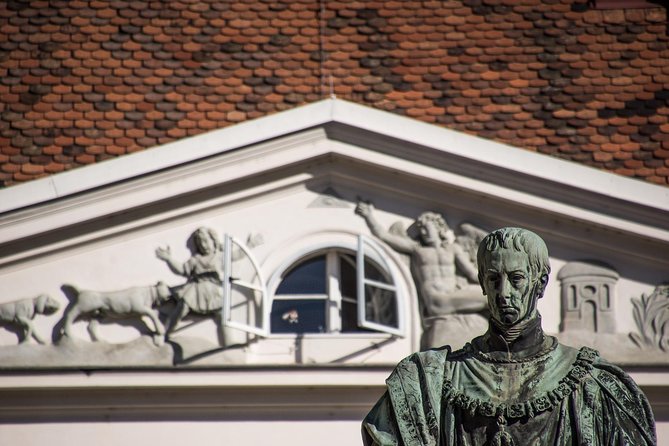
Another point on the route is a place that contains a small inner square. The description does not identify its name, so the guide’s explanation will be important here.
The appeal is easy to understand. A compact inner square can reveal a different side of Graz than the main streets do. It may offer a quieter view of the city’s buildings, layout, and daily use of public space. You will likely get more from this stop if you pay attention to how the space is arranged and what the guide says about its past.
The next stop focuses on a square with several kinds of buildings and a long history. Again, the exact name is not supplied, so you should not plan your route around a specific landmark without checking the meeting information.
These two stops seem designed to teach you how to read Graz. One gives you a small interior space. The other puts several building types and historical layers together. That is useful for orientation, especially if you are visiting the city for the first time and want more than a list of postcard views.
The limitation is precision. The tour information does not give a full street-by-street route, the names of every square, or the amount of time spent at each stop. If you need a detailed schedule, this experience may feel a little open-ended.
Centuries-old mural art and the final gallery stop
The route includes centuries-old mural art, a strong choice for a culture-focused walk. Murals make history visible on the sides of buildings, rather than keeping it behind museum doors. They also give you a chance to compare older decorative work with the contemporary street art and gallery culture mentioned in the tour description.
The exact mural, subject, and location are not identified ahead of time. That means the guide’s story will shape the stop. I would listen for details about how the art survived, what kind of building it belongs to, and how older visual work fits with the city’s current creative scene.
The walk finishes at HALLE FÜR KUNST Steiermark, at Burgring 2. This is a practical ending for anyone who wants to continue exploring art independently. You can end the guided portion there and make your own plans, rather than being left in a random street far from the main cultural area.
The end point also gives the experience a clear purpose. The guide introduces you to several ways of seeing Graz, then leaves you near a place associated with contemporary art. It works well as an orientation for the rest of your visit.
Admission to HALLE FÜR KUNST Steiermark is not listed as included. Personal costs, food, drinks, and snacks are also separate. Check current opening information before planning to enter after the walk.
How the small group affects the experience
A six-person maximum is more than a marketing detail. It changes how a walking tour feels.
In a large group, the guide often has to keep moving and repeat information for people at the back. With no more than six people, you should be able to stay closer to the guide and ask questions without stopping the whole street.
The format also suits art. You may want to pause at a detail, ask why a particular building matters, or compare an older mural with newer street work. A small group gives the guide more room to adjust the conversation.
It is still a group experience, not a private tour. You will meet other people interested in Graz’s art and culture, and the social side is part of the appeal. If you prefer complete control over the pace, a private guide or self-guided walk may suit you better.
The booking includes mobile ticketing and instant confirmation. That makes the arrangement simple, especially if you are planning several activities in Graz. The important point is to keep the confirmation available on your phone and arrive at the stated starting point on Burggasse.
Is $161.74 a fair price?
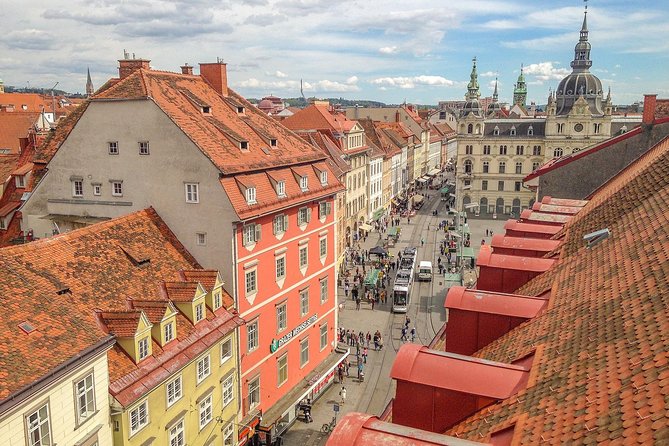
The cost is $161.74 per person, with group discounts available. For a 90-minute walk, that is a premium price. You are paying mainly for the local guide, the small group, and the effort of linking art, architecture, public spaces, and cultural life into one route.
You are not paying for a meal, drinks, snacks, personal purchases, or stated admission fees. You also should not assume that the tour includes an opera performance or entry into every cultural building.
I see the price making the most sense for three kinds of people:
- You have limited time in Graz and want a quick cultural orientation.
- You care about contemporary art, street art, galleries, and local creative life.
- You prefer asking questions in a tiny group rather than following a large scripted walk.
The value is weaker if you only want famous sights or a basic introduction to Graz’s old center. You could find a shorter, less expensive way to see the cathedral and Opera House. This experience earns its higher price only if the local guide provides strong context and makes the less obvious stops meaningful.
One piece of feedback connected with the supplied information concerns a separate food-focused Graz experience. It praises the friendly service and excellent wines at Vinothek Glou Glou, then describes good food and friendly service at another restaurant, with a note that small snacks were not yet available at the wine bar. That comment does not assess this art walk, so I would not use it as proof of the tour’s quality. It does offer one useful reminder: food and drinks are not part of this art experience, so plan those separately.
Who should book this Graz experience?
I would recommend it to art lovers who want a local introduction rather than a standard sightseeing loop. The range of stops is appealing: cathedral, opera, child-friendly café, inner square, historic buildings, old murals, and a contemporary art venue.
It also suits solo visitors and couples who like meeting a few other people without joining a large group. The six-person limit gives the walk a more relaxed feel and should make conversation easier.
Families may find Martin Auer Kindercafé especially interesting, though the tour is not described as a children’s activity. If you are booking for children, remember that the experience is focused on art and culture, and the tour does not promise snacks or play time.
I would hesitate if you need full details before booking. The route does not identify every square, mural, or guide, and it does not state whether specific buildings are entered. The tour is best for people who are comfortable with a local-led route that leaves some room for discovery.
Free cancellation is available if you cancel at least 24 hours before the local start time. Changes or cancellations made less than 24 hours ahead are not accepted for a refund.
Should you book it?
Book this experience if you want a compact, personal introduction to Graz’s creative side and you place real value on a local guide. The small group, varied route, and finish at HALLE FÜR KUNST Steiermark make it useful as a first-day orientation.
Skip it if $161.74 feels high for 90 minutes, or if you want guaranteed museum entry, a meal, a named guide, or a detailed schedule of every stop. For the right person, this is a thoughtful way to start seeing Graz beyond its major monuments. For everyone else, the cost may be hard to justify.
FAQ
Where does the tour start?
The tour starts on Burggasse, 8010 Graz, Austria.
Where does the tour end?
The experience ends at HALLE FÜR KUNST Steiermark, Burgring 2, 8010 Graz, Austria.
How long does the experience last?
The tour lasts approximately 1 hour and 30 minutes.
How many people can join the group?
The group has a maximum of six people.
What is included?
The experience includes a local guide who wants to show you the city.
Are food and drinks included?
No. Food, drinks, snacks, and personal expenses are not included.
Can I cancel for a full refund?
Yes, if you cancel at least 24 hours before the experience start time. Cancellations or changes made less than 24 hours before the start are not accepted for a refund.
Just added in Graz
- Vienna: Private tour from Vienna to Graz★ 5.0 · 1 review
- Vienna: Private tour to Graz★ 5.0 · 1 review
- Graz Scavenger Hunt and Sights Self Guided Tour★ 4.0 · 9 reviews
- Historic Graz: Exclusive Private Tour with a Local Expert★ 5.0 · 1 review
- Sightseeing flight over Graz★ 5.0 · 1 review
- Graz city tours★ 3.5 · 9 reviews
- Graz – Private tour including Castle visit★ 5.0 · 1 review
- Graz: Schlossberg Private Guided Tour★ 5.0 · 2 reviews
Graz Tours, compared.
Graz Funicular Ride and Schlossberg Picnic Experience
Read our review →Browse the lists this tour appears in