
Reviewed · COOKING CLASSES
Salzburg: Apple Strudel & Salzburger Nockerl Class
Fresh strudel beats another museum stop. This hands-on Salzburg cooking class lets you stretch pastry, season apples, and bake two classic Austrian sweets in 90 minutes. I like the friendly small-group setup, and I like that lunch is included while your desserts bake. The main consideration is that drinks cost extra, and the Salzburger Nockerl may not suit every taste.
The class takes place at Edelweiss Cooking School, about a 10-minute walk from Mirabell Square or Mozart Square. With a maximum of 15 people, shared tables, and English instruction, it feels social without becoming a crowded cooking demonstration.
In This Review
- Key details at a glance
- Why this Salzburg cooking class is worth your time
- Arriving at Ursulinenplatz 9
- The opening lesson: apples, pastry, and Austrian technique
- Baking Salzburger Nockerl while the strudel cooks
- Goulash soup turns the wait into lunch
- Eating your own strudel and Nockerl
- What the 90-minute schedule means for your day
- Who will enjoy this class most
- Who may want to choose another activity
- Is $70 a fair price?
- Small practical tips before you book
- Should you book the Edelweiss Cooking School class?
- FAQ
- Where does the Salzburg apple strudel class meet?
- How long does the cooking class last?
- What will I make during the class?
- Is lunch included?
- Is the class taught in English?
- How many people are in each class?
- Can I cancel or pay later?
Key details at a glance
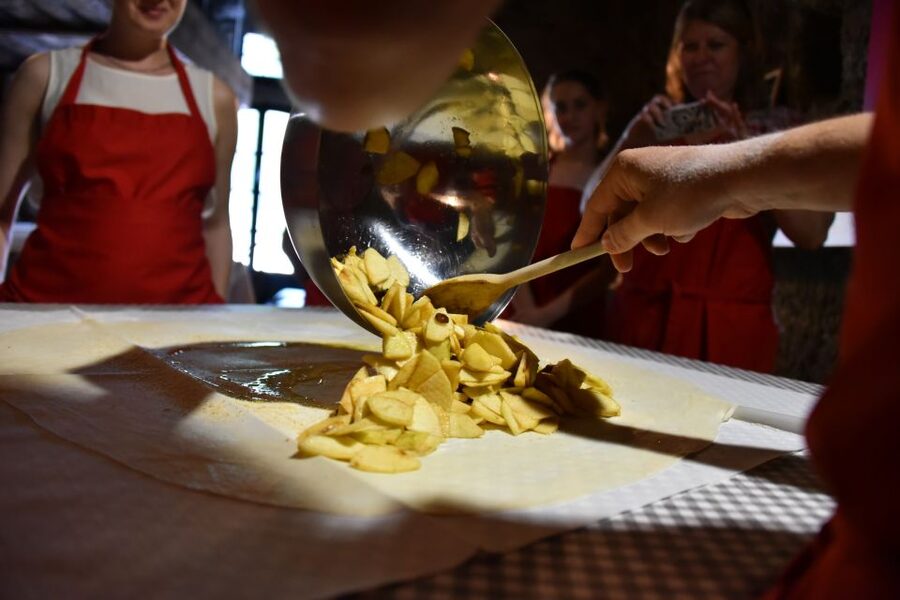
- Austrian sweets from scratch: You prepare an original apple strudel and a Salzburger Nockerl, rather than simply watching a chef work.
- A cozy cave-like venue: The cooking school is in an atmospheric room carved into the side of Salzburg’s hill.
- Lunch is part of the experience: Goulash soup arrives while your desserts finish baking, making this a useful midday activity.
- Small groups with real participation: Groups are capped at 15, with people working at tables of two to four.
- Good for beginners and families: Clear instructions make the recipes manageable even if you rarely bake.
- A practical 90-minute schedule: You can fit the class between a morning tour and afternoon sightseeing.
Why this Salzburg cooking class is worth your time
Salzburg is famous for music, palaces, churches, and mountain views. Food can slip down the list. This class fixes that by giving you a simple way to connect with the city through two local specialties that appear on menus across town.
You do not just eat apple strudel in a café. You learn what goes into it, handle the pastry, prepare the filling, and see how the finished dessert comes together. That small change matters. Afterward, a slice of strudel on a Salzburg menu has more meaning because you understand the work behind the thin pastry and warm apple filling.
The class also introduces Salzburger Nockerl, a light local sweet closely tied to Salzburg. It is served as a soft baked dessert and is considered a must-try local specialty. Its airy texture is very different from dense cake or pastry, so I would treat it as a chance to try something distinctive rather than assume you will love it.
The strongest part of the experience is its balance. You learn enough to take the recipes home, but the class does not appear aimed at professional bakers. It is designed for ordinary people who want to cook, eat, laugh a little, and meet others during a busy city break.
More Cooking Classes in Salzburg
- Austrian Apple Strudel Cooking Class including Lunch in Salzburg
★ 5.0 · 929 reviews - Salzburg Christmas Cookies and Apple Strudel Cooking Lesson
★ 5.0 · 183 reviews - Cookies and Apple Strudel Cooking Class Including Lunch
★ 4.9 · 156 reviews
Arriving at Ursulinenplatz 9
The meeting point is Ursulinenplatz 9, 5020 Salzburg. From Mirabell Square or Mozart Square, allow about 10 minutes on foot. That makes the class easy to pair with central Salzburg sightseeing, though you should still leave enough time to arrive without rushing.
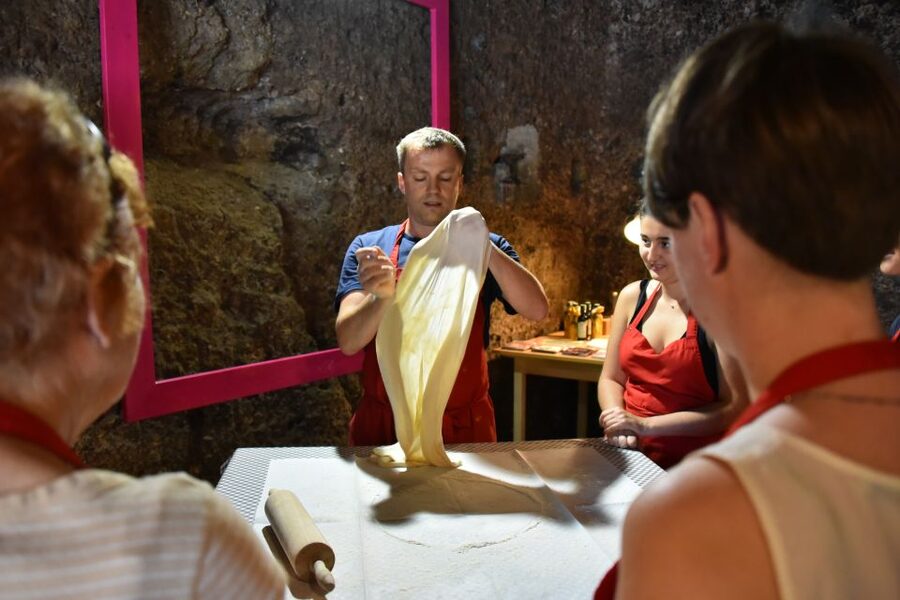
The setting adds much of the charm. The cooking school occupies a cozy, cave-like room carved into the side of the hill. It is not a polished modern studio with a showroom feel. The unusual space gives the class a stronger sense of place and helps it feel connected to Salzburg rather than portable to any city.
That atmosphere is worth noting if you are choosing between several food activities. The recipes are the main event, but the room becomes part of the memory. You are cooking in a space that feels distinctly Salzburg, not simply renting a kitchen for an hour and a half.
The class is wheelchair accessible, and the instruction is in English. The published information lists English as the available language, so this is a straightforward choice for English-speaking visitors.
The opening lesson: apples, pastry, and Austrian technique
The class begins with guidance from an experienced chef. You are expected to take part in the preparation instead of standing behind a counter while someone else does the important work.
One of the first practical jobs is marinating the apples. This sounds simple, but it is the kind of small step that helps you understand how the filling gets its flavor before it is wrapped in pastry. The chef explains the process and gives you a clear path to follow, which is helpful if you are not comfortable in a kitchen.
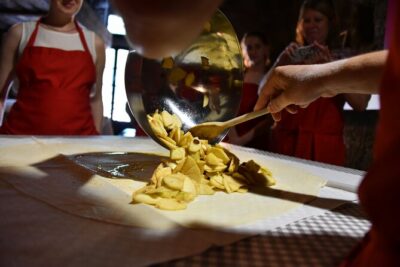
Then comes the memorable part: stretching the pastry. Apple strudel depends on thin pastry, and handling it yourself makes the dish feel less mysterious. It can also be fun in the way many hands-on cooking tasks are fun: part technique, part group effort, and part hope that you do not create a pastry disaster.
The instruction is pitched well for beginners. You do not need previous baking experience, and the recipes are explained step by step. Several classes have been praised for clear demonstrations, patient help, and useful reminders for making the dishes at home.
The guides are also part of the appeal. In different sessions, instructors including Leonardo, Agnes, Johan, Riea, and others have been singled out for friendly, engaging teaching. Names and staff can vary by date, but the pattern is clear: the best part of the instruction is its warm, informal tone rather than a stiff classroom routine.
Baking Salzburger Nockerl while the strudel cooks
Once the apple strudel is in the oven, the class turns to Salzburger Nockerl. This keeps the session moving and gives you a second dessert to make rather than leaving you waiting for the pastry.
Nockerl is a local specialty and one of Salzburg’s signature sweet dishes. The preparation is light and hands-on, and the class makes it approachable even for people who do not bake often. You get to prepare your own portion, then taste the result after it has cooked.
Here is where I would set your expectations carefully. The apple strudel receives the most consistent praise, while one otherwise very happy participant did not care for the taste of the Nockerl. That is not a flaw in the class so much as a reminder that its soft, airy style is not for everyone. Trying it is still worthwhile because it is a local Salzburg dish you might not encounter in the same form at home.
The two recipes also work well together. Strudel gives you crisp pastry and warm fruit, while Nockerl offers a lighter texture. You leave with a better sense of the range of Austrian desserts than you would from ordering one slice at a café.
More Salzburg trips:
- The Original Sound of Music Tour in Salzburg
★ 4.5 · 6,129 reviews - Salzburg: Original Sound of Music Tour
★ 4.8 · 5,059 reviews - From Salzburg: Half-Day Tour to Hallstatt
★ 4.6 · 3,596 reviews - Salzburg: Mozart Concert at Mirabell Palace
★ 4.8 · 3,498 reviews
Goulash soup turns the wait into lunch
While the desserts finish baking, the instructors serve goulash soup. This is a smart part of the schedule. Baking takes time, and instead of sitting around with nothing to do, you get a savory dish before the sweets arrive.
The soup is not just a token snack. It is repeatedly praised as a satisfying and delicious part of the meal, with several people describing it as an excellent midday lunch. One family group especially liked sitting together at a communal table while the desserts finished.
This changes the value calculation. At $70 per person, you are paying for instruction, ingredients, a distinctive venue, and a meal that includes your finished creations. Drinks are not included, so budget separately if you want something to drink with lunch or dessert. Still, the included soup means you do not need to plan and pay for a separate lunch immediately afterward.
The order also makes sense from a food perspective. A warm bowl of goulash gives you something savory before the rich desserts. You get a proper pause, time to talk with the people at your table, and a chance to compare how everyone’s baking turned out.
Eating your own strudel and Nockerl
After the baking is complete, you sit down and eat what you made. This is the payoff, but it is not the only rewarding part. Because you worked through the steps yourself, the final tasting feels more personal than ordering a finished dessert.
The communal table helps the class feel social. People come from places including the United Kingdom, the United States, Canada, Australia, New Zealand, Israel, Germany, and Ecuador. You may end up sharing a meal with a mix of couples, families, and solo participants.
That social setup can be a plus or a drawback depending on your mood. If you enjoy meeting people, it adds easy conversation to the class. If you prefer a private cooking lesson, the shared table and group format may feel less intimate. Tables hold two to four people, while the full class can reach 15, so expect a small-group activity rather than one-on-one teaching.
Portions appear generous. Several people have had enough strudel left to take some away, including one person who saved half for lunch the next day. The exact amount you take home can depend on the class and how much you eat, but you should not assume that every leftover portion will be packaged for you unless the staff confirms it.
What the 90-minute schedule means for your day
Ninety minutes is a useful length for Salzburg. It is long enough to prepare two dishes and eat lunch, but short enough to fit into a sightseeing plan.
The class works particularly well after a morning tour. You can walk over, cook, eat, and continue with afternoon activities without giving up half your day. It can also serve as a pleasant break before an afternoon visit to Salzburg’s major sights.
Do not schedule it too tightly against another timed activity. The advertised duration is 90 minutes, but cooking has a human rhythm, and you will want a little breathing room for the walk to your next stop. The experience is efficient, yet it is not a grab-and-go meal.
The class is also useful on a rainy day. Salzburg rewards outdoor wandering, but wet weather can make a warm cooking room and hot soup especially welcome. The cave-like venue adds to that comfort without requiring a long trip outside the city center.
Who will enjoy this class most
I would recommend it first to people who want an activity rather than another passive sightseeing stop. You spend the session mixing, stretching, shaping, baking, and tasting. That makes it a good change of pace during a trip packed with churches and historic buildings.
It suits beginners particularly well. You do not need baking skills, and the instructions are designed to help you succeed. If you enjoy cooking already, you will still appreciate the chance to learn local recipes and techniques, but do not expect an advanced pastry workshop.
Families are another strong match. An 11-year-old and a 14-year-old were able to enjoy the session with their family, and a larger three-generation group found the instructors patient and helpful. Children who like mixing and shaping food should have plenty to do, though parents should decide if a shared class suits their children’s attention span.
Couples and solo visitors can also benefit from the social format. You are likely to share the table with people from other countries, which can turn lunch into one of those easy travel conversations that happens naturally over food.
Who may want to choose another activity
This is not the best pick if you want a serious chef-training session. The recipes are approachable and the class moves at a practical pace. You learn useful methods, but the goal is enjoyment, cultural context, and a successful meal, not professional certification.
It may also disappoint you if you dislike group participation. The class can include up to 15 people, with shared work areas and a communal meal. You have a real role in the preparation, but you are still part of a larger group.
Finally, keep your dessert preferences in mind. The apple strudel is the safer crowd-pleaser, with its familiar apples and pastry. Salzburger Nockerl is more unusual, and its delicate texture and flavor may not appeal to everyone.
Is $70 a fair price?
At $70, the class is not a bargain lunch, but it offers more than a restaurant meal. Your price covers the cooking instruction, ingredients, use of the space, goulash soup, and the desserts you prepare. It also gives you recipes and enough practical experience to try apple strudel at home.
The value is strongest if you would otherwise spend money on lunch and a dessert tasting. You get both, plus an activity and a local food lesson. The value is weaker if you only want to eat and have no interest in cooking.
I also like that you can reserve now and pay later, keeping your plans flexible. Free cancellation is available up to 24 hours in advance for a full refund. Drinks are extra, so remember that when comparing the total cost with a standard café lunch.
Small practical tips before you book
Plan your route from Mirabell Square or Mozart Square and allow about 10 minutes to walk to Ursulinenplatz 9. Arriving with a little spare time will help you settle in before the cooking starts.
Wear something comfortable for active kitchen work. The class is hands-on, so you will be standing and working with food rather than simply listening to a lecture.
Come hungry, but not desperately hungry. The goulash arrives before the desserts and portions are described as generous. You will want room for both your strudel and Nockerl.
If you want a drink, plan to buy one separately because drinks are not included. Ask the school about payment options before ordering, since one past participant specifically noted that drinks were cash only.
Should you book the Edelweiss Cooking School class?
Yes, if you want a friendly, practical taste of Salzburg beyond the usual sights. The combination of two local desserts, goulash soup, and a memorable cave-like venue gives the class real character. The 90-minute format also fits neatly into a sightseeing day.
I would book it for families, couples, solo visitors, and anyone who likes learning by doing. I would skip it only if you dislike communal activities, want advanced pastry training, or already know that light baked desserts are not your thing.
For most people, the best reason to book is simple: you leave with a full stomach, a Salzburg food story, and enough confidence to try apple strudel again at home.
FAQ
Where does the Salzburg apple strudel class meet?
The meeting point is Ursulinenplatz 9, 5020 Salzburg. It is about a 10-minute walk from Mirabell Square or Mozart Square.
How long does the cooking class last?
The experience lasts 90 minutes. Starting times vary, so you should check availability for your chosen date.
What will I make during the class?
You will prepare an Austrian apple strudel and a Salzburger Nockerl, a local Salzburg dessert.
Is lunch included?
Yes. Goulash soup is served while the apple strudel and Salzburger Nockerl finish baking. Drinks are not included.
Is the class taught in English?
Yes. The listed instruction language is English.
How many people are in each class?
Each class has a maximum of 15 people. Participants work at smaller tables of two to four people.
Can I cancel or pay later?
You can cancel up to 24 hours in advance for a full refund. The reserve-now, pay-later option lets you book without paying immediately.
Just added in Salzburg
- Werfen: Hohenwerfen Castle Entrance Ticket★ 4.5 · 84 reviews
- Vienna: Private tour from Vienna to Hallstatt and Salzburg★ 5.0 · 1 review
- Private Melk Hallstatt, Salzburg tour from Vienna★ 4.9 · 22 reviews
- Vienna: Hallstatt & Salzkammergut Trip with Ossuarry Option★ 5.0 · 1 review
- Private Full Day Trip to Hallstatt ,Salzburg and Melk from Vienna★ 4.5 · 58 reviews
- Day Tour from Vienna to Hallstatt and Salzburg with Photographer★ 3.0 · 10 reviews
- From Vienna ,Lakes to Mountains,Melk,Hallstatt and Salzburg Tour★ 3.5 · 7 reviews
- Transfer from Vienna to Salzburg with 2 hours for sightseeing★ 5.0 · 24 reviews
Cooking Classes, compared.
Austrian Apple Strudel Cooking Class including Lunch in Salzburg
Read our review →
Gerstner KuK Hofzuckerbäcker Baking Show & Tasting
Read our review →
Salzburg Christmas Cookies and Apple Strudel Cooking Lesson
Read our review →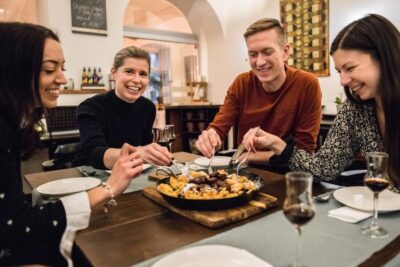
Traditional Kaiserschmarrn Cooking Class & Tasting
Read our review →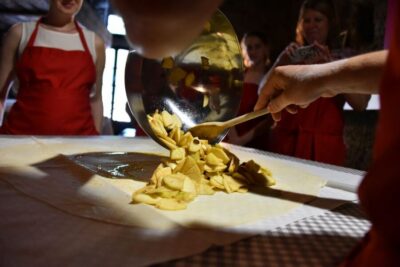
Cookies and Apple Strudel Cooking Class Including Lunch
Read our review →
Original Sound of Music Tour Salzburg With Schnitzel and Noodle
Read our review →Browse the lists this tour appears in